
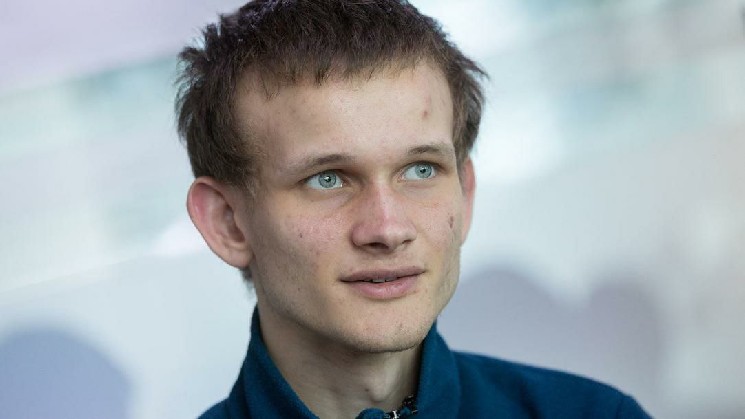
Ethereum co-founder Vitalik Buterin has issued serious warnings with regard to Sam Altman’s Digital Identity Project World (Wld, formerly known as WorldCoin).
While World, who has attracted attention with more than 13 million “unique people” records, continues to grow in the digital identity space, Buterin said that such projects could endanger anonymity online.
In his paper that was published today, Buterin assesses the potential benefits and damage of digital identity systems that use zero-knowledge certificates (ZK), with the argument that systems based on a “per person identity” model, such as the world, can threaten the privacy of internet users.
“In an identity system per person, even wrapped in ZK, we run the risk that all your online activities will be effectively assigned to a single identity,” said Buterin, and noted that eliminating anonymity could have serious negative consequences in an environment of increasing digital threats.
World was developed by Tools for Humanity, a company founded by Sam Altman and Alex Blania. Users prove that they are human by scanning their eyes with devices called “Orbs” and therefore receive both a world -ID and Wld -Tokens. The biometric data used in the identity creation process are protected by ZK technology.
Buterin acknowledged the privacy benefits of ZK technology, but noted that the imposition of a single identity by the system could be harmful in the long term. Buterin noted that comparable systems have become widespread in regions such as the European Union and Taiwan, and that this trend becomes worldwide.
“At first glance, the proliferation of ZK-driven digital identities may seem like a considerable profit against bots and fake accounts on social media, online votes and different platforms,” wrote Buterin, but he warned that the freedom of users to manage multiple e-mail or social media accounts with these systems could be eliminated.
The World Project is making progress despite criticism from proponents of privacy. World, which was launched in the US, is preparing to publish a visa card and takes steps to verify users in a pilot program with Tinder in Japan.
Despite these developments, Buterin proposes a more pluralistic model:
“Instead of single identity systems wrapped in ZK, a pluralistic structure must be assumed where identities can be provided in various ways by more than one institution, platform or person.”
*This is not investment advice.