

OpenAI’s hint that it could build a social app targeting real people sent one crypto token surging this week. Traders quickly took action after reports surfaced that the new service would try to block bots using biometric checks. Prices rose, chatter rose, and soon after came a few questions.
Markets react to biometric rumors
According to Forbes and various market channels, OpenAI is quietly exploring a human-only social platform. According to reports, the project is still small and is run by a team of around ten people within the company.
The idea would be to authenticate real users with biometric tools – existing phone systems such as Face ID or iris scans similar to those used by Worldcoin’s Orb.
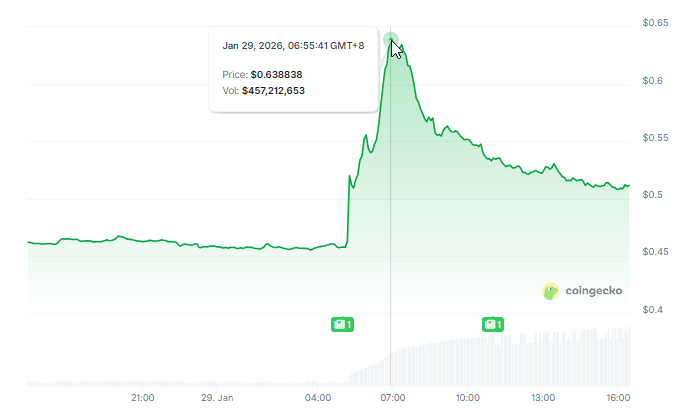
Worldcoin’s token, WLD, rose sharply on the news, posting gains of up to 33% during its initial trading peak. That move was partly speculative. Prices later retreated, but trading volume remained high and volatility increased. WLD has risen from $0.51 to $0.68 in the past 24 hours, according to data from Coingecko.
How evidence of personality can be used
Evidence of personality The goal is to tell a platform which accounts are managed by real people and which are automated. Reports note that using biometrics would make it harder for bots to create fake accounts, but that approach raises new hurdles.
For example, devices and systems must be trusted to verify identity without sharing private data. Worldcoin’s model combines an iris scan with a cryptographic claim. That claim is intended to prove uniqueness while hiding the raw biometric image.
The technical details are important. How the checks are stored, who has the keys and whether users can log out will determine public acceptance.
The Identity Project
News media first published the OpenAI message at the end of last week. The markets reacted in real time. Social posts reinforced the rumor, and media pieces tied the plan back to Worldcoin because OpenAI CEO Sam Altman helped kick off the identity project.
No formal announcement has been made by OpenAI or by Worldcoin. Everything on the table is based on reporting from unnamed sources. It should be understood that plans can change and early reports often overstate certainty.
Privacy and policy questions loom
Policy experts were quick to point this out. Biometrics are sensitive data. Laws in different countries treat them in different ways. Reports have suggested that regulators are likely to question how consent is obtained, how long data is kept and whether people can use alternatives to biometric checks.
Security is also a concern: if a verification system is breached, the consequences can be serious. Some civil rights groups are already saying that any mass biometric system deserves scrutiny.
Featured image of Nelson Dai, chart from TradingView