

Worldcoin [WLD] experienced a significant 11% drop in value in the early hours of September 24th, amidst a surge in bullish activity. This decline was driven by a substantial pullout of capital from both the Spot and perpetual markets of WLD.
This current trend of price depreciation may continue, leading to further downward pressure on the asset in the upcoming trading sessions.
Spot and Perpetual Markets Indicate Weakness
Recent capital flow data revealed that traders offloaded a total of $280.92 million worth of WLD in the perpetual market over the past 24 hours. This sell-off surpassed the total WLD purchases during the same period, resulting in a negative netflow of $41.45 million.
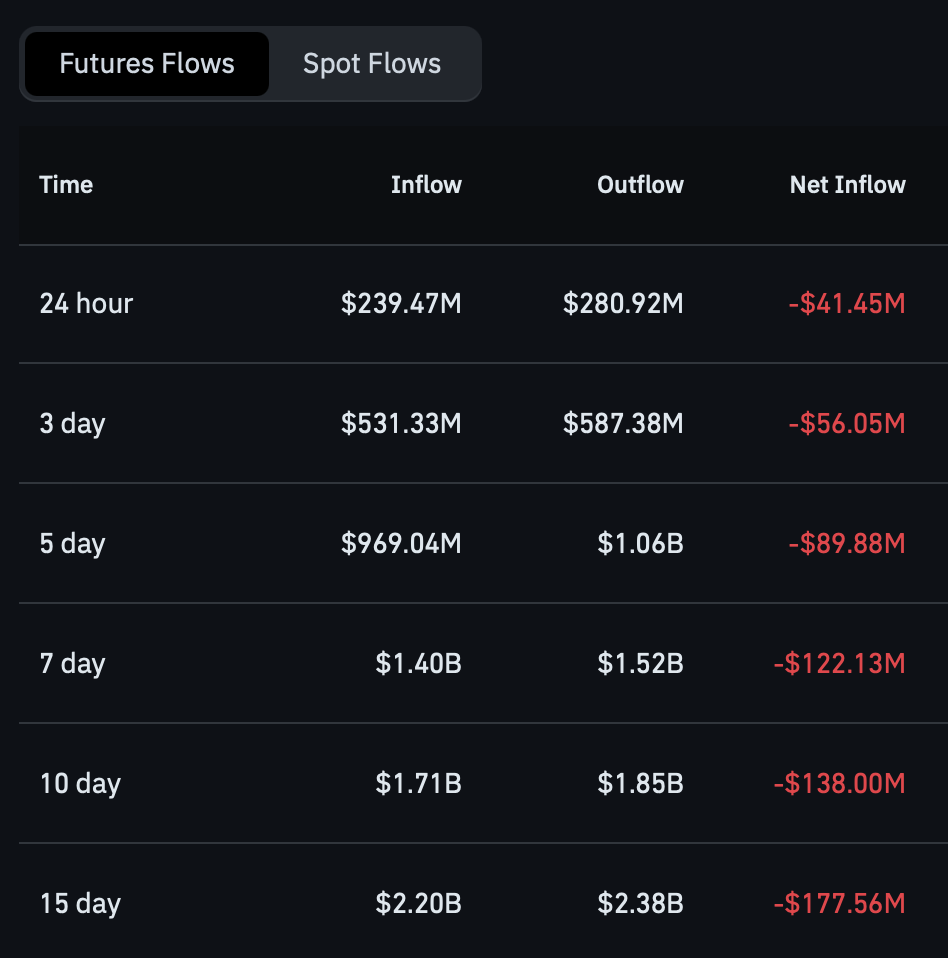
When capital exits an asset’s perpetual market on such a large scale, it can trigger further selling as demand fails to match selling pressure. A similar scenario is unfolding in the Spot market, where investors are withdrawing capital due to struggling demand.
The Spot market witnessed significant inflows of WLD across various exchanges, resulting in a total inflow of approximately $63.89 million, surpassing the outflow. This imbalance indicates that more investors are selling their assets in the Spot market rather than holding onto them for the long term.

The positive netflow in the Spot market, amounting to $6.02 million, adds further downward pressure to the price, which is already struggling to attract sufficient demand to prevent a decline.
Uncertain Recovery Due to Negative Funding Rate
Analysis of the perpetual market’s Funding Rate data indicates a potential opportunity. Despite a significant drop to -0.0096% initially, the Funding Rate has since recovered to -0.0046% and is trending upwards.
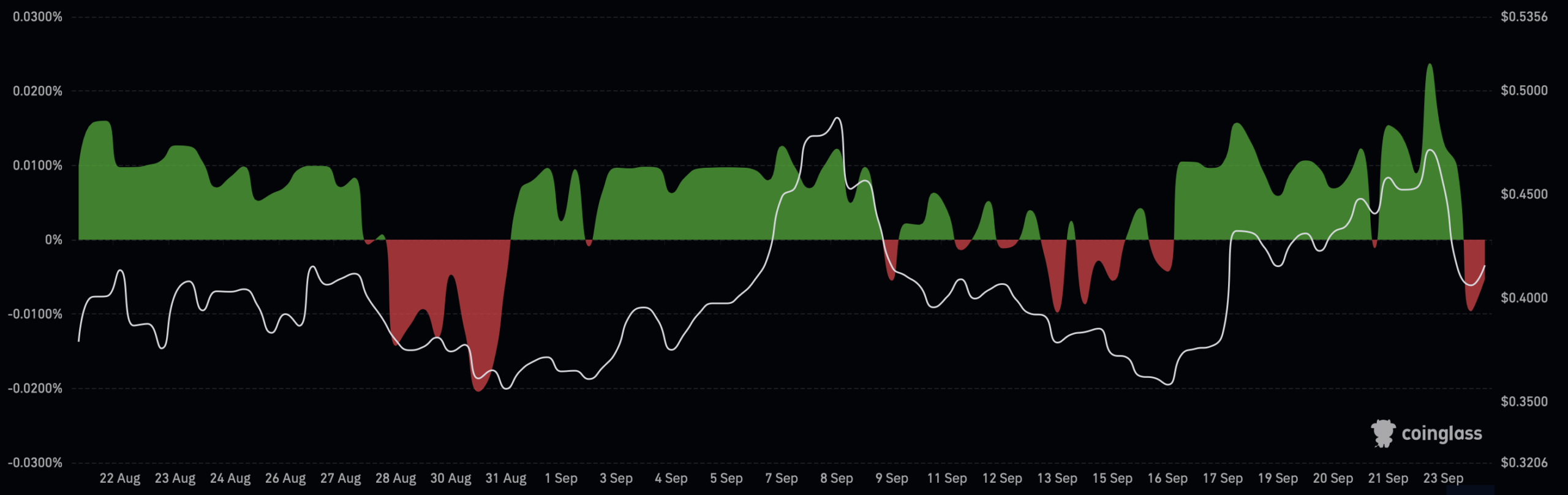
This fluctuation suggests an increase in long contracts following a period of heavy short exposure. However, the presence of a negative Funding Rate indicates that short positions still dominate the market significantly, casting doubt on a bullish reversal.
Further examination of liquidation data reveals that long positions suffered a loss of approximately $4.32 million compared to shorts, which only lost $39,090 within the same timeframe.
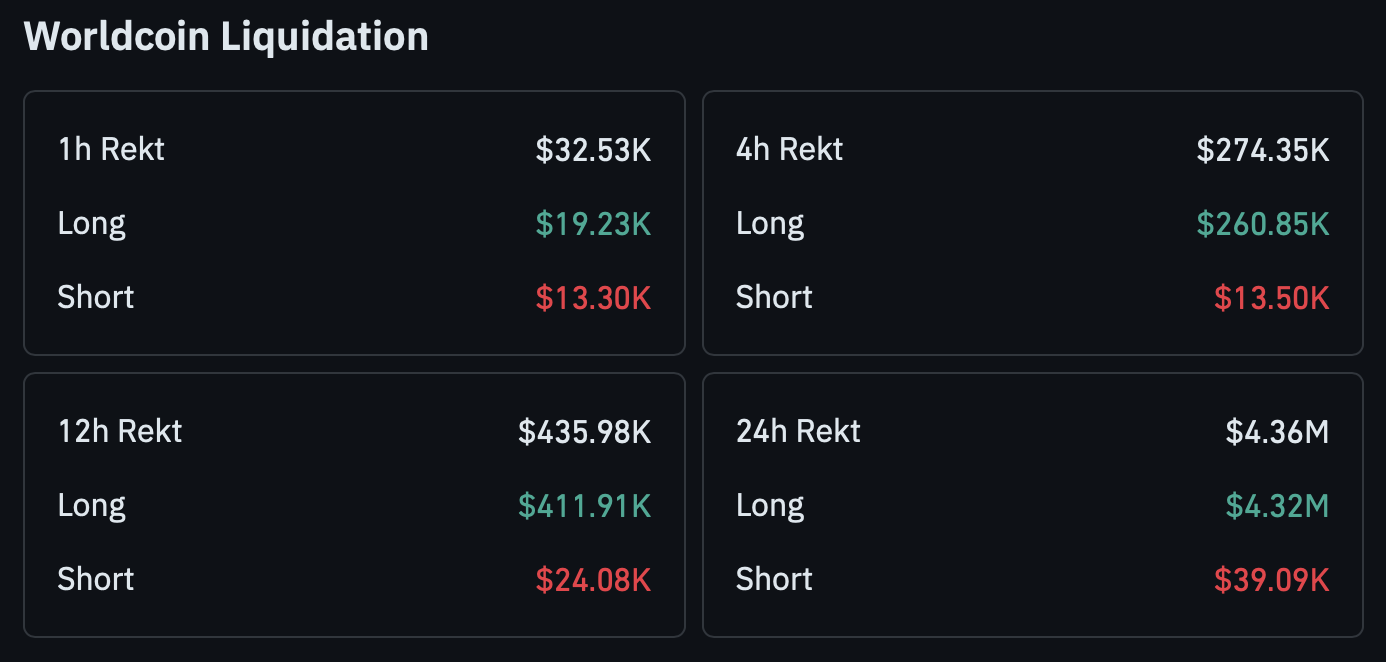
For every $1 lost by shorts, long positions lost around $110.50, indicating that shorting WLD may be more profitable than going long. Investors are advised to exercise caution due to the outflow of capital and the risk posed to long positions by liquidations.
The rising Funding Rate suggests a possible stop hunt by investors to liquidate more long positions before a potential continuation of the downward trend.
Concluding Remarks
- Worldcoin [WLD] continues to face selling pressure as both perpetual and Spot Market Netflow data indicate a movement against the asset.
- The negative Funding Rate and substantial long liquidations maintain elevated downside risks despite the recent funding recovery.
The impact of technology on education
Technology has revolutionized the way we live our lives, and education is no exception. In recent years, the integration of technology into the classroom has transformed the way students learn and teachers teach. From interactive whiteboards to online learning platforms, technology has become an integral part of the modern education system.
One of the most significant impacts of technology on education is the accessibility it provides to students. With the rise of online learning platforms and educational apps, students can now access a wealth of information at their fingertips. This has made learning more flexible and convenient, allowing students to learn at their own pace and in their own time.
Technology has also transformed the way teachers deliver lessons. Interactive whiteboards and multimedia presentations have made lessons more engaging and interactive, helping to capture students’ attention and improve their retention of information. Teachers can also use technology to tailor lessons to individual students’ needs, providing personalized learning experiences that cater to different learning styles.
Furthermore, technology has opened up new avenues for collaboration and communication in the classroom. Students can now easily collaborate on projects using online tools and platforms, allowing them to work together regardless of their physical location. Teachers can also communicate with students and parents more easily through email, messaging apps, and online portals, keeping everyone informed and engaged in the learning process.
In addition, technology has made learning more immersive and experiential through the use of virtual reality and augmented reality. These technologies allow students to explore virtual environments and simulate real-world scenarios, bringing learning to life in a way that was previously not possible. This hands-on approach to learning can help students better understand complex concepts and develop critical thinking skills.
However, while technology has many benefits in education, it also comes with its challenges. The digital divide, where some students have access to technology while others do not, can widen educational inequalities. Additionally, the overreliance on technology can lead to distractions and reduced face-to-face interactions, which are crucial for social and emotional development.
In conclusion, technology has had a profound impact on education, transforming the way students learn and teachers teach. While there are challenges to overcome, the benefits of integrating technology into the classroom are undeniable. By harnessing the power of technology, we can create a more engaging, personalized, and immersive learning experience for students, preparing them for success in the digital age.