

In recent months, the reserves of Ethereum (ETH) have plumbled on low 2 (L2) networks, with the total ETH balance falling by around 25%.
ETH on Optimism has fallen by no less than 54% since March, while arbitrum and base have seen falls of 17% and 14% respectively.
What drives this decline?
The graph from the Defi -report clearly illustrates this trend, especially since the beginning of 2025, when large L2 networks such as optimism and base have witnessed important ETH decline. According to analyzes, the weakening prices of native Ethereum L2 -Tokens are a critical factor.
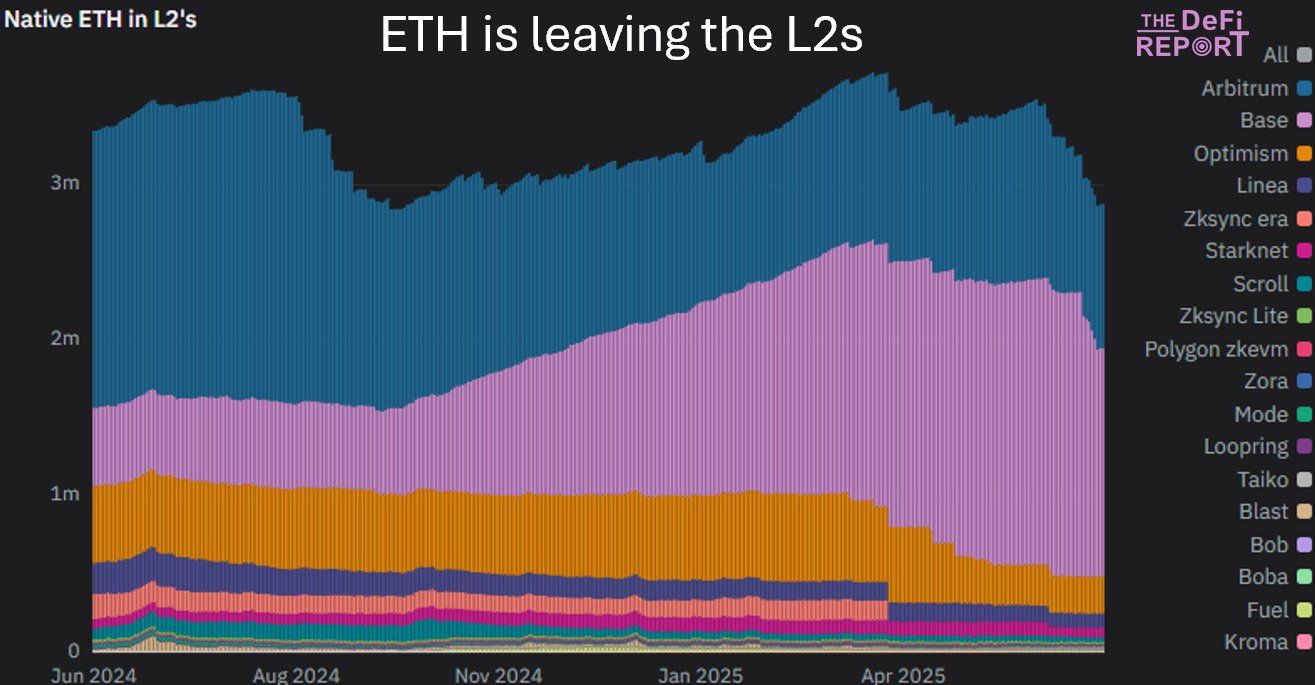
ETH reserves on L2 networks have plummeted. Source: The Defi report
Tokens such as OP Optimism have fallen more than 38% in the last 90 days. In the meantime, ARB from Arbitrum has fallen by 21%. This decline has reduced the call of investors, causing them to shift to other platforms.
At the same time, part of the ETH returns to the Ethereum Minet, which is considered safer because of the high security.
In addition, the amount of ETH that is set and the number of long-term addresses has reached new highlights, indicating that investors give priority to the strategies for value retention above trade on Ethereum L2.
Another potential factor is the movement of ETH from accumulation addresses. Data from cryptoquant indicate that large portfolios are re -assigned to assets, which increases the sales pressure on L2.
Accumulation addresses (holders without sales history) have reached a record high, which now have 22.8 million ETH. Many public companies also include ETH as a reserve.
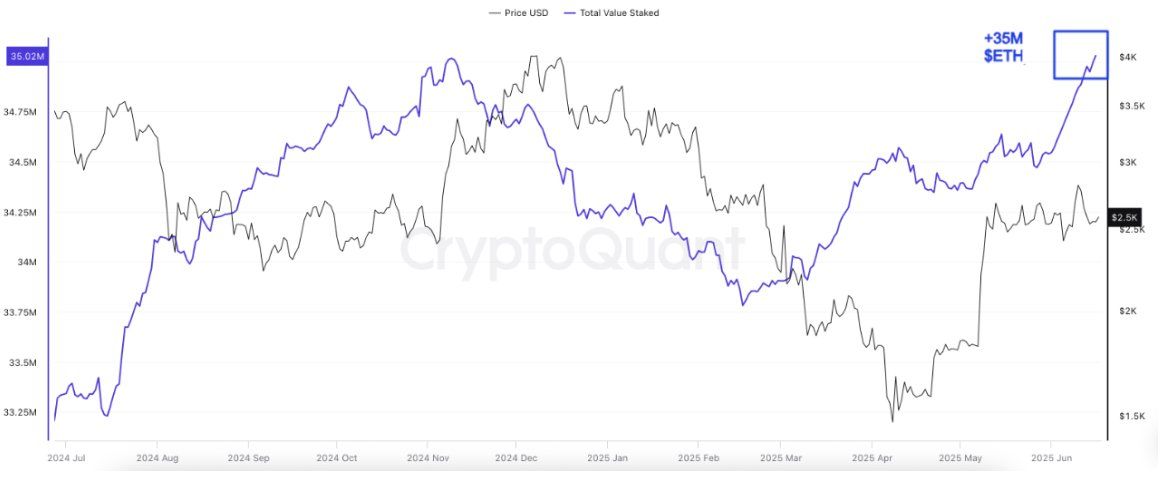
Total value of ETH deployed. Source: Cryptuquant
“In just the first half of June, more than 500,000 ETH were used, so that the total locked amount is pushed into a new peak of more than 35 million ETH. These growth directorys indicate confidence and a continuous decrease in liquid supply,” said a cryptoquant analyst.
Impact on the Ethereum -Ecosystem
This decline marks a shift from 2024, when L2S was seen as a threat to the Mairet because of their ability to attract users and transaction costs. However, the inverted trend now unfolds, whereby the Mainnet recording increased activity.
This could strengthen the position of Ethereum, especially after the successful Pectra upgrade last month, which improved the performance and reduced the costs. However, L2s such as optimism and base must improve to regain trust; Otherwise they run the risk of losing their crucial role in scaling the network.
The departure of ETH from L2S can last to the successful Pectra -Upgrade or Strategy adjustments this month in the middle of market volatility. To recover, however, L2S must focus on improving liquidity and reducing trust in easily manipulated tokens.
Developers could consider implementing more transparent stimulation mechanisms and at the same time working closely with centralized exchanges to stabilize capital flows.
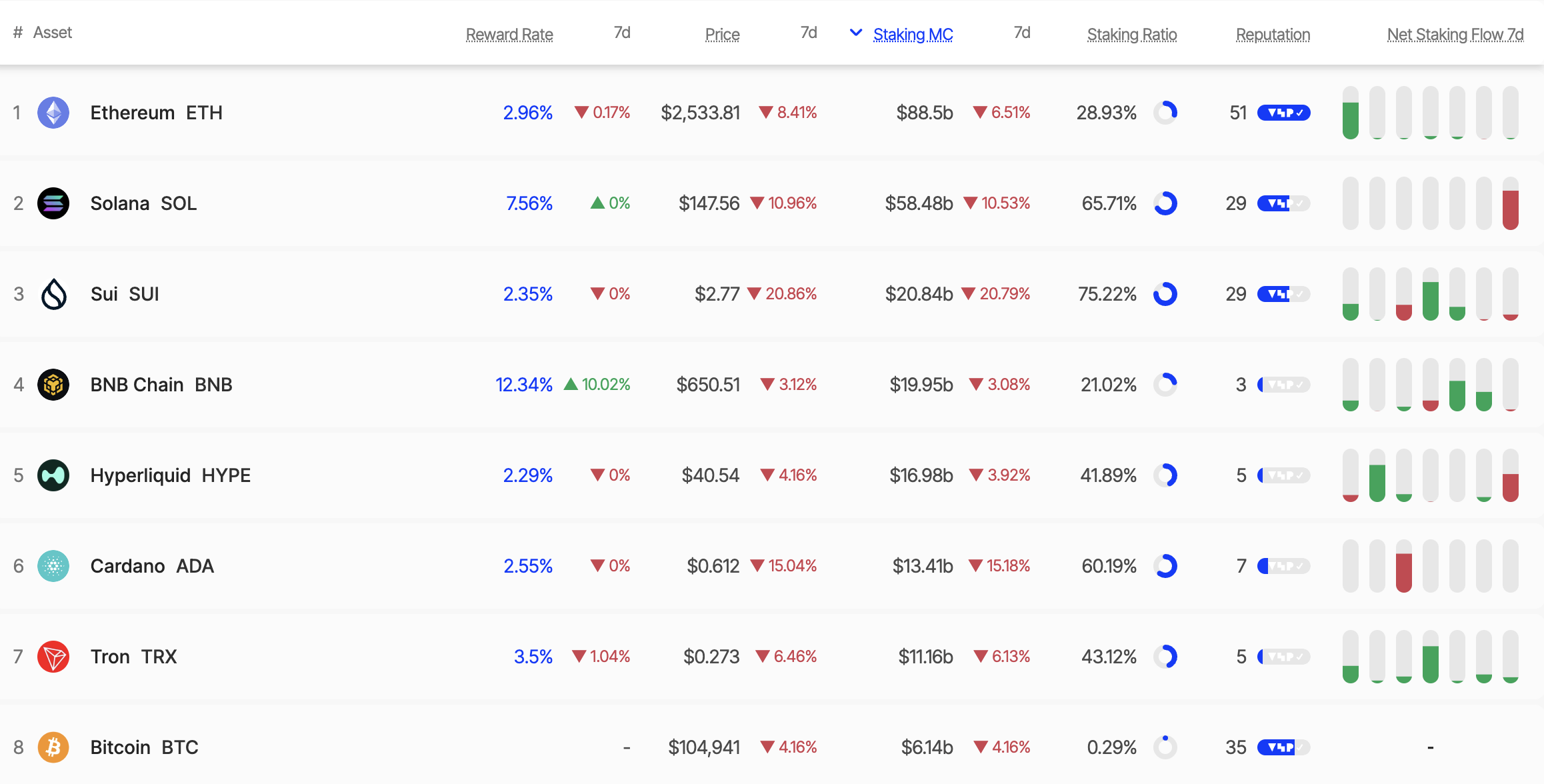
ETH Disputratio.Source: Rewards Strike Rewards
In addition, the growth of ETH deployment-now accounts for almost 29% of the total supply storytelling for long-term trust in Ethereum. If L2’s do not adjust quickly, they can lose their competitive advantage while the mainnet is clots the leading position.