

New Developments in the Venice Token [VVV] Market
The Venice Token [VVV] has seen a 6% increase in the past 24 hours, continuing its upward trend with weekly gains of over 11%. This comes after a significant rally since July, which saw the altcoin’s price more than double.
Despite new token supply outpacing burns, VVV has shown resilience, possibly due to increased access and platform usage.
Exploring VENC’s AUM, Burns, Users, and API Activity
European investors now have access to the Venice Token ETP through 21Shares, with the ticker VENC on the SIX Swiss exchange. The ETP acquired over $1.45 million in assets under management on its first day, indicating a strong entry into the $2.30 trillion EU market.

Additionally, a burn mechanism totaling $10.40 million has slightly reduced the token supply. Despite 41K VVV tokens being burned this month, more coins have entered circulation, with 164K minted and 309K vested.
The AI protocol has reached a milestone of 5 million users, with API calls increasing by 400% since July, according to Costcode data.
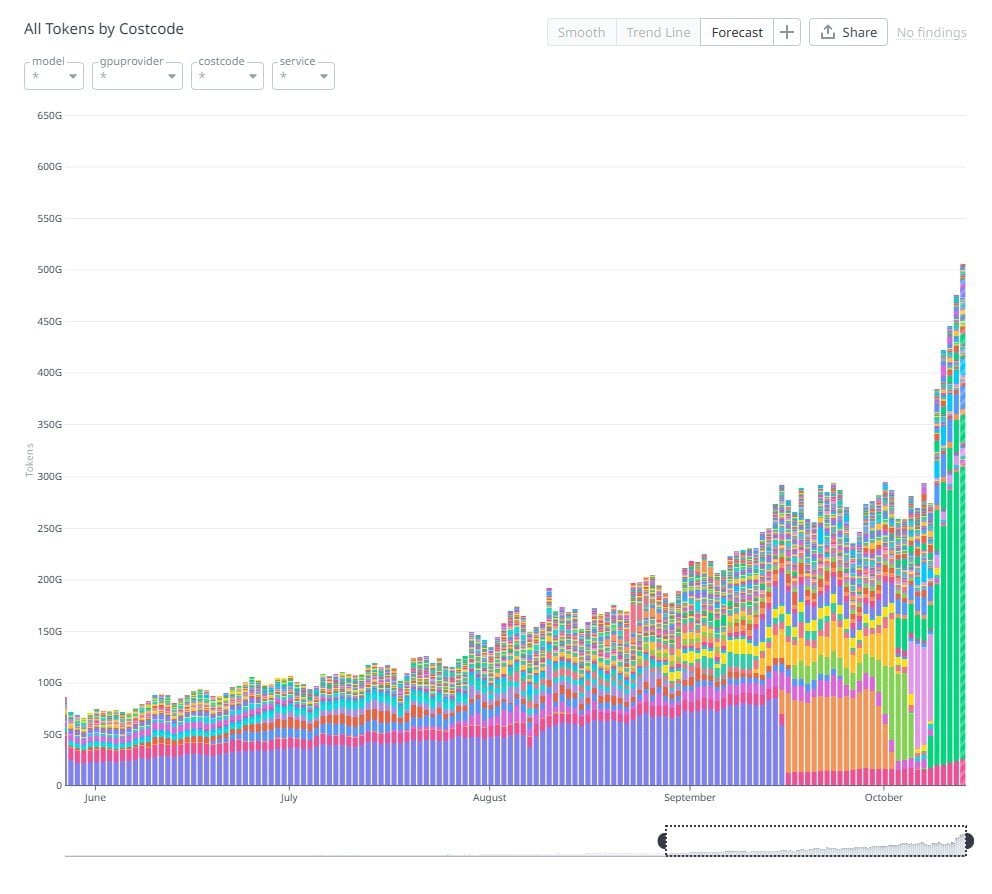
The number of token holders has risen by nearly 2K since late September, indicating growing investor interest in the AI model.
Market Analysis: Bulls Testing Liquidity at $25
On the price charts, VVV bulls have pushed above the $25 liquidity level but have struggled to maintain momentum. Previous attempts to break higher have been met with resistance.
Buyers have defended the $21 level since mid-September, preventing a deeper decline. Bull Bear Power favors buyers, and the RSI Divergence indicator has signaled three buy opportunities since September.
While buyers may attempt another move higher, the $30 supply zone poses a challenge before reaching $34.
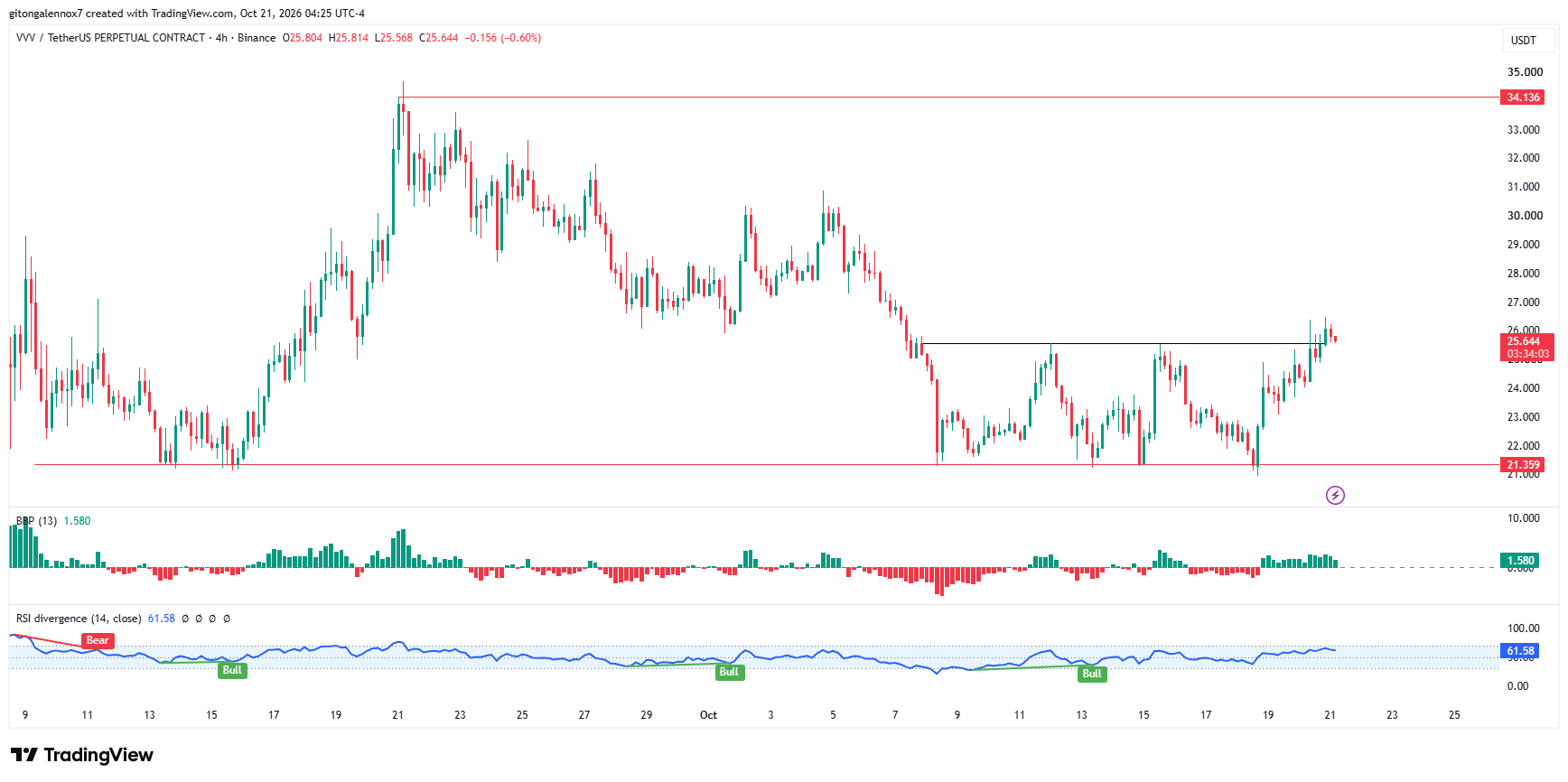
Continued hesitation around $25 could lead to a false breakout, with the bullish case strengthened by holding that level as support.
Key Takeaways
- 21Shares has introduced a Venice Token ETP for EU investors, with strong initial AUM of $1.45 million.
- Despite testing liquidity at $25, VVV faces resistance from bears in relinquishing control of the market.
The emergence of artificial intelligence (AI) has revolutionized various industries, including healthcare, finance, and transportation. AI has the potential to transform the way we live, work, and interact with technology. With advancements in machine learning algorithms and data processing capabilities, AI has become increasingly sophisticated and capable of performing tasks that were once thought to be exclusive to human intelligence.
One of the key areas where AI is making a significant impact is healthcare. AI-powered technologies are being used to analyze medical imaging data, such as X-rays and MRI scans, to help doctors detect diseases more accurately and efficiently. AI algorithms are also being used to identify patterns in patient data to predict the likelihood of developing certain conditions, enabling early intervention and personalized treatment plans.
In the finance sector, AI is being used to analyze market trends and make investment decisions in real-time. AI-powered chatbots are also being used to provide customer support and automate routine tasks, such as processing loan applications and insurance claims. By leveraging AI, financial institutions can improve operational efficiency, reduce costs, and enhance customer satisfaction.
In the transportation industry, AI is being used to improve safety and efficiency. Self-driving cars use AI algorithms to navigate through traffic, detect obstacles, and make split-second decisions to avoid accidents. AI-powered traffic management systems analyze real-time data to optimize traffic flow and reduce congestion. By harnessing the power of AI, transportation companies can enhance passenger safety, reduce emissions, and improve overall mobility.
While the potential benefits of AI are vast, there are also concerns about the ethical implications of using AI in decision-making processes. As AI becomes more integrated into our daily lives, there is a growing need to ensure transparency, accountability, and fairness in AI algorithms. It is crucial to establish ethical guidelines and regulations to govern the development and deployment of AI technologies to protect the rights and interests of individuals.
Overall, the emergence of AI is reshaping industries and transforming the way we interact with technology. By harnessing the power of AI, we can unlock new opportunities for innovation, efficiency, and productivity. However, it is essential to approach AI development with caution and consideration for ethical and societal implications to ensure that AI benefits all stakeholders.