
Much of the world takes water for granted. And much of the world has so little water that it is a matter of life and death.
So how can we send water from areas of surplus to areas of deficit? This is the mission of Atlantis, a project that focuses on solving problems arising from climate change, with a particular emphasis on water. And they are trying to solve this problem by using blockchain.
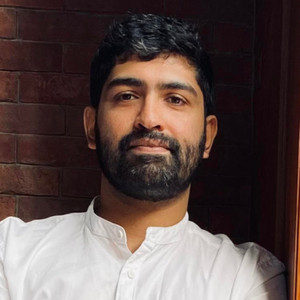
Irthu Suresh is a speaker at this year’s Consensus Festival in Austin, Texas, May 29-31.
Atlantis is not just theoretical. In 50 villages in the Chikmagalur region, India, Atlantis deployed a Web3 solution that encouraged people to effectively transfer water from the Haves to the Have Nots. A clever system of ‘bounties’ encouraged villagers to perform tasks that made this new distribution possible. And the pilot program worked. “We exchanged more than 21,000 kiloliters of water,” says Irthu Suresh, CEO of Atlantis.
Suresh previews what he’ll share in Austin at Consensus, explaining why Atlantis adopted blockchain, the challenges they had to overcome with onboarding, and why he wants the world to know that Web3 isn’t just for commerce, but that “we can use this to fight water problems and poverty.”
The interview has been condensed and lightly edited for clarity.Atlantis didn’t start as a blockchain organization, but you eventually integrated the technology. What led you to this?Irthu Suresh: We were trying to build solutions for climate change as a Web2 company – mainly through water – but a private entity trying to build for the commons couldn’t really strike a chord. And we encountered all kinds of challenges with the existing power structures, from regulations to unregulated mafias in India. It is very easy to shoot down an idea if it is developed by a private entity. All you need is a bunch of lawyers.
And that led us to think, “How can me and my co-founder become insignificant over time as this system continues to expand?” And that led us to look at decentralized distributed systems. We thought if this works, no one could do it. bring it down.
Then we realized that there were people who were willing to harvest extra water and then supply it to the network. This created additional sources of surplus resources. And we were like, “What if we could build this whole system on blockchain?”
So what exactly does that look like?
In most parts of the world, things like water are highly regulated. And you have these centralized networks. But as cities and spaces grow, these centralized networks often struggle to catch up.
But India is a great example of historically being built on decentralized communities. You have small villages meeting their needs. It’s hyper-local. So for us it was a no-brainer to come up with a concept that solves the resource allocation problems.
There are areas where water is plentiful, and no one cares about it. And there are other places where access to water is life and death. So for the pilot, when we partnered with Mercy Corps Ventures, we chose a specific location in India where there is an abundance of water on one side of the hill and drought on the other side of the hill. And how could people in this region exchange this excess water? How can we create the infrastructure locally ourselves? So for our pilot program in Chikmagalur – a rural region of 50 villages – we started with people in different water stress zones.
Interesting. What has your system done?
First we had people volunteer on site to raise awareness, then we had local people sign up to become water harvesters. Once we had these harvesters and a rain shower was received, there was an opportunity to trade them.
How does blockchain fit into this?
We built the product on a mobile native app. On this app, anyone could create a profile, log in and first mention what their skills are. And based on the skill we start giving you tasks. And these tasks are pretty much to build this peer-to-peer water network.
You could participate in surveying, you could participate in testing water samples, you could sign up as someone who wants to spread awareness through workshops, or you could become a harvester. All these tasks are gamified; we call them premiums. People sign up and then complete the required steps, after which they are incentivized. We knew this first required a distributed ledger that was tamper-proof, and we knew blockchain was useful for that.
Astonishing. Can you quantify the impact so far?
Yes. We exchanged more than 21,000 kiloliters of water. The network employs more than 3,000 people and covers 50 villages. Of the 3,000, it is mainly consumers who enter the network to access water. But we have almost 150 harvesters in the network. And then we have a bunch of surveyors and validators.
What is a validator in this context?
Let’s say you connect to the network and say, “Hey, I’m a harvester.” Then we give someone from the neighborhood a bounty to become a validator, who goes to your house and just validates that, “Hey, these guys have the infrastructure for it.” So essentially what’s happening is we’re creating some of these local green jobs. And all these different tasks are gamified using our bounty system.
What problems have you encountered?
One was off-ramp. Especially in India, it is difficult to deviate from the route, because the regulations are still in a gray area.
And from the first MVP we designed, right at the beginning of onboarding, when we asked people to connect to a wallet, that didn’t work. Because people said, “What’s a wallet?” And I got an absolute education in UI and UX. We really had to figure out the right place to introduce blockchain or the Web3 terminologies.
And we had to take extra steps to educate people about this. Because people say, ‘Oh, it’s crypto. That means it’s a scam.” And we say, “No, no, wait a minute!” Right? There is so much more to it!
What tokens do you use to control the mechanics?
We have an internal token, which we will launch at some point. We actively used it during the pilot. But seeing how the Web3 market works, we are convinced that launching a token makes no sense for us unless we achieve a strong product-market fit.
That’s why we integrated a mechanism that allows different tokens to be brought onto the platform. If someone wants to finance a water project in Africa using Solana, he or she can do so, while if someone wants to do a water project in Vietnam using Optimism, he or she can do so. We really worked on the interoperability aspect of it, because for climate change it doesn’t matter which chain you’re in.
Well said. Last question: What are you most looking forward to at Consensus?
So one of the biggest lifelines for our project was Bitcoin. And I know Consensus is a great place to meet people who have pioneered the technologies we use today.
I hope we can come and talk about the things we’ve been doing with blockchain, which isn’t necessarily just DeFi trading. We really want people to know, “Hey, we can use this to fight water problems, to fight poverty.” The idea of distributed ledgers is super powerful. More people need to know that there are concrete examples of how this is being played out.
Great feeling. Congratulations on what you’ve built and see you in Austin.