
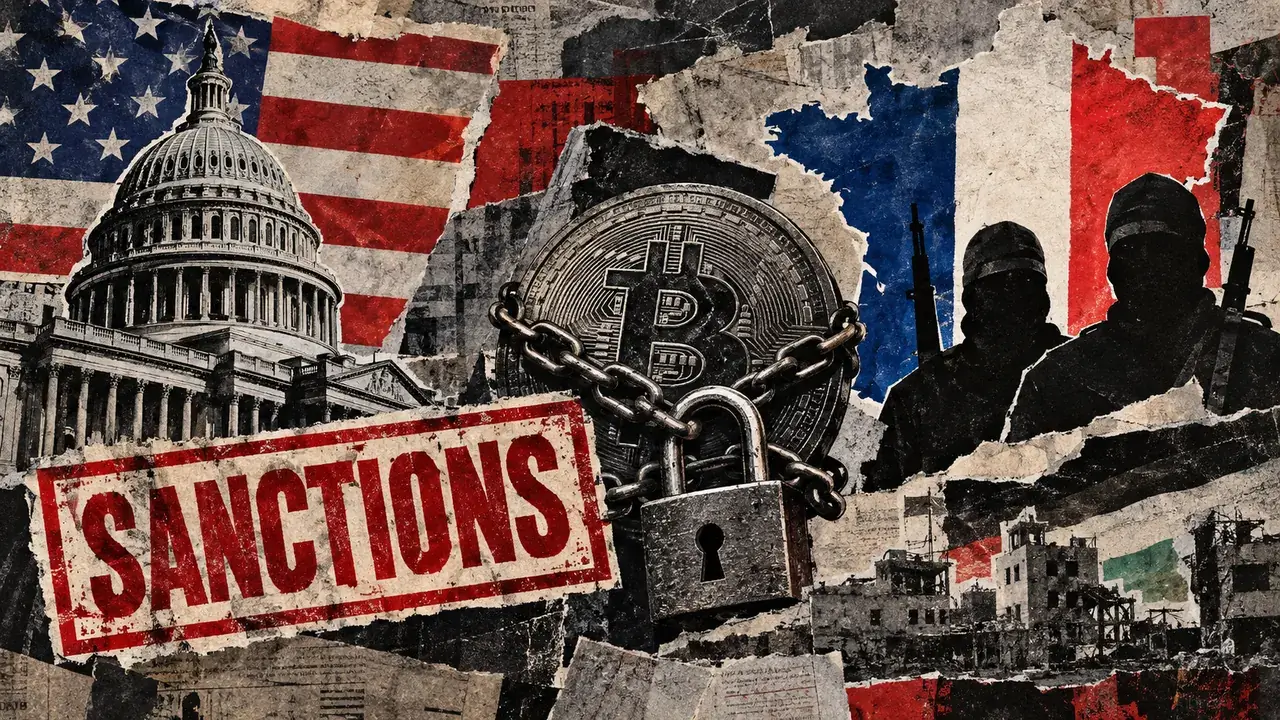
The US government has recently imposed sanctions on two French charities and three individuals for allegedly assisting in the transfer of cryptocurrency and other funds to Hamas, a Palestinian militant group. The sanctions were announced by the Treasury Department’s Office of Foreign Assets Control (OFAC) on October 2, adding Association Baraka, Ensemble C Mieux, Faouzi Barika, Amel Oualid, and Saleem Abdallah Saleem al-Zaq to its list of sanctioned entities.
According to the Treasury Department, Barika and Oualid, based in France, were responsible for sending hundreds of thousands of dollars in cryptocurrency to al-Zaq, a deputy battalion commander in Hamas’ military wing based in Gaza. The fundraising efforts of these individuals and organizations reportedly raised over $2 million for Hamas between 2020 and 2026.
While the agency did not specify that the entire $2 million was transferred using digital assets, it highlighted the cryptocurrency transactions attributed to Barika and Oualid. These designations are part of broader US efforts to disrupt the financing networks of Hamas, with authorities now closely monitoring digital asset transfers in addition to traditional banking and cash channels.
As a result of these sanctions, US crypto exchanges, custodians, and payment processors are now required to screen for any property or assets associated with the designated parties and block them if found in their possession. Companies owned 50% or more by blocked persons are also subject to these restrictions, necessitating thorough compliance checks by these entities.
OFAC treats digital assets the same as fiat currency and other property, requiring US-regulated crypto firms to report any assets belonging to sanctioned individuals within 10 business days. While firms are not obligated to convert frozen cryptocurrency into dollars, they must prevent sanctioned parties from accessing or transferring these assets.
The impact of these sanctions extends beyond US borders, with foreign financial institutions facing secondary sanctions for facilitating transactions for designated parties. This raises compliance risks for offshore exchanges and intermediaries servicing the network, as they could be penalized for aiding in illicit financial activities.
Moving forward, crypto firms will need to remain vigilant for any additional disclosures or identifiers related to the sanctioned network, which could increase their screening responsibilities. By staying abreast of regulatory developments and ensuring compliance with OFAC guidelines, these companies can mitigate risks associated with facilitating illicit transactions.