
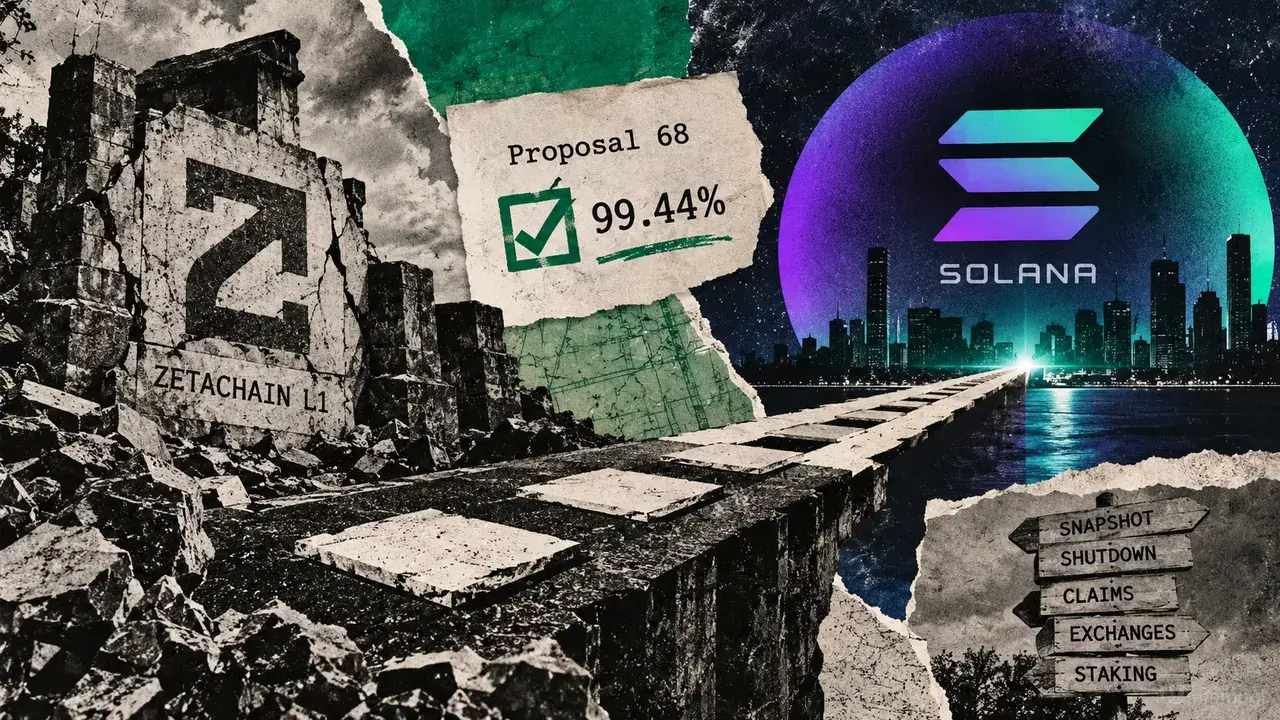
ZetaChain, a project focused on connecting different blockchains, has made a significant strategic decision to retire its standalone blockchain and migrate ZETA to Solana. The move comes as ZetaChain shifts its focus towards developing private AI applications.
The decision to migrate was approved through on-chain governance in Proposal 68, with an overwhelming majority of 99.44% of ballots supporting the move. This approval gives core contributors the mandate to begin preparations for the migration. However, it’s important to note that the vote does not immediately transfer tokens or shut down the existing network.
ZetaChain’s decision to move away from its own Cosmos SDK-based layer-1 blockchain is driven by the project’s increasing focus on Anuma, a private multi-model AI application built around a Private Memory Layer. The project believes that maintaining its own blockchain no longer aligns with its goal of developing AI applications efficiently. Operating a Cosmos-based network requires significant coordination and resources, which the project now wants to redirect towards developing Anuma and the AI application layer.
The migration to Solana is seen as a strategic move that will allow ZetaChain to leverage Solana’s infrastructure for faster transaction speeds, lower fees, and access to a larger ecosystem for AI applications. The project has seen significant growth with Anuma, attracting over 300,000 users since February and processing more than 1 million requests across 35 AI models. By migrating to Solana, ZETA holders will have access to a more robust trading and payments ecosystem.
As part of the migration, native ZETA balances on ZetaChain will be converted 1:1 into a Solana-native SPL token under the same ticker. The total token supply will remain unchanged, and no additional tokens will be created. ZETA will now serve as an access token for AI products within the ZetaChain ecosystem, rather than primarily functioning as the asset for an independent proof-of-stake network.
The next steps in the migration process will depend heavily on centralized exchanges that list ZETA. The project will submit a follow-up governance proposal after exchanges confirm their support for the migration. This proposal will outline the specifics of the migration process, including the withdrawal window for assets connected to ZetaChain, snapshot and halt heights, exchange-held balance conversions, and validator wind-down procedures.
Overall, ZetaChain’s decision to migrate to Solana represents a significant shift in strategy as the project focuses on developing private AI applications. The migration will enable ZETA holders to access a more robust ecosystem and infrastructure, while also streamlining the project’s operations towards AI development.