



SpaceX is headed for a public listing that could redefine how Bitcoin appears on the stock markets. The size of the IPO is more important than the size of the shares.
SpaceX has reportedly filed a confidential filing for an initial public offering with the U.S. Securities and Exchange Commission (SEC), a move that would bring Elon Musk’s rocket and satellite company closer to what could be the biggest stock market debut in U.S. history.
According to reports, the company is looking to raise as much as $75 billion at a valuation of around $2 trillion, with a stock market listing as early as June. This would make the IPO more than three times higher than the largest American IPO to date.
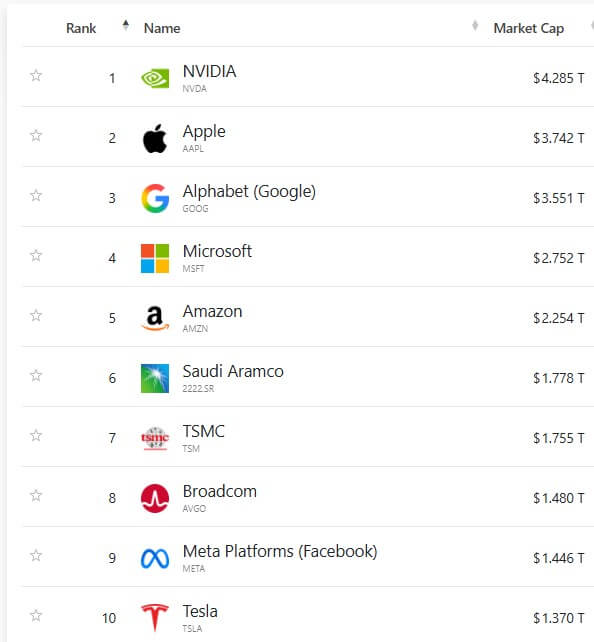
At that level, the IPO would also make the company one of the ten largest companies in the world by market capitalization.
Why this is important: This would mark a shift in the way Bitcoin enters the public markets. Until now, exposure has largely come through companies built around owning the asset. A listing at SpaceX would introduce Bitcoin to one of the largest industrial and infrastructure companies in the world, changing the context in which investors interact with it.

Launched in 2022, SpaceX sits at the intersection of commercial space, communications, defense and infrastructure.
In recent years, the company has become the dominant force in commercial launches, NASA’s top launch partner, and operator of Starlink, the satellite broadband network that has become central to its broader valuation.
That would give investors exposure to a company with a much broader base than most recent market debuts.
The most valuable publicly traded company with Bitcoin
Aside from the size of the deal, a listing with SpaceX could create the most valuable publicly traded company with Bitcoin on its balance sheet.
Data from BitcoinTreasuries.com shows that the company holds 8,285 Bitcoin, worth $569.5 million on its balance sheet. The company is currently the fourth largest private company holder of BTC.
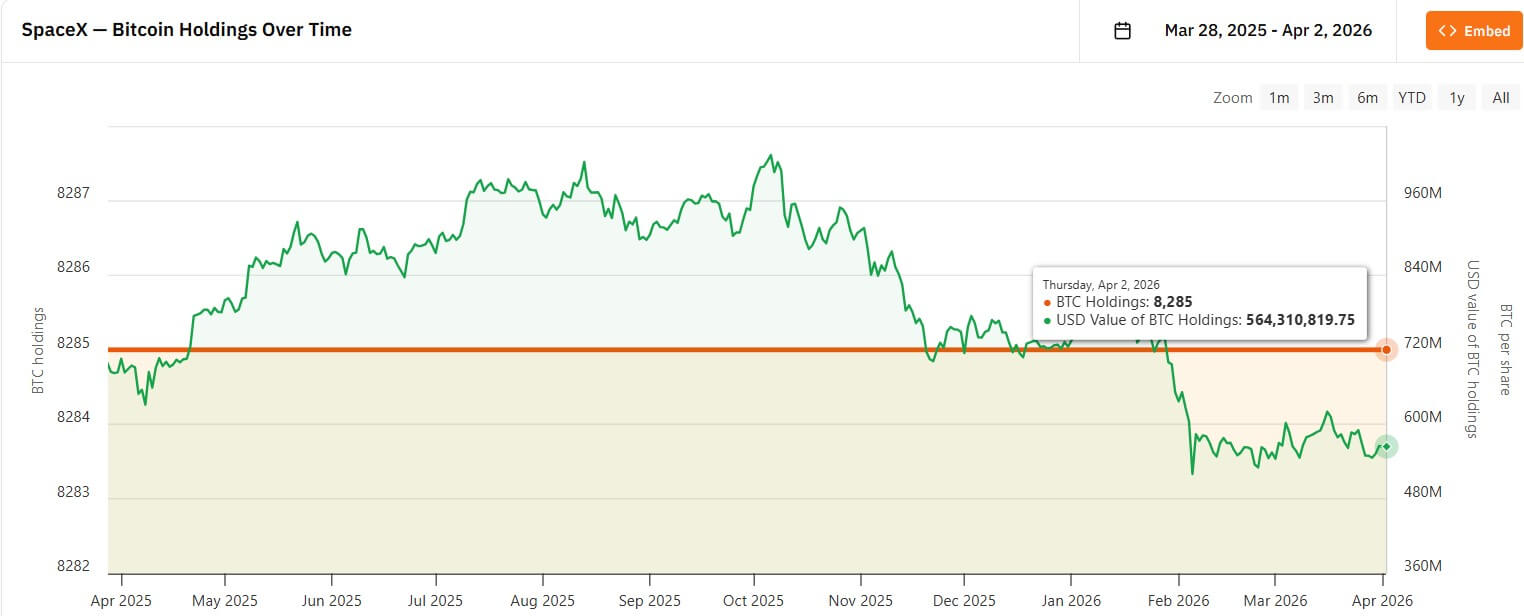
If SpaceX’s public filings confirm these stakes, the company would thus overtake another Musk-led company, Tesla. Tesla currently owns over 11,000 Bitcoin and remains the most valuable publicly traded company known to own the token. The automaker is currently valued at $1.37 trillion.
With a planned valuation of $2 trillion, SpaceX would overtake Tesla in market value even if it held fewer coins.
Over the past year, the market has seen an avalanche of public companies introducing Bitcoin to their balance sheets. This is a model popularized by Michael Saylor’s Strategy, who is currently the largest public Bitcoin holder with 762,099 Bitcoin.
However, SpaceX’s shares would not trade like those of Strategy or other Bitcoin holdings.
The strategy’s equity model is built around Bitcoin accumulation, capital raising and the price of the token. SpaceX would go public as a launch, satellite and defense company that happens to own Bitcoin.
The numbers make that clear. SpaceX’s reported Bitcoin stash is worth approximately $569.5 million, which translates to less than 0.03% of its $2 trillion valuation.
Such a valuation is too low to make the stock a Bitcoin proxy. However, it is large enough to become part of the company’s public identity.

Would private investors benefit from the IPO?
The answer is probably yes, but mainly because of what SpaceX is, and not because of the Bitcoin on its balance sheet.
Reports indicate that retail investors would get significant exposure to the IPO, with allocations of up to 30% of the shares and possibly without the standard six-month lock-up.
If that structure holds, it would give ordinary investors access to one of the most sought-after private companies in the world on unusually favorable terms for a deal of this size.
That retail angle would drive demand, and the Bitcoin connection would add a new layer of interest, especially among crypto investors who are already closely following Musk, Tesla and government bond companies.
But the core draw would lie elsewhere. Investors would buy into the dominant launch franchise in the commercial space, the Starlink network, and into a company whose footprint extends into defense and communications.
The stock would be attractive because of its size, strategic relevance and scarcity value, not because there is 8,285 Bitcoin on the balance sheet somewhere.