
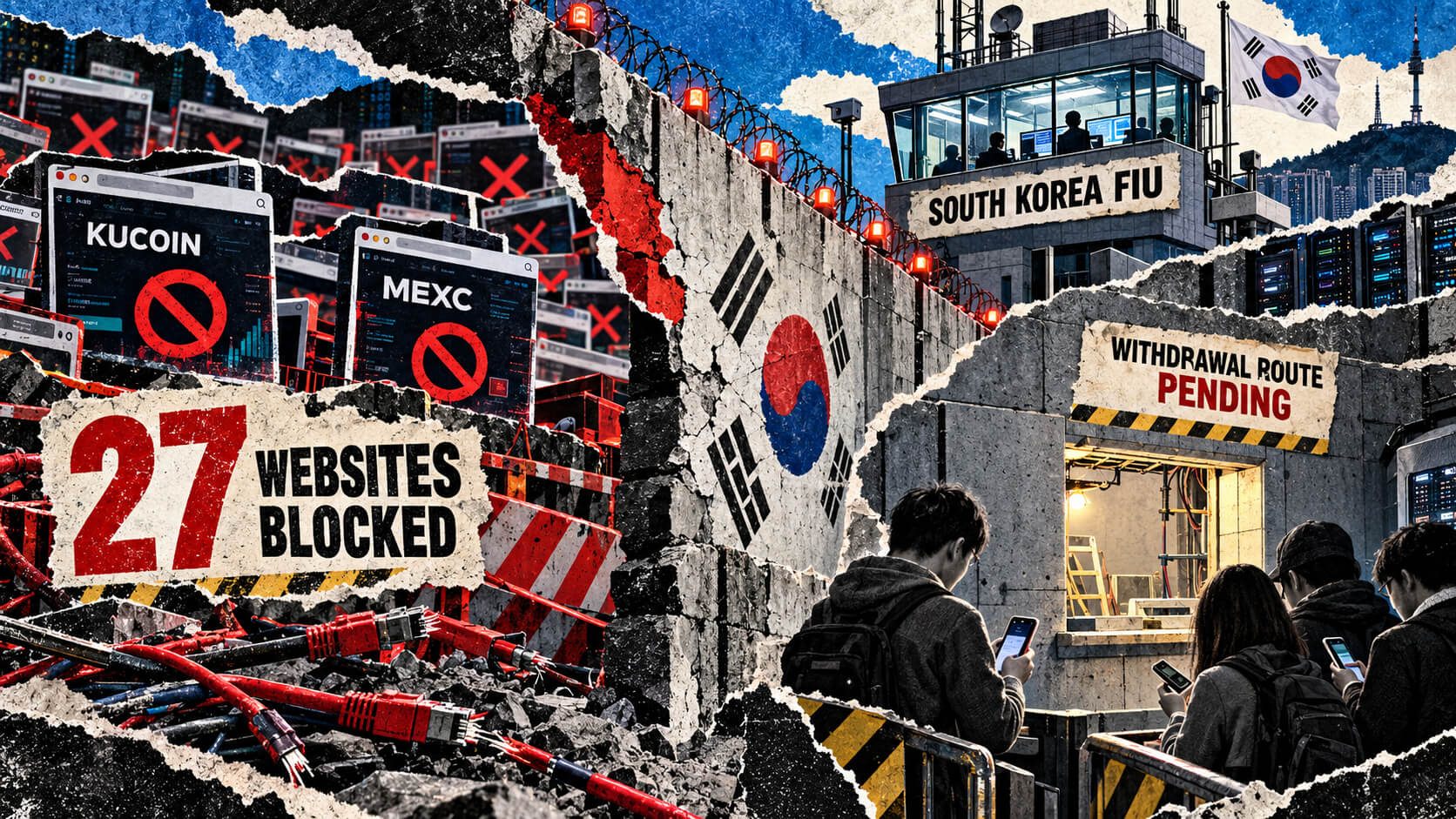
South Korea has recently taken a firm stance against unregistered crypto operators by ordering the blocking of domestic access to 27 cryptocurrency websites, including popular platforms like KuCoin and MEXC. This move is part of the country’s efforts to crack down on unauthorized exchanges and ensure that all providers serving Korean customers adhere to registration requirements.
The Financial Intelligence Unit (FIU) of South Korea disclosed the decisions on October 13, following deliberations by the country’s communications standards regulator on October 6-7. The FIU emphasized that foreign crypto providers catering to Korean users must meet the same registration standards as domestic businesses. This includes certification under Korea’s Information Security Management System (ISMS) and compliance with regulations related to Korean-language websites, marketing targeting Korean users, and support for local currency payments.
App marketplaces have already taken steps to block new installations and updates for unregistered operators, as announced by the FIU. In a previous move on March 26, 2025, South Korea restricted 17 Google Play apps, including KuCoin and MEXC. The FIU has been actively pursuing website restrictions in addition to app-market actions.
While these measures are aimed at preventing unregistered operators from conducting business in South Korea, they may also impact existing users who hold assets on these platforms. The website blocks could potentially interfere with users’ ability to access their accounts and initiate withdrawals. The FIU acknowledged that this could lead to withdrawal restrictions and inconvenience for current customers.
To address these concerns, the FIU plans to work with DAXA, a Korean exchange industry group, to provide detailed withdrawal methods and procedures for affected users. However, the timeline for implementing these measures and the specific withdrawal routes for platforms like KuCoin and MEXC have not been confirmed yet. Users are advised to withdraw their assets immediately after identifying an unregistered operator and to avoid sharing sensitive information like private keys or login credentials.
Authorities in South Korea are committed to monitoring substitute website addresses and taking further action if operators attempt to continue business under different domains. This proactive approach aims to protect consumers and maintain the integrity of the country’s crypto market.