
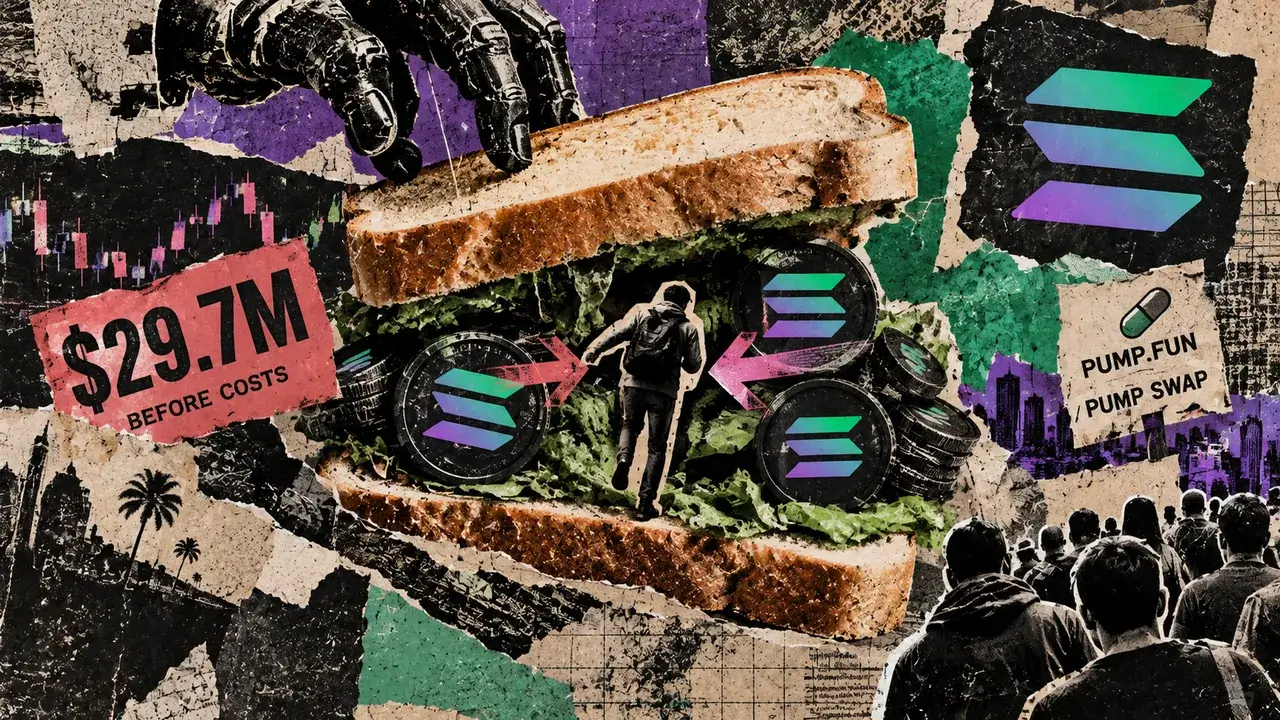
Sandwich attacks on the Solana network have resulted in approximately $29.7 million being extracted over an 11-month period, according to data from Bitquery. These attacks primarily targeted memecoin platform Pump.fun’s launch curve and PumpSwap exchange, accounting for 96% of the detected incidents.
The investigation conducted by Bitquery revealed that a total of 6,850,144 attacks were carried out by 2,545 bot wallets, impacting 2,154,994 distinct wallets between October 30, 2025, and October 7, 2026. It is important to note that the wallet addresses do not directly correspond to individual users, as some of the trades were executed by other bots on behalf of different entities.
Sandwich attacks involve a bot strategically placing buy and sell orders around a trader’s swap transaction. By manipulating the pool price, the bot is able to profit from the price difference between the initial purchase and subsequent sale. This results in the trader receiving fewer tokens than expected, ultimately leading to financial losses.
Bitquery’s analysis also revealed that trades with higher slippage tolerance, allowing for price deviations of 20%–50%, were targeted significantly more than those with lower tolerance levels. Slippage tolerance determines how much the execution price can deviate from the quoted price, with wider tolerances potentially resulting in more significant price discrepancies.
Despite the observed patterns, the report highlighted that not all trades with wider slippage tolerance settings were targeted uniformly. Trades with slippage tolerance below 0.5% were more frequently attacked compared to those with tolerance levels between 1% and 3%. Interestingly, trades with slippage tolerance of 50% or more were targeted less frequently than those with 20%–50% tolerance.
The estimated $29.7 million figure represents the value of Solana tokens at the time of each attack and does not account for net profits. Bitquery’s analysis of a sample of 63 attacks revealed that bots retained 68% of the gross proceeds, with some attacks resulting in losses after factoring in costs. However, this sample does not provide a comprehensive view of the overall profitability of the bots over the entire period.
In conclusion, sandwich attacks on the Solana network have highlighted the vulnerabilities in decentralized exchanges and the need for better security measures to protect traders from such malicious activities. The findings underscore the importance of monitoring trading patterns, setting appropriate slippage limits, and implementing robust security protocols to safeguard users’ assets.