
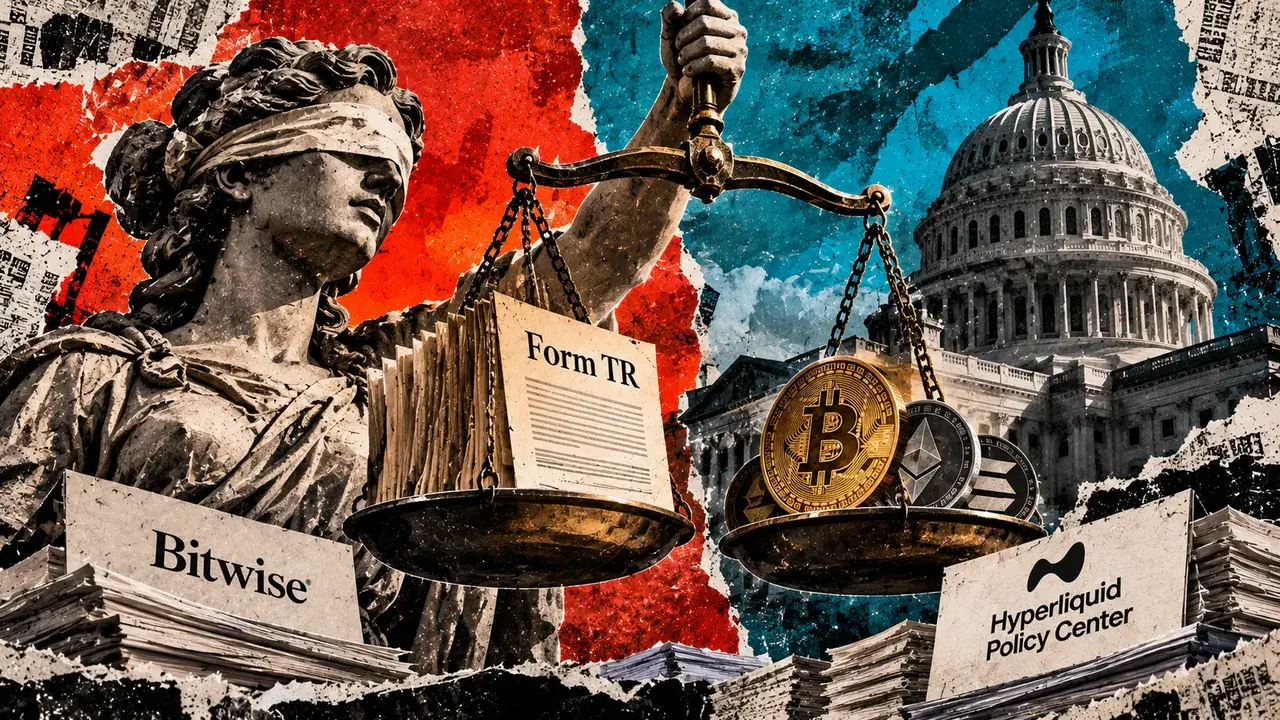
US banks have issued a warning regarding the potential impact of proposed SEC crypto exemptions on deposits, as investment managers advocate for broader access to digital assets. The SEC’s proposed Regulation Crypto Assets, which had a comment deadline on October 20, has sparked divisions within the industry on how regulations should be eased for cryptocurrency fundraising and investment.
The proposal, published on August 21, would allow qualifying crypto projects to raise up to $5 million over four years or $75 million annually without registering their investment-contract offerings under the Securities Act. Issuers would still be required to adhere to disclosure requirements and federal antifraud provisions. Additionally, a conditional safe harbor would be established for crypto assets to cease being subject to investment contracts once issuers complete or permanently abandon promised essential managerial work and file a transition report with the SEC.
Various stakeholders, including Bitwise, Nasdaq, the Alternative Investment Management Association, community banks, and investor advocates, have submitted comments with differing priorities that could influence the final regulations.
Bitwise, an asset manager, is advocating for easier determination of which cryptocurrencies can be held in investment products. They propose relying on issuers’ public transition reports after an SEC review period expires without challenge, and seek protection for good-faith reliance in case regulators dispute an issuer’s classification.
The Alternative Investment Management Association is pushing for the safe harbor to be extended to investment adviser and fund regulations, while also calling for clearer custody requirements and resale protections to ensure consistency in acquiring, holding, and disposing of digital assets.
Hyperliquid Policy Center is advocating for protection for crypto projects that are still under development, rather than requiring issuers to complete or abandon their promised work first.
Nasdaq has endorsed the framework but suggested that tokenized versions of traditional securities should not be included in the exemptions, to maintain existing registration, disclosure, and trading requirements.
On the other hand, the Independent Community Bankers of America has raised concerns about potential deposit flight from smaller banks due to easier crypto issuance, which could accelerate stablecoin adoption. They argue that this could concentrate customer funds at stablecoin issuers, exchanges, and large reserve banks, increasing funding costs for community banks and reducing lending capacity.
Investor advocates like Public Citizen, John Reed Stark, and Lee Reiners have taken a critical stance, urging the SEC to abandon the proposal. They argue that the exemptions would encourage speculative fundraising and weaken protections for retail investors, and question the SEC’s statutory authority to create such exemptions.
The SEC will now review the submissions and decide on potential revisions to the offering thresholds, investor disclosures, and economic analysis before finalizing the rules. Any decision to proceed without addressing statutory objections could lead to legal challenges in federal courts, potentially delaying the implementation of the exemptions and the proposed pathway for tokens to exit investment-contract treatment.