
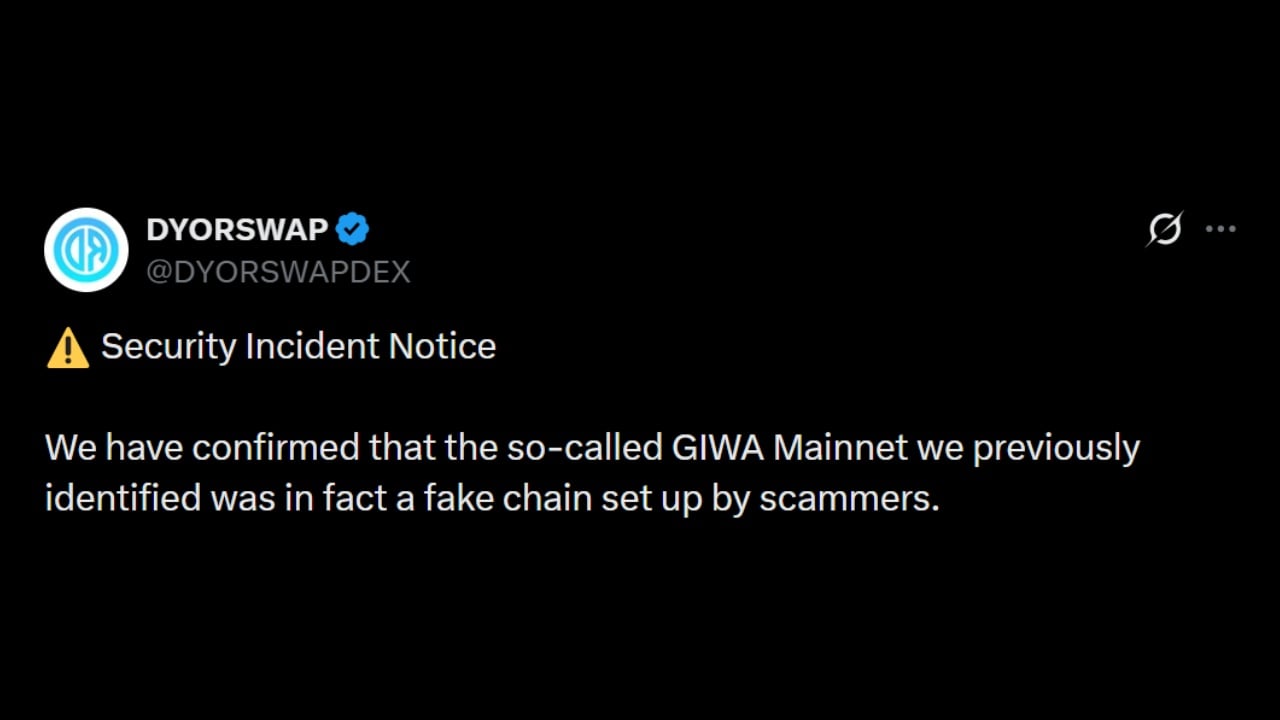
The recent deployment of a fake Ethereum L2 solution has caused significant losses for over 1,300 users who bridged their funds to the fraudulent chain. The scam, which masqueraded as the GIWA mainnet backed by Upbit, saw approximately 766 ETH (equivalent to over $2 million) drained from unsuspecting users.
Initially identified by DYORSWAP, a decentralized exchange (DEX), the fake chain used the Chain ID number 9134 and lured early adopters with promises of lucrative financial opportunities. Contrary to initial beliefs that it was a simple replication of an ETH address, DYORSWAP confirmed that the scam involved a complex infrastructure including an OP stack-style setup, a bridge, and a batcher, indicating a high level of sophistication.
The theft occurred after users bridged their funds to the fake chain, with real-time transactions such as buys, sells, and token launches taking place before the funds were siphoned off. DYORSWAP issued a warning urging users to avoid using any unofficial GIWA Mainnet RPC, bridge, or contract, and refrain from sending funds to related addresses.
Following the incident, the legitimate Giwa project clarified that they had not launched their mainnet and disavowed any association with the fraudulent chain. Despite this, DYORSWAP initiated a reimbursement process for affected users, utilizing its own funds to compensate victims and vowing to investigate and trace the attacker’s addresses.
While DYORSWAP’s efforts to rectify the situation are commendable, some users criticized the platform for enabling the scam by promoting the fake chain and facilitating fund bridging. This incident underscores the ongoing security challenges faced by both centralized and decentralized platforms in the cryptocurrency space, highlighting the need for heightened vigilance among crypto holders.
As the crypto community remains vigilant against such scams, it serves as a reminder of the importance of conducting thorough due diligence before engaging with new projects or platforms. Stay informed, stay cautious, and protect your assets in the ever-evolving landscape of cryptocurrency.