
Saudi Arabia just crossed a major threshold in real-world asset tokenization – and did so without outsourcing control of its legal system.
—
The kingdom has completed the world’s first end-to-end tokenized title deed transaction using droppRWA’s sovereign infrastructure. A settlement that once took days was reduced to seconds – while ownership, compliance and legal enforceability remained fully entrenched in the Saudi state.
Register as truth, no digital packaging
What makes this transaction different from previous “tokenized real estate” experiments is where authority lives.
The Kingdom integrated its Real Estate Registry (RER) directly into the transaction layer, meaning that the blockchain did not sit next to the registry, but was run in parallel with it. Ownership transfers, compliance checks, and the handling of delivery versus payment were all coded into the infrastructure itself.
In practice, this transforms Saudi real estate from a traditionally illiquid asset class into programmable, investable infrastructure – while keeping the keys to the national registry firmly in sovereign hands.
How the transaction worked
The transaction was conducted between the National Housing Company (NHC) and the Real Estate Development Fund (REDF), two cornerstone institutions in Saudi Arabia’s housing ecosystem.
Using the droppRWA infrastructure:
A tokenized title deed was issued and cryptographically linked to the official RER record
A separate ownership interest token enabled legal transferability
Compliance rules were embedded directly into the transfer logic
Settlement took place via a stable delivery-versus-payment mechanism, which ensures atomic, secure execution
The result: immediate settlement with full legal enforceability.
A Vision 2030 moment
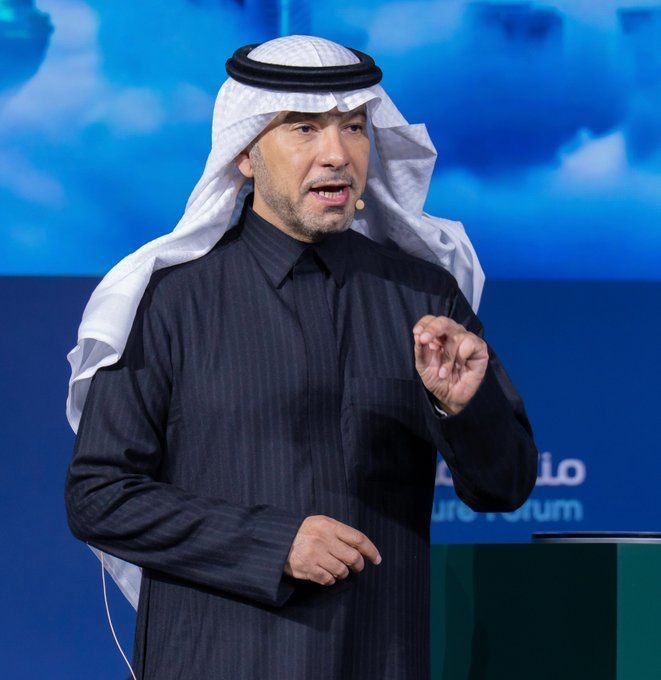
The transaction was completed under the patronage of Majed Al-Hogail, Minister of Municipalities and Housing of Saudi Arabia, and is directly aligned with Vision 2030’s objectives around digital infrastructure, foreign investment and capital market modernization.
“Saudi Arabia is building a real estate sector that is inherently digital. By linking transactions directly to official documents from the start, it will increase participation, strengthen FDI confidence, improve liquidity and enable new PropTech innovation.”
Majed Al-Hogail, Minister of Municipalities and Housing of Saudi Arabia
Unlike jurisdictions that have introduced regulatory frameworks but left implementation fragmented, Saudi Arabia has implemented technical code at the registry level – a first for any G20 economy.
Skipping the era of the ‘digital wrapper’
According to Faisal Al-Monai, CEO of droppRWA, this is exactly the point.
“Our goal is to help Saudi Arabia skip the ‘digital packaging’ era that other markets are stuck in,” Al-Monai said. “By embedding enforceability into assets at source, we are creating a new category of government bonds – and the industrial engine that enables Saudi’s multi-trillion dollar real estate pipeline to be accessible to global institutional capital with absolute legal certainty.”
Faisal Al-Monai, CEO of droppRWA
Rather than retrofitting blockchain into legacy processes, droppRWA’s model encodes legislation, compliance, settlement and registration authority directly into the infrastructure.
What comes next
Following this successful implementation, the infrastructure is expected to be rolled out more broadly across Saudi Arabia’s multi-trillion dollar real estate pipeline, including designated investment zones.
While regions such as Britain, the EU and Singapore have laid the groundwork for regulation, Saudi Arabia is the first to implement registry-based tokenization on a national scale, transforming real estate into a liquid, programmable asset class without giving up sovereignty.