
TL; DR
- Ripple enters the execution phase with Mastercardshifting blockchain settlement from pilots to live card payment flows using $RLUSD on the $XRP General ledgerwhere transactions are settled in seconds instead of days.
- Mastercard confirms that stablecoins function as a native settlement tool within its regulated network Consumers’ payment experiences have remained unchanged while modernizing back-end infrastructure.
-
The rollout starts with the Gemini credit card issued by WebBanksignaling wider institutional adoption of on-chain settlement via regulated financial rails.
Ripple enters execution phase with Mastercard marks a transition from experimentation to operational deployment in global payments. The collaboration places blockchain settlement directly within card networksan area traditionally dominated by slow interbank clearing. For the cryptocurrency This development strengthens the role of this sector distributed ledgers as core financial infrastructure instead of assistive technology.
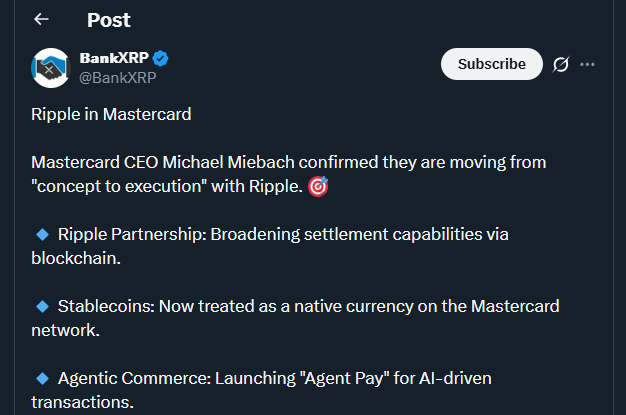
The move follows a pilot launched in 2011 end of 2025 and comes in live performance in February 2026. Mastercard executives confirm this real credit card transactions are now working on it blockchain infrastructure instead of batch-based clearing systems. The process continues invisible to consumerswho continue to tap or swipe as usual The settlement mechanism evolves behind the scenes.
Ripple enters execution phase with Mastercard and live card settlement
Located in the middle of the system $RLUSDRipple’s regulated stablecoinworking on the $XRP General ledger. Once Mastercard authorizes a transaction and completes credit checks, settlement takes place in the chain within a few seconds. This replaces clearing cycles that often extend one to three days between financial institutions.
The Gemini credit cardpublished by WebBankis the first product to run on this structure. WebBank’s role as a FDIC-insured institution provides and safeguards regulatory supervision blockchain settlement is in line with US banking standards. Mastercard maintains compliance checks consistent with existing card ruleswhere cryptorails are integrated without making any changes consumer protection.
Mastercard leadership frames the partnership as part of a broader resolution strategy. Stablecoins are now treated as their own settlement currency within the network, which means efficiency gains while it is preserved regulatory certainty. In addition to these efforts, Mastercard continues to promote initiatives such as Pay agentthat supports AI-powered transaction execution within established payment frameworks.

Institutional adoption and momentum for settlement in the chain
Ripple Reports steady growth $RLUSD circulationdriven by demand payment and settlement use cases. The offer exceeded $1.3 billion by January 2026due to increased institutional comfort with regulated stablecoins. Company executives estimate that by the end of 2026between 5 and 10% of capital market settlements operate on the chainsupported by comparable enterprise implementations.
This execution phase reflects a broader industrial direction. Financial institutions increasingly integrate blockchain technology into existing systems instead of building crypto-only parallel rails. As Mastercard expands settlement in the chain And agentic trading instrumentsRipple’s infrastructure positions itself as one connection layer between traditional financial and crypto-native networkspointing to deeper integration into global payment transactions.