
In the United States, people are concerned about rising electricity bills. From the tech hubs of Northern Virginia to small towns in Texas, residents are showing up at local rallies to protest new data centers.
Many believe that the digital economy is now directly hurting their wallets. In response, politicians are rushing to propose new regulations and taxes on energy-hungry industries.
But they miss an important truth. While public anger focuses on Bitcoin [BTC]most of the network pressure now comes from fast-growing AI data centers.
According to crypto investment company ParadigmBitcoin is mainly blamed for being unpopular and misunderstood.
In reality, however, Bitcoin works very differently from AI, and rising energy prices won’t be solved by targeting the wrong industry.
Paradigm noted the same about this:
“Policymakers should use bitcoin mining as a tool, not a threat. And if you’re worried about crypto having a bad impact on energy consumption, these aren’t the droids you’re looking for.”
Perception versus reality
Senate Democrats, groups like Earthjustice, and some media reports blame crypto mining for high electricity costs, with some even comparing Bitcoin’s energy consumption to entire countries.
But the data tells a different story. Bitcoin uses only about 0.23% of global electricity and produces about 0.08% of global emissions, far less than many industries.
At the same time, AI data centers are expected to double or triple their energy consumption by 2028.
Bitcoin’s energy consumption is also limited by design. Past claims that the Earth would consume more energy than the planet were wrong; in 2020 it used only 0.046% of global energy.
Why Bitcoin Helps the Power Grid, While AI Strains It
The main difference between Bitcoin mining and AI data centers is flexibility.
AI centers need constant power and cannot afford outages. However, Bitcoin miners use cheap electricity and shut down when prices rise.
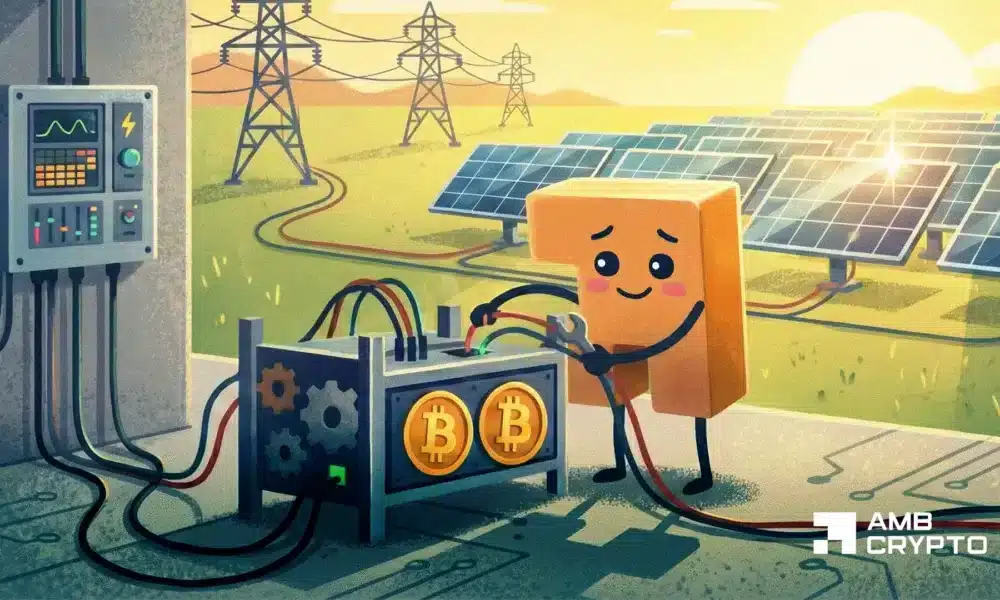
They operate primarily during low-demand hours, use additional renewable energy, and shut down during emergencies to support the electrical grid. In Texas, this even reduced network support costs by 74% in one year.
Overall, Bitcoin is adapting to the network, while AI data centers are putting constant pressure on it.
Bitcoin mining data looks positive
Meanwhile, after a big drop in mining revenues in late January, the industry has already started to recover in February.
There was a brief dip over 24 hours, when sales dropped from $43.00 on February 15 to $37.60 on February 16. Still, the overall trend for the month remains upward.

Source: Glassnode
A longer-term cooling also fits with these short-term ups and downs. Bitcoin mining woes have been steadily declining since hitting an all-time high in November 2025.

Source: Glassnode
As the difficulty decreases, miners require less computing power and less energy to operate. This reduces the pressure on the electricity grid during this period.
With Bitcoin trading at levels that threaten miners’ profitability and revenues facing new 24-hour declines, the industry is entering a strategic battle for survival.
Instead of increasing energy demand, miners can stabilize the grid by turning off their energy or shifting it to AI infrastructure that drives up prices.
Final summary
- Unlike AI centers that require constant power, Bitcoin miners are flexible and can shut down when electricity is scarce or expensive.
- Targeting Bitcoin with strict regulations could weaken one of the few industries actively helping to balance the power grid.