
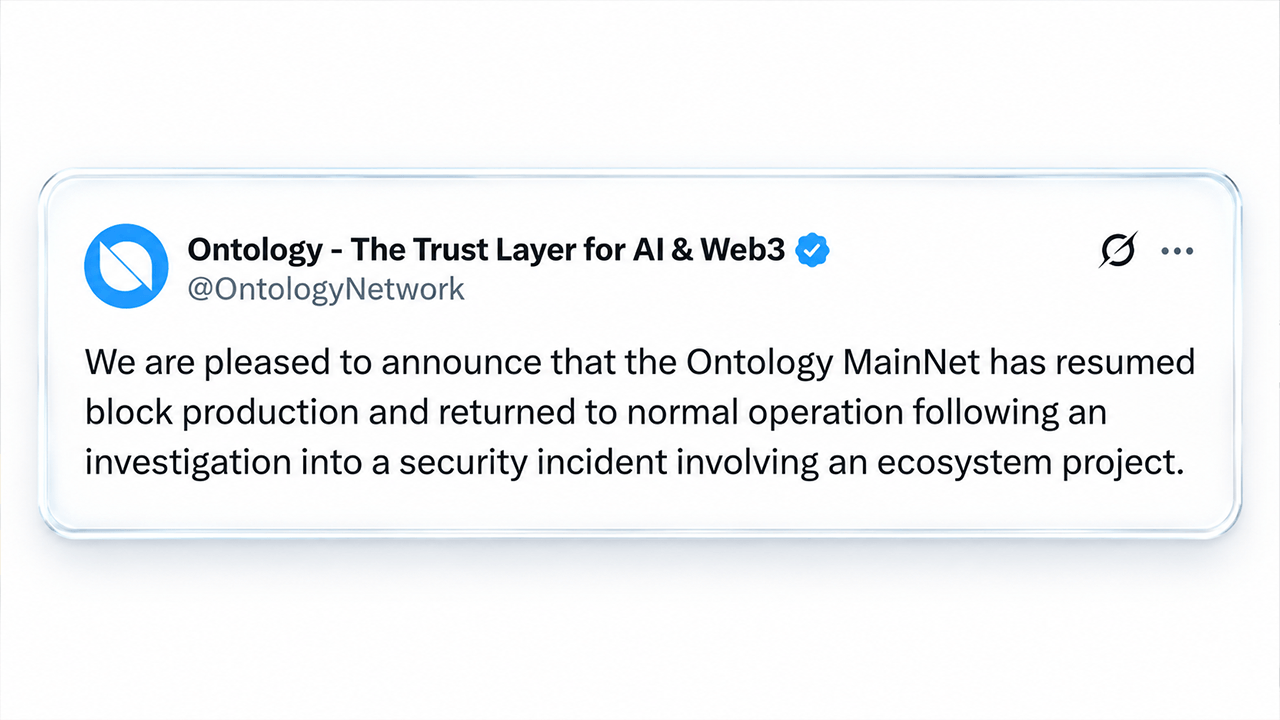
The Ontology blockchain recently faced a security warning that led to a temporary halt in block production. The incident occurred on Saturday, October 10, when Ontology announced that a security report had raised concerns about a project operating on its blockchain. As a precautionary measure, the team coordinated with consensus nodes and suspended block production, effectively stopping the addition of new transactions to the blockchain.
During the 41-hour interruption, exchanges such as Bitget and Coinone suspended deposits and withdrawals involving Ontology-network assets. Despite the disruption, Ontology reported no network-level losses. However, the identity of the affected ecosystem project was not disclosed, leaving many questions unanswered.
Following an investigation, Ontology confirmed that mainnet block production had resumed and that no funds were lost from the Ontology network itself. The network’s core infrastructure was deemed secure, but the status of the unidentified ecosystem project and its users remained unclear.
Ontology’s use of the Verifiable Byzantine Fault Tolerance (VBFT) consensus system allowed participating nodes to collectively halt the network in response to perceived risks. This mechanism played a crucial role in mitigating potential threats and ensuring the overall security of the blockchain.
Interestingly, this was not the first time Ontology experienced a security-related shutdown. In August, the blockchain suspended production due to confirmed malicious activity targeting the network. Similar incidents have occurred on other networks like Cronos, ICON, Injective, and MultiversX, highlighting the importance of robust security measures in the blockchain industry.
While Ontology has successfully restored its blockchain operations, the lack of detailed information about the incident raises concerns about transparency and accountability. The public is still waiting to learn more about the project that triggered the emergency shutdown and the measures taken to prevent future security breaches.
Overall, the Ontology blockchain’s resilience in the face of security challenges underscores the importance of proactive risk management and transparent communication in the crypto space. As the industry continues to evolve, maintaining a strong security posture will be crucial for ensuring the trust and confidence of users and investors. The COVID-19 pandemic has drastically changed the way we live our lives. From wearing masks in public to practicing social distancing, the virus has forced us to adapt to new norms in order to protect ourselves and our loved ones. One of the most significant changes brought about by the pandemic is the shift towards remote work.
Remote work, also known as telecommuting or working from home, has become the new standard for many businesses and organizations around the world. With the need to limit the spread of the virus, companies have had to quickly pivot to remote work in order to keep their employees safe while still maintaining productivity.
There are many benefits to remote work, including greater flexibility, reduced commuting time, and improved work-life balance. Employees have the freedom to work from anywhere, whether it’s from the comfort of their own homes or while traveling. This flexibility allows workers to better manage their time and responsibilities, resulting in increased job satisfaction and overall well-being.
Furthermore, remote work has also proven to be cost-effective for businesses. With employees working from home, companies can save money on office space, utilities, and other overhead expenses. This has led to increased profitability for many organizations, as well as the ability to attract top talent from around the world.
However, remote work also comes with its challenges. One of the biggest concerns for employers is maintaining communication and collaboration among remote teams. Without the ability to meet face-to-face, it can be difficult to ensure that everyone is on the same page and working towards a common goal. To address this issue, many companies have turned to virtual meetings and collaboration tools to keep their teams connected and engaged.
Another challenge of remote work is the potential for burnout. With the boundaries between work and home life blurred, some employees may find it difficult to disconnect and take breaks. This can lead to increased stress and decreased productivity in the long run. To combat burnout, it’s important for employees to establish a routine, set boundaries, and prioritize self-care.
As the world continues to navigate the challenges of the COVID-19 pandemic, remote work is likely here to stay. While it may not be the ideal situation for everyone, it’s important for both employers and employees to adapt to this new way of working in order to stay safe and productive. By embracing the benefits of remote work and addressing its challenges, we can create a more resilient and flexible workforce for the future.