
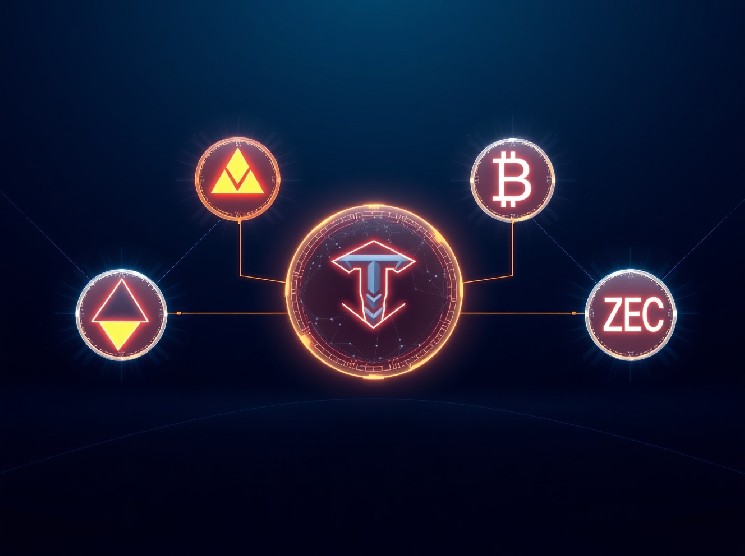
In a major development for decentralized finance, cross-chain liquidity protocol THORChain has announced plans to integrate the mainnets of three prominent yet distinct cryptocurrencies: Monero ($XMR), Bittensor ($TAO), and Zcash ($ZEC). This strategic expansion, detailed in an official blog post, aims to bridge significant liquidity gaps and connect diverse blockchain ecosystems within the next two months. This move marks a significant step toward a more interconnected and functionally rich decentralized financial landscape, directly addressing the community’s long-standing demand for native support of privacy-preserving and AI-driven digital assets.
THORChain’s strategic roadmap for Mainnet integration
THORChain’s development team has outlined a clear, phased technical roadmap for this ambitious integration. According to the announcement, the Monero chain customer has already successfully passed rigorous simulation tests. Therefore, the team has planned a developmental merger for the $XMR integration within the next two weeks. Following this crucial merger, the protocol will undergo an extensive stagenet testing phase of two to four weeks. This testing period is essential for identifying and resolving potential edge cases in a controlled environment before deploying to the mainnet. Parallel development for Bittensor and Zcash integrations is progressing simultaneously, with similar testing protocols expected. This structured approach underlines THORChain’s commitment to security and reliability, a cornerstone of its operating philosophy since its inception.
The integration process involves creating secure, least-trust bridges for each new asset. THORChain does not use wrapped or synthetic versions; instead, it enables direct, native swaps between chains. This requires the development of specialized on-chain clients that can securely verify transactions and manage liquidity pools for each new blockchain. The protocol’s unique Continuous Liquidity Pools (CLPs) and Threshold Signature Scheme (TSS) for securing assets are being adapted to accommodate the specific cryptographic and consensus mechanisms of Monero, Bittensor and Zcash. This technical depth ensures that users can trade these assets directly without relying on centralized intermediaries or custodians.
Technical and market implications of the expansion
From a market perspective, this expansion leverages three substantial, but previously separate, liquidity pools. Monero and Zcash represent the vanguard of privacy-focused cryptocurrency, while Bittensor is a groundbreaking project at the intersection of blockchain and decentralized artificial intelligence. By bringing these assets into its liquidity network, THORChain isn’t just adding new trading pairs; it creates fundamental economic bridges between vastly different technological paradigms within the crypto space. This could potentially unlock new use cases, such as privately procuring computing resources for AI models or deploying decentralized intelligence in financial strategies, all within a non-custodial framework.
Deep Dive: The Meaning of Monero, Bittensor and Zcash
Each of the three incoming assets brings a unique value proposition and technology challenge to the THORChain ecosystem. Understanding their core functions is key to appreciating the scope of this integration.
Monero ($XMR): Monero is the leading privacy-focused cryptocurrency, which uses advanced cryptographic techniques such as ring signatures and stealth addresses to obscure transaction details. Its integration is particularly complex due to the opaque blockchain, which poses challenges to the transparent verification required in cross-chain protocols. THORChain’s solution is likely to include verifying evidence related to transaction outputs without compromising Monero’s core privacy guarantees, a significant technical achievement.
Bit tensor ($TAO): Bittensor operates a decentralized network where participants are incentivized to contribute machine learning models and computing resources. The original token, $TAOis used to reward these contributions and govern the network. Integrate $TAO connects DeFi liquidity to the fast-growing field of decentralized AI, making this possible $TAO holders can stake their assets in liquidity pools and enable the crypto economy to interact directly with the AI resource markets.
Zcash ($ZEC): Like Monero, Zcash offers strong privacy features through its zk-SNARKs technology, which enables shielded transactions. However, Zcash also supports transparent transactions and offers an optional privacy layer. This option may provide an easier integration path for THORChain’s verifiers, while still being suitable for users who prioritize financial confidentiality.
Impact on the broader DeFi and cryptocurrency landscape
This announcement has immediate and long-term implications for the decentralized finance sector. First, it provides legitimate, non-custodial on- and off-ramps for privacy coins, which are often delisted on centralized exchanges. Users can now switch between Bitcoin, Ethereum and other major assets $XMR or $ZEC without KYC checks, while maintaining financial sovereignty. Second, it brings tangible benefit $TAO outside its own AI network, increasing liquidity and potentially attracting new participants to the Bittensor ecosystem. For THORChain itself, this move significantly expands the total addressable market and strengthens its position as the leading decentralized cross-chain swap protocol. The integration demonstrates the protocol’s adaptability and could set a precedent for future support of other specialized blockchains.
Expert analysis of safety and regulatory considerations
Industry observers note that while technically impressive, integrating privacy coins comes with nuanced considerations. THORChain’s model is based on a decentralized network of node operators managing chain clients. Asset safety, especially for complex chains like Monero, depends on the robustness of these customers and the economic security of the nodal bond. Furthermore, the regulatory landscape for privacy-enhancing technologies remains uncertain in many jurisdictions. However, the decentralized and permissionless nature of THORChain means that the protocol itself does not control user funds or dictate usage, positioning it as a neutral infrastructure layer. The successful integration and secure operation of these assets could serve as a powerful case study for the viability of decentralized, cross-chain privacy and specialized asset liquidity.
Conclusion
THORChain’s planned integration of Monero, Bittensor, and Zcash mainnets represents a pivotal moment for cross-chain liquidity. By addressing the technical hurdles of connecting privacy-focused and AI-driven blockchains, the protocol pushes the boundaries of what is possible in decentralized finance. This expansion promises to increase liquidity, unlock new financial strategies and strengthen the interconnectedness of the multi-chain universe. As development progresses through stagenet testing towards mainnet deployment over the next two months, the crypto community will be closely watching and anticipating a more private, intelligent, and fluid future for digital asset exchanges.
Frequently asked questions
Question 1: When will Monero, Bittensor and Zcash be available for trading on THORChain?
The official timeline estimates mainnet support within the next two months. The Monero client is scheduled for a development merge in two weeks, followed by two to four weeks of stagenet testing. Bittensor and Zcash integrations are on a parallel track.
Question 2: Will THORChain use packaged versions of these assets?
No. THORChain specializes in native, non-custodial swaps. Users can trade the actual value $XMR, $TAOAnd $ZEC tokens directly from their own blockchains, without packaging.
Question 3: Why is Monero integration considered technically challenging?
Monero’s blockchain is designed to be opaque to protect privacy, making it difficult for third-party systems to transparently verify transactions. THORChain must develop a secure method for its node network to validate Monero transactions without compromising the asset’s key privacy features.
Question 4: What does this mean for Bittensor ($TAO) holders?
$TAO holders will have the opportunity to provide liquidity and exchange their tokens directly for a wide range of other cryptocurrencies (such as BTC, ETH) on a decentralized platform. This is increasing $TAO‘s utility and integrates the AI token into the broader DeFi economy.
Question 5: Are there any risks associated with using these new integrations?
As with any new blockchain integration, there is an inherent risk during the initial rollout phase. The extensive stagenet testing is intended to mitigate this. Users should always do their own research and understand that providing liquidity in new pools may involve volatility and temporary losses.