
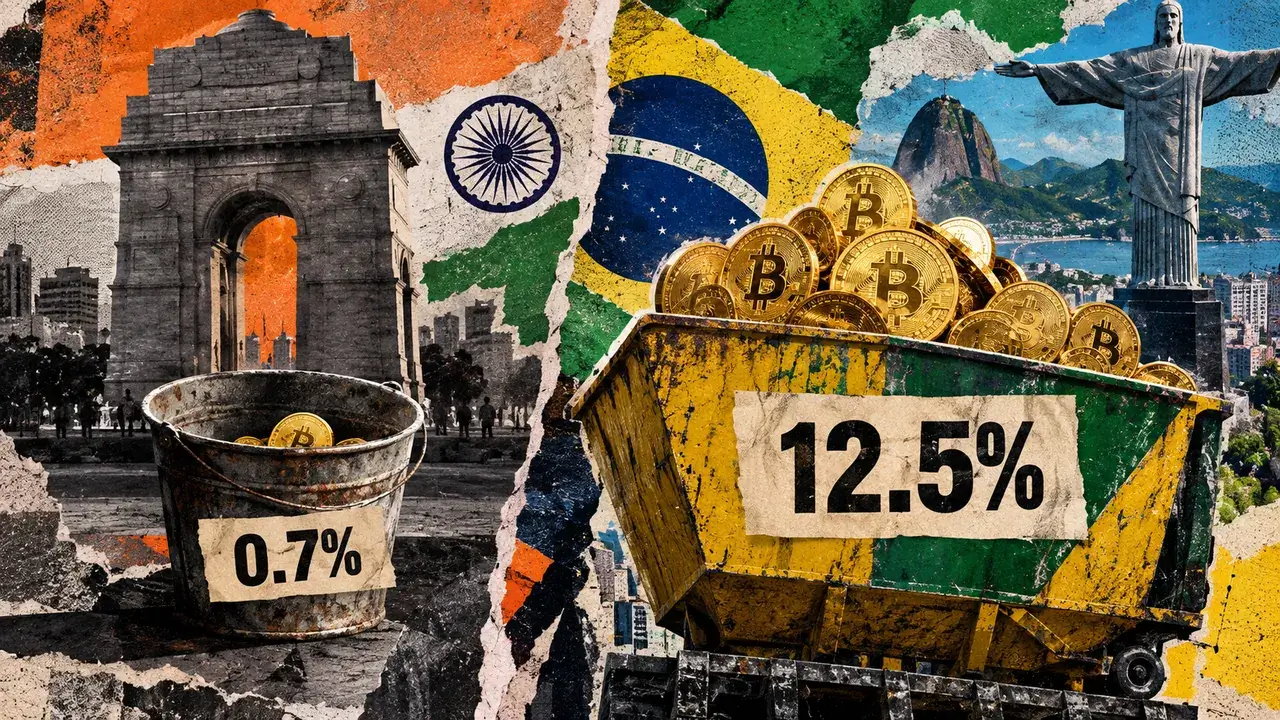
India’s cryptocurrency users are actively engaging with centralized exchanges, sending a significant amount of value to these platforms. However, a recent report by Chainalysis reveals that domestic platforms in India receive only 0.7% of the total exchange value, highlighting a stark contrast with the global market. In comparison, Brazil-based exchanges capture 12.5% of inflows, showcasing a different trend in the Latin American region.
The disparity in exchange value distribution raises important questions about the true extent of a country’s cryptocurrency adoption and the market share of its domestic platforms. While India’s transaction withholding policies may impact the cash flow available for trading, the choice of venues for cryptocurrency transactions remains a complex interplay of factors.
The findings were detailed in Chainalysis’s regional reports for Central and Southeast Asia, Oceania, and Latin America, covering the period from July 2025 to June 2026. The report attributed a staggering $88.4 billion in centralized exchange inflows to Indian users, making it the largest market in the region. However, a significant portion of this activity flows to platforms based outside the country.
The report also highlighted a drastic decline in the share of exchange value received by domestic platforms in India, dropping from around 7% to a mere 0.7%. In contrast, Brazil’s domestic exchanges saw a notable increase in their share of inflows, rising from 1.5% to 12.5%.
It’s important to note that the reported percentages reflect the value received by exchanges in Chainalysis’s analysis and do not necessarily reflect the overall business performance of these platforms. Factors such as executed trades, revenue, and customer numbers offer a more comprehensive view of a platform’s operations.
The methodology used by Chainalysis to allocate activity to user countries relies on website traffic data adjusted for income disparities based on GDP per capita. While the report provides valuable insights into the market dynamics, the exact calculation of domestic exchange shares remains undisclosed.
India’s current tax regulations, particularly section 393, impose a 1% withholding tax on consideration for virtual digital asset transfers paid to residents. This withholding can impact the immediate cash available for further trades, as the deducted amount reduces the proceeds from a transaction.
The tax exemptions under the current Act vary based on the payer and the aggregate consideration for the tax year. Understanding these exemptions and the tax credit process is crucial for traders and platforms operating in India. Foreign platforms may offer an alternative to Indian exchanges, especially for users looking to avoid withholding taxes.
In Brazil, regulatory clarity, local investment, and enhanced offerings from domestic platforms have contributed to the growth of the domestic market share. Industry experts also point to the use of corporate stablecoins for liquidity and cross-border transfers as driving factors behind Brazil’s increasing adoption.
Overall, the contrasting trends in India and Brazil’s cryptocurrency markets highlight the importance of understanding the dynamics of exchange value distribution and domestic platform participation. While India remains a significant player in the global cryptocurrency market, Brazil’s growing domestic share signifies a shift towards local platforms. Operators and users alike must consider these factors when navigating the evolving landscape of cryptocurrency trading.