
Disclosure: The views and opinions expressed here belong solely to the author and do not represent the views and opinions of crypto.news’ editorial.
On the heels of July 4th celebrations, last Friday, July 18, President Donald Trump signed the GENIUS Act into law, making it the first federal law to regulate stablecoins. Approved by Congress on Thursday, July 17, the bill’s passage saw the digital asset industry assets surge past a $4 trillion market capitalization for the first time.
Summary
- The GENIUS Act marks a turning point, becoming the first U.S. federal law to regulate stablecoins and boosting crypto’s market.
- Trump is leaning into the crypto spotlight, issuing his own stablecoin, NFTs, and memecoin, positioning himself as the “Crypto President.”
- NFTs and memecoins are fundamentally different: NFTs are unique, nonfungible assets tied to ownership, while memecoins are fungible, viral tokens driven by hype.
- Regulatory and tax treatment varies widely, with the SEC treating many memecoins as collectibles and the IRS applying up to a 28% tax on NFTs deemed collectibles.
- Expert consensus: buyer beware — memecoins can resemble gambling, while NFTs show more promise in gaming, art, and identity, but both demand careful vetting.
The GENIUS Act imposes federal and state oversight on stablecoins—digital assets backed by the U.S. dollar—transforming realms of finance forever and making President Trump the de facto crypto president of our Nation.
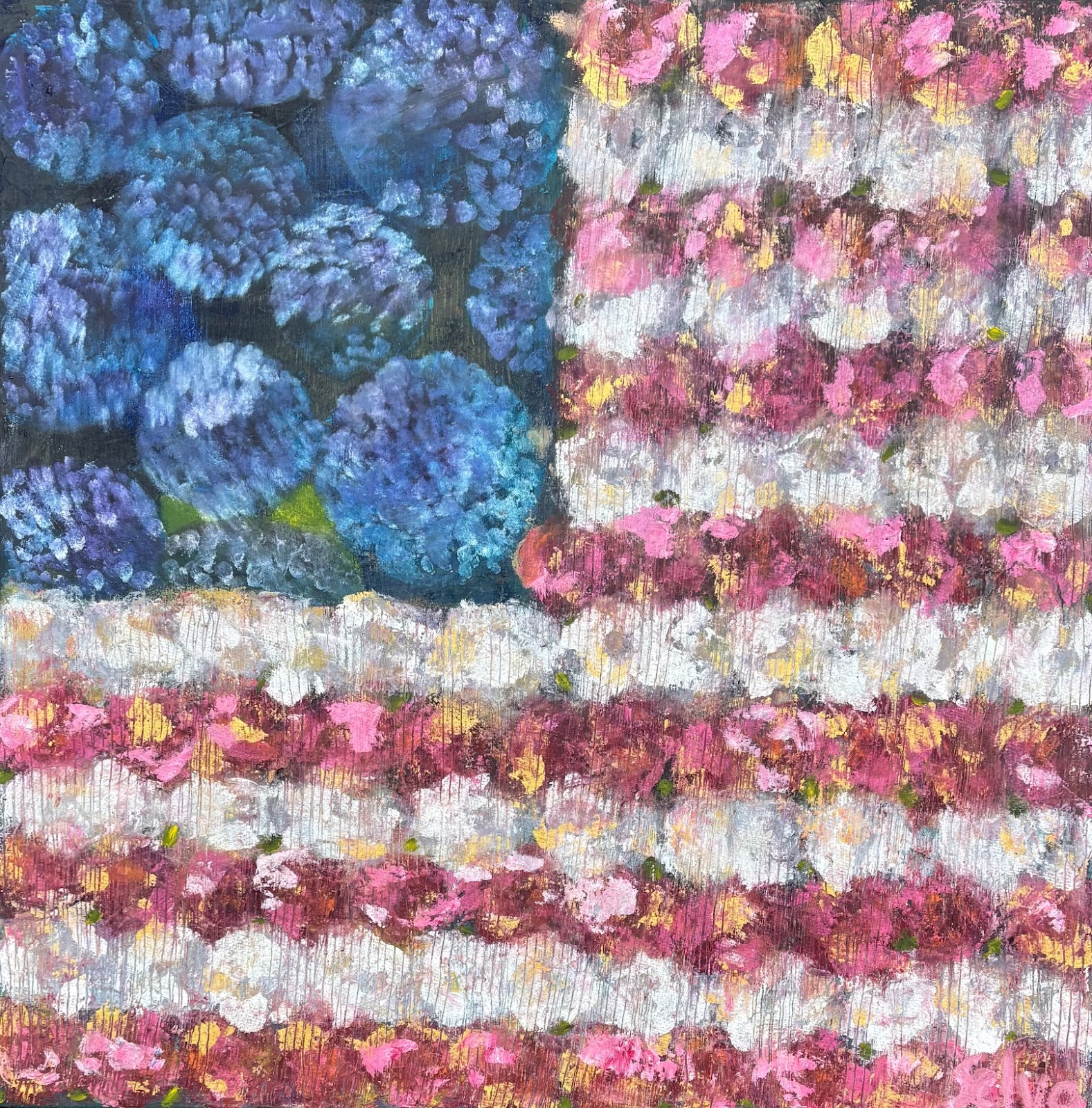
Flag – Rose by Selva Ozelli, USA 250 series
You might also like: US leadership in crypto: The focus is on stablecoins | Opinion
President Donald Trump’s World Liberty Financial platform has a mission to “make crypto and America great” and has issued a stablecoin USD1. Additionally, prior to taking office for his second term, President Trump issued nonfungible tokens called “Trump Digital Trading Cards” as well as Official Trump (TRUMP) memecoin. While stablecoins are regulated by federal law, NFTs and memecoins are still in need of regulatory clarity from the US Securities and Exchange Commission.
How can an investor distinguish between an NFT and a memecoin before making an investment, and are these good digital asset investments? I asked some of the industry experts for practical guidance on these questions for my readers’ benefit.
How to differentiate between NFTs and memecoins
Generally speaking, NFTs are unique digital assets stored on a blockchain, representing ownership of a specific item, digital or physical. Unlike fungible digital assets, which are interchangeable, each NFT is distinct and cannot be replaced by another. A memecoin, on the other hand, is a type of digital asset that is typically created as a joke or parody of an internet meme, trend, or humorous concept. While memecoins share the underlying blockchain technology with other digital assets such as Bitcoin (BTC), Ethereum (ETH), Avalanche (AVAX), NFTs, and stablecoins, they often lack a serious financial or technological purpose.
Kristen Mierzwa, Head of Digital Assets at FTSE Russell, further explains to me in an interview the distinctions between NFTs and memecoins: “FTSE Russell has been pricing and calculating indices on digital assets since 2019. Our goal is to cover the investible crypto markets, which include stablecoins along with memecoins, but do not include NFTs. We are identifying digital assets that are listed on centralized exchanges per our rules in the ‘Guide to the Vetting of Digital Assets and Digital Asset Exchanges,’ or Vetting Guide. As always, we are taking a rules-based approach to this asset class. For more information on how we select which assets are included in our FTSE Digital Asset Universe, which is rebalanced quarterly, please refer to our Guide to Coverage.
The easiest way for anyone to identify if a digital asset is a memecoin or an NFT is to see if the asset has a token symbol. An example would be Dogecoin (DOGE) with a symbol, whereas an NFT does not have a token symbol. Another great identifier you can look for is if the digital asset is sold in fractional units like 0.0001, which would be a memecoin quote. If you see an image with a unique ID like #221 of a collection, it is likely an NFT.
Now let’s think about the attributes associated with a memecoin versus an NFT. We classify memecoins in the FTSE Grayscale’s Crypto Sector Index Series in the Consumer & Culture sector. The reason is to capture the social trends linked to the usage of memecoins. Quite simply, many users are having fun trading these types of assets like Fartcoin (FARTCOIN). The valuation of memecoins in our universe is based on the executed trades on centralized exchanges. We then aggregate these prices every 15 seconds and form a Volume Weighted Average Price. Examples of NFTs that many people are familiar with are the Bored Ape Yacht Club NFTs. These are considered collectibles and, like any one-of-a-kind piece of art, there is no straightforward methodology to valuation. It could be the most recent sales history, an evaluation of rare traits, celebrity influence, liquidity, and market sentiment, to name a few.”
From a regulatory perspective, the SEC staff views typical memecoins as collectibles and has not provided clear, formal guidance on whether NFTs are securities, but has instead pursued enforcement actions, sometimes citing resale royalties as evidence that an NFT is a security. Therefore, investors need to analyze memecoins and NFTs on a case-by-case basis, focusing on whether the NFT is being used as an investment contract rather than a collectible or digital asset, with the differentiation remaining complex and subject to further interpretation and individual assessments based on the tokenomics, specific characteristics, and marketing of each token.
Shane Molidor, CEO and founder of Forgd, a platform and advisory firm specializing in supporting blockchain projects, explained to me: “Memecoins are typically fungible tokens, with many memecoins launched with ‘no utility’ disclaimers. The SEC’s Division of Corporation Finance considers most memecoins to be akin to collectibles rather than securities under federal law, but can still view them as securities under the Howey Test, especially if the tokenomics allow coordinated promotion, insider allocations, or implied profit expectation.
NFTs, on the other hand, are nonfungible and often represent digital art, collectibles, or in-game items. From a regulatory standpoint, NFTs are less likely to be considered securities unless they’re fractionalized or marketed with an expectation of profits tied to the work of others.”
Are NFTs and memecoins good investments?
Kristen Mierzwa of FTSE Russell—which is a global index provider, subsidiary of the London Stock Exchange Group, that creates and manages a wide range of financial market indices; they are known for their FTSE and Russell index series, which are used by investors worldwide for benchmarking, investment strategies, and creating financial products—said to me: “As an index provider that invests in memecoins but not NFTs, we stick to talking about the reported historical numbers and do not make predictions about the future. It is clear that memecoins are trending up in the market capitalization in our investible universe. FTSE Russell does not make recommendations on whether memecoins belong in an index; we simply cover the data so that our clients can decide what the appropriate benchmark is for their investment objective.”
Source: FTSE Russell. As of March 31, 2025. Please note that the missing fields are due to non-memecoin market caps not being verified in the historical data. Please note that in December 2022, FTSE Russel covered 363 assets rather than 400
William Quigley, a cryptocurrency and blockchain investor and co-founder of WAX and Tether (USDT), explained to me: “I expect 2025 to be a meme coin market high year parallel to the digital asset bull run akin to when the NFT market exploded during the first part of 2021.”
You might also like: Tokenization of art, gaming, and the future of NFTs | Opinion
As Shane Molidor, CEO and founder of Forgd, explained: “Memecoins can be valuable tools for influencers—typically, influencers’ earnings are determined by the amount of attention they get, and how well they can monetize it via ads. The problem for influencers is that social media platforms act as gatekeepers—they determine who gets ‘screentime,’ and consequently, how much money creators can make off of ads.
Creators, to some extent, bypass this by creating alternative revenue streams like merchandise, etc., but memecoins are really the purest instantiation of the attention economy. Instead of an attention economy at the behest of some shadowy super coders who determine your ‘rank’ in a black-box algorithm, memecoins put creators’ fate in the hands of the free market—the money they make is proportionate to the eyeballs they’re able to get on their token, and that’s it. An additional advantage of memecoins is that utility can be embedded in that token too, so instead of merely being an attention token, a musician could, for instance issue a token that gives fans a financial stake in the artist’s success, serve as loyalty token, or can be used for exclusive content, merch, or access, etc.
That said, memecoin markets largely function like gambling, and are extremely unsustainable today. Gambling, at face value, is in fact sustainable—the industry is worth over $1 trillion, and with financial nihilism on the rise (as people find themselves increasingly financially desperate), the industry is only getting larger. The rising popularity of memecoins is a symptom of this phenomenon as well.
However, unlike legacy gambling (such as casinos), the game theory behind memecoins doesn’t lend itself well to sustainability. Pose this: you’re the owner of a casino. You own all the slot machines and poker tables in the casino. The last thing you want to do is for everyone to lose money. You have an optimal strategy wherein some people make money, and some people lose money, but it’s structured such that it’s not completely extractive. Since you own everything in the casino, you’re fine losing money on some games to make money off of others. But with memecoins, that couldn’t be further from the truth. Every memecoin creator has every incentive to extract maximally; they aren’t worried about customers returning to their casino. This creates a lot of churn and extractive behavior, which is what we see today.”
Sergio Hamza, the Founder and CEO of Coincu, which came out with a digital asset risk report, agrees with all expert comments, adding: “U.S. President Donald Trump’s memecoin mania and Argentine President Javier Milei’s public blunder have spotlighted how wild and unpredictable the memecoin market can be. Trump’s memecoin raked in millions, crashed spectacularly, and handed the European Central Bank new ammunition to want to tighten MiCA’s grip even further into a European crypto standstill. At the same time, Milei’s memecoin attempt fizzled, fueling more ‘I told you so’ from global regulators. But behind the chaos, there’s a real chance for memecoins to grow up. With agentic financial automation and independent AI tools, we could see memecoins evolve from pure speculation into a foundation for digital financial independence.”
Lukas Enzersdorfer-Konrad, Deputy CEO of Bitpanda, points out: “We’re seeing a clear shift in momentum across the crypto market, with strong capital rotation away from Bitcoin and into altcoins. Ethereum, XRP (XRP), Solana (SOL), and even meme coins like Dogecoin are significantly outperforming BTC over the past week, showing that investors are increasingly willing to move further out on the risk curve. Whether this marks the start of a sustained altcoin [memecoin/NFT] season remains to be seen, but the current rally shows just how quickly sentiment can turn once confidence and liquidity are in place. The broad ecosystem is clearly healthy, and there is more for investors to explore than just BTC and ETH.”
John Crain, co-founder and CEO of SuperRare NFT platform with a new NYC-based physical art gallery called Digital Decadence, says, “SuperRare deals especially in art NFTs— whereas NFTs are a much broader digital asset class than simply digital art or collectibles. While initially gaining prominence in the art world, NFTs’ use has expanded across numerous industries and applications, including but not limited to gaming, real estate, music and entertainment, supply chain management, digital identity and credentials, event ticketing, intellectual property and royalties, phygitals, literature, and digital publishing. I think we’re going to see slow, steady institutional adoption of the NFT digital asset class, making them good investments.”
I previously covered some of these topics. Read further on the music industry, real estate, and digital identity, for example.
US taxation of memecoins, NFTs, and collectibles
In the United States, digital assets, which include stablecoins, memecoins, NFTs, and collectibles, are taxed as property. When you sell or exchange digital assets, you may incur capital gains or losses, which are subject to taxation. The tax rate depends on whether the gains are short-term (held for one year or less), long-term (held for more than one year), or collectibles.
Under March 2023 IRS guidance, certain NFTs may be classified as collectibles—subjecting them to a higher capital gains tax rate of up to 28%, compared to the standard 15–20% for other crypto assets (per IRS Notice 2023-27). The distinction of a digital asset between an NFT and a memecoin may be particularly important due to the taxation of collectibles. For example, an investor might assume that President Trump’s NFTs and memecoins are both collectibles. But investors need to make the determination under the tax rules and not what they think or what the SEC says.
Furthermore, investors are urged to consider the cross-border tax implications of such digital asset investments as well. Some countries impose a federal level and VAT (meaning sales tax) on such investments, and some tax treaties impose double tax on capital gains.
Read more: What you need to know about the IRS’s crypto question on tax returns | Opinion