

The Georgian Ministry of Justice has signed a Memorandum of Understanding (MoU) with public blockchain network Hedera, as it considers moving the country’s land registry on-chain and tokenizing real estate.
According to a Monday announcement from the Ministry of Justice of Georgia, the government has signed an MoU with Hedera, a public blockchain with authorized node operations. During a meeting between the Minister of Justice of Georgia, Paata Salia, and a representative of Hedera, the two sides discussed the possible integration of blockchain technology into public infrastructure.
Georgian officials said they are considering transferring data from the National Agency of Public Registry to the blockchain network, hoping this would “guarantee even greater protection of property rights, transparency and reliability of processes.”
The tokenization of real estate is also being considered, in an effort very similar to real-world asset (RWA) tokenization projects.
For now, the agreement is a non-binding MoU. The next step would be to form joint working groups with experts from the Ministry of Justice and the National Agency for Public Registration, the announcement said.
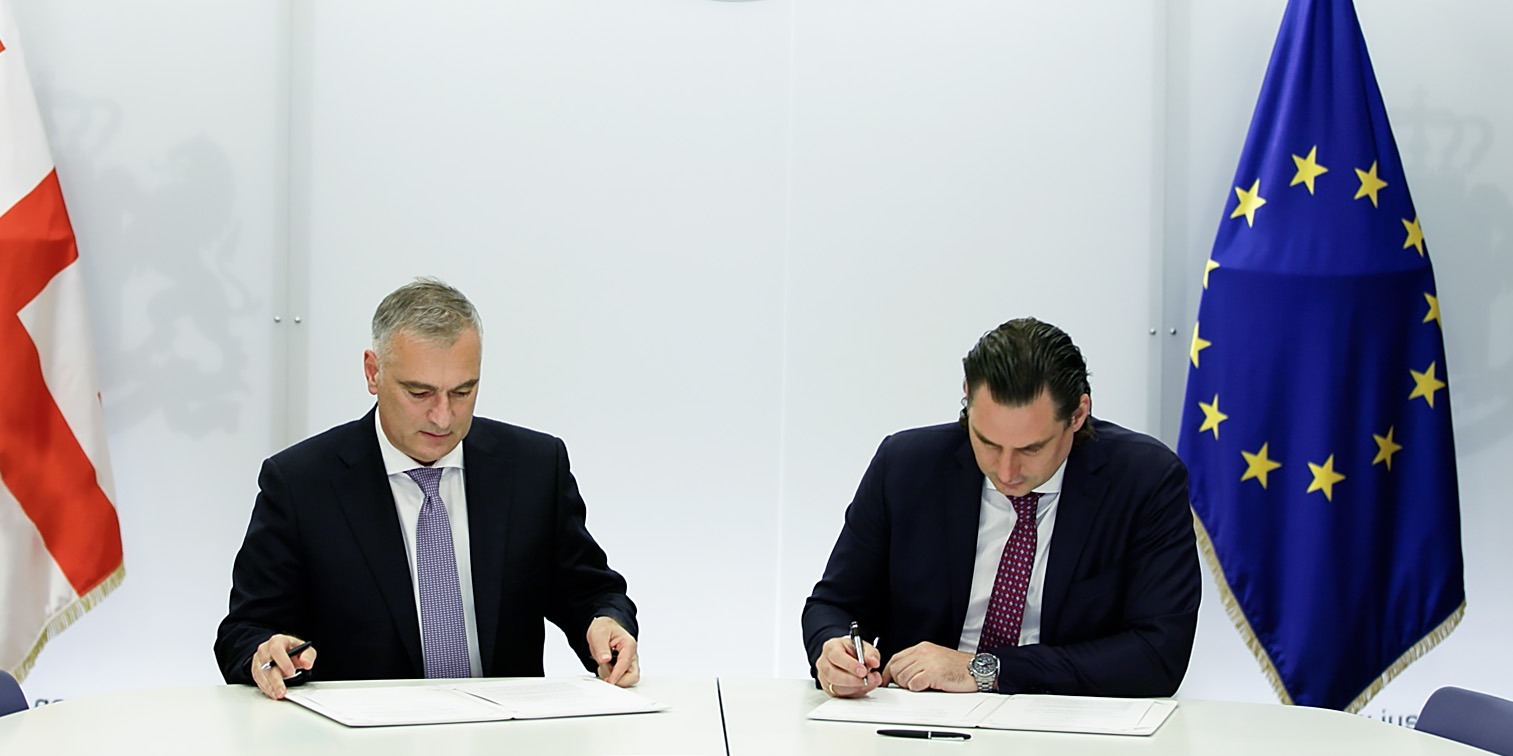
Meeting between the Ministry of Georgia and a representative of Hedera. Source: Ministry of Justice of Georgia
Related: How governments use blockchain for public services
Not Georgia’s first rodeo
Georgia has long been a proponent of blockchain technology in government. In early February 2017, the government of Georgia signed an agreement to use the Bitcoin blockchain to verify real estate transactions. Reports from late April that year indicated that the country had already registered more than 100,000 ownership details on the chain.
The push for government adoption of blockchain has not stopped since then. About a year ago, the United National Movement coalition partnered with Rarilabs to release a new blockchain solution for public administration. Several political and technical initiatives have sought to expand the use of blockchain in public administration, although not all have been adopted by the ruling Georgian Dream party.
Related: Tether signs MoU with Georgia to develop Bitcoin P2P infrastructure
In June 2024, Natia Turnava, acting governor of the Central Bank of Georgia, and Varlam Ebanoidze, head of the bank’s financial and supervisory technology development department, met with Ripple director James Wallis to explore possible opportunities for cooperation in digitalizing the Georgian economy.
This followed reports in early November 2023 that the central bank had selected blockchain payment network Ripple Labs as its official technology partner to develop the central bank’s digital currency. This followed the bank’s announcement two months earlier that it planned to pilot a limited-access pilot of its CBDC.
Magazine: Crypto is used in Georgia for payments, not to get rich: Tbilisi Crypto City Guide