

The ongoing surge in tokenization is set to have a significant impact on major Layer 1 (L1) networks like Ethereum. However, there are concerns emerging that Ethereum’s mainnet (L1) may not be fully participating in this tokenization wave compared to its Layer 2 solutions (L2s).
Is Ethereum L1 Falling Behind in the Tokenization Trend?
According to analyst Gabriel Shapiro, Ethereum’s blockchain will benefit regardless of where tokenization takes place. He pointed out that companies have the option to tokenize on the mainnet or utilize their own Ethereum L2 solutions, citing the example of Robinhood’s Robinhood Chain.
The discussion was sparked by Ethereum L1’s minimal market share in tokenized stocks on decentralized exchanges (DEXes). Despite a 12% surge in tokenized securities DEX volumes overall, Ethereum’s mainnet seems to be lagging behind, as noted by Lorenzo Valente, Ark Invest’s head of crypto research.
Valente raised a valid question, emphasizing the role of platforms like Robinhood, Arbitrum, and Base in driving tokenization activities and questioning the position of Ethereum L1 in this evolving landscape.
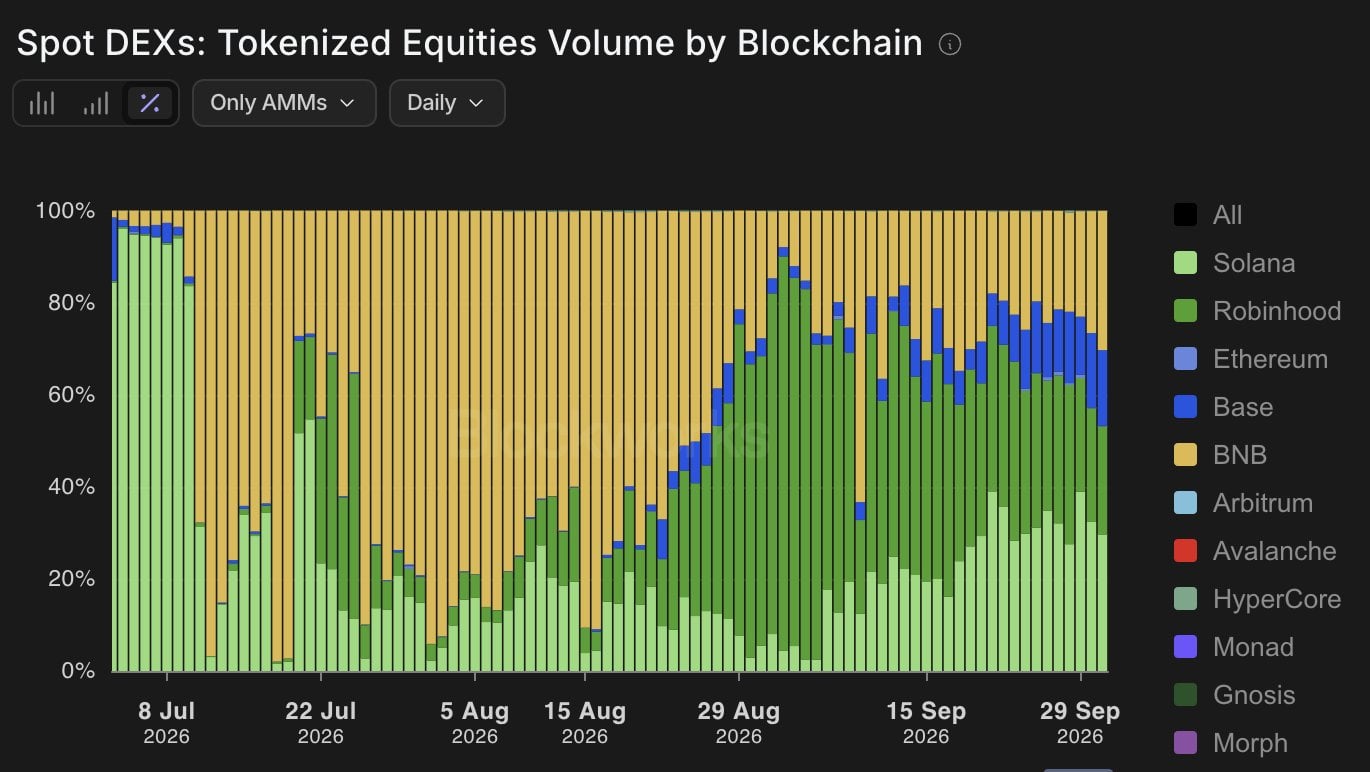
In response, Valente stressed the importance of a clear vision for Ethereum L1 to navigate the tokenization landscape effectively. This renewed the discussion on value capture and sharing between L1 and L2 solutions within the Ethereum ecosystem.
Interestingly, some industry experts supported Valente’s call, including Luigi DeMeo, Chief Strategy Officer at Aave, who highlighted the risk of Ethereum losing ground in tokenizing new asset classes like stocks to emerging ecosystems.
On the contrary, Marius Smith, co-founder of Ethereum Institutional, challenged the notion of Ethereum falling behind, emphasizing the importance of supply over volume as a measure of success.
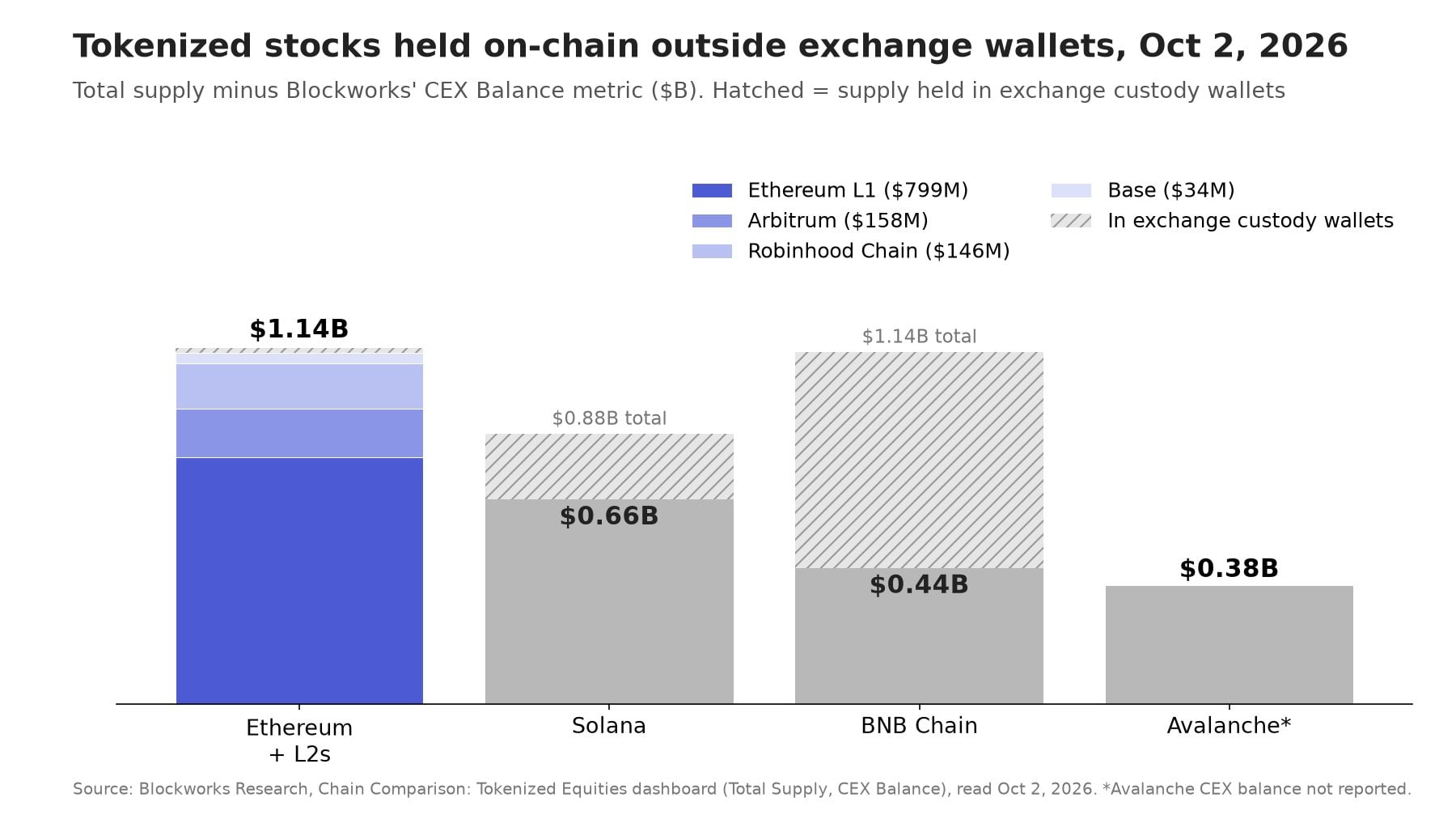
Marius advocated for Ethereum’s active engagement in attracting issuers and regulated platforms rather than solely focusing on transaction volumes. This aligns with the mission of Ethereum Institutional to drive business adoption on the chain.
As the tokenized securities market grows rapidly, reaching $3.2 billion and projected to hit $2 trillion by 2028, various players, including tech giants and traditional financial institutions, are gearing up to issue these assets on their own blockchains. The extent to which Ethereum can maintain its market share in this evolving landscape remains to be seen.
Key Takeaways
- Ethereum L1 currently has minimal market share in tokenized securities volumes on DEXes.
- The emphasis is on the supply of regulated tokenized assets rather than transaction volumes for Ethereum’s success.