
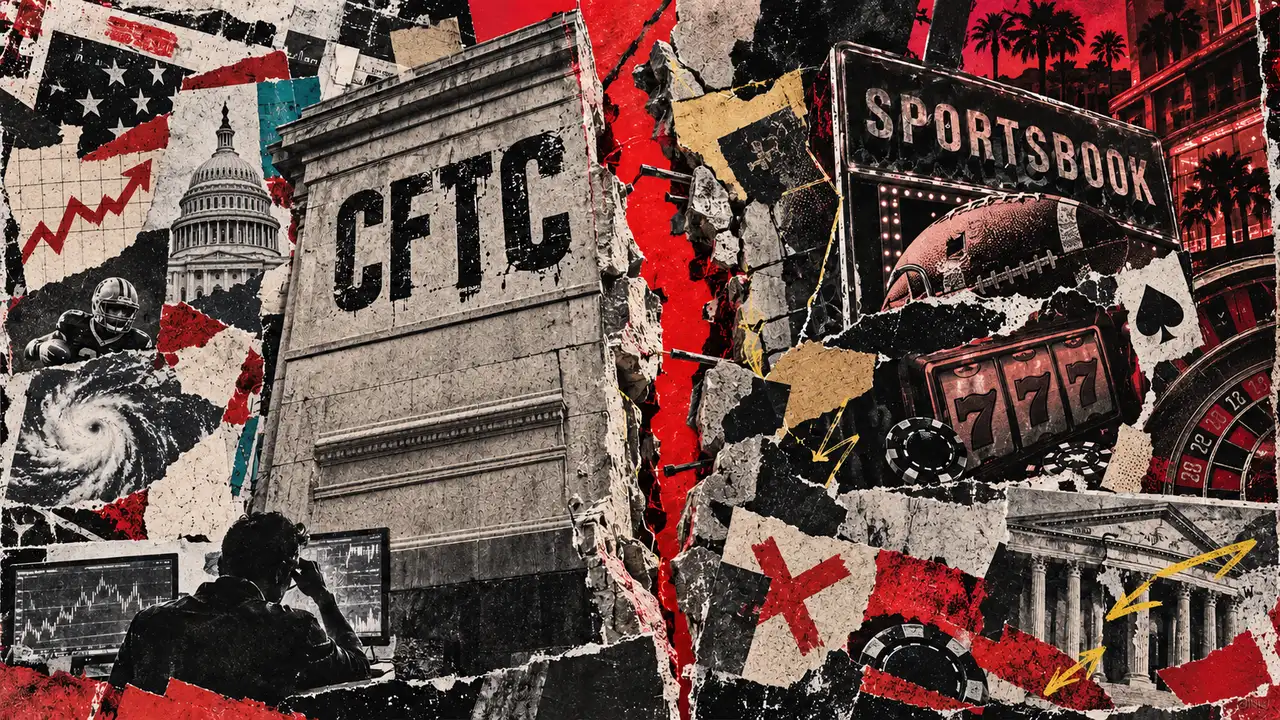
The Commodity Futures Trading Commission (CFTC) made a significant announcement on October 9 regarding the regulation of prediction-market contracts and traditional gambling. The agency proposed including sports and other event contracts in the definition of a swap, a type of financial derivative. At the same time, it introduced an interim final rule to clarify that sportsbook and casino wagers are excluded from this definition.
Event contracts, which cover sports, politics, cultural events, and weather-related outcomes, are seen as falling within the CFTC’s jurisdiction under the Commodity Exchange Act. These contracts allow traders to take positions on future outcomes, similar to traditional betting, but with a fixed payout and the ability to hedge risk or speculate on the outcome.
The distinction between event contracts and traditional gambling is crucial, as it determines which regulatory framework applies. Platforms like CryptoSlate differentiate between odds-based wagers in sportsbooks and tradeable outcome contracts in prediction markets like Polymarket.
While the proposed inclusion of event contracts in the swap category is not yet final, the CFTC is inviting written comments on the proposal. On the other hand, the interim final rule regarding casino-style gambling products, including sportsbook and casino wagers, is already in effect upon publication in the Federal Register.
One key legal question that remains unresolved is the interaction between federal regulation and state gambling laws. A recent ruling in the Sixth Circuit involving prediction-market operator Kalshi highlighted the issue of whether federal regulation preempts state laws regarding gambling. The court held that even if the contracts were considered swaps, federal law did not necessarily displace state gambling laws in Ohio and Tennessee.
This legal uncertainty has drawn criticism from advocacy groups like Better Markets, who argue that sports event contracts should be subject to state gambling laws to prevent them from enabling sports betting. The ongoing debate underscores the complex regulatory landscape surrounding prediction markets and gambling activities.
In conclusion, the CFTC’s actions to clarify the regulatory boundary between prediction-market contracts and traditional gambling have sparked debate and legal challenges. The outcome of these regulatory efforts will have significant implications for operators in the prediction market space and the broader gambling industry.