

The CFTC is determined to make use of its current authority to set up clear rules and provide guidance for crypto businesses and market participants. While the agency would have preferred a federal regulatory framework codified into statute, they are making the most of the powers they have.
What’s the CFTC’s Approach?
Despite the challenges, the CFTC is working on establishing basic rules and bringing more transparency to the crypto industry. Mike Selig, a key figure at the CFTC, remains optimistic that Congress will revisit the CLARITY Act in the future to address any regulatory gaps that still exist.
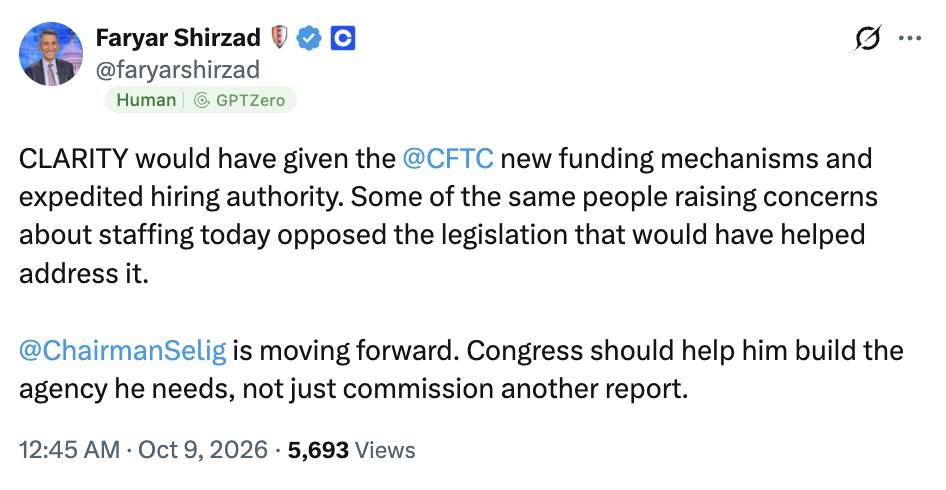
Faryar Shirzad from Coinbase believes that the proposed CLARITY Act would have strengthened the CFTC’s ability to regulate crypto markets by providing additional funding and faster hiring authority. However, practical support from Congress in terms of resources and staff is crucial for effective rule enforcement.
Despite Challenges, Progress Continues
While tensions remain, the CFTC is pressing forward with its initiatives. Senator Cynthia Lummis highlighted the Democrats’ opposition to the CLARITY Act, despite their call for new regulations in the digital commodity space. This has caused frustration among Republicans, but the CFTC remains committed to its goals.

Recently, the CFTC updated its FAQs to provide clarity on how tokenization and blockchain technology can comply with existing regulations. The agency has also permitted regulated firms to utilize blockchain for record keeping, as long as the records meet specific criteria for authenticity and accessibility.
Key Takeaways
- Mike Selig is hopeful that Congress will revisit the CLARITY Act in the future.
- Senator Lummis highlighted the Democrats’ opposition to the CLARITY Act despite their push for new regulations.