

Disclosure: The views and opinions expressed here belong solely to the author and do not represent the views and opinions of the crypto.news main article.
Access to clean water is a basic human need, yet billions of people worldwide still struggle to obtain it. According to the World Health Organization, more than 2 billion people live in countries with severe water scarcity, and this number is only expected to increase due to climate change and population growth.
You might also like: Creating a resilient and sustainable blockchain-as-a-service for everyone | Opinion
Traditional water management systems have struggled to address these challenges, often hampered by inefficiency, lack of transparency and inadequate resource allocation. Blockchain technology offers a promising solution to these challenges, providing equitable access and sustainable use of this crucial resource.
The current state of water management
Water management today is confronted with a number of urgent problems. Inefficiencies in water collection, distribution and use, combined with the lack of real-time monitoring, often result in resource waste and misallocation. Many water resources are not reaching their full potential due to infrastructure and financing shortages. For example, the Environmental Protection Agency (EPA) report indicated that the United States would need to invest $625 billion over the next twenty years to repair, maintain, and improve the nation’s drinking water infrastructure due to aging pipelines and other infrastructure problems. Furthermore, household leaks can waste nearly 900 billion gallons of water annually in the United States alone. That is equivalent to the annual water consumption of almost 11 million households.
Furthermore, corruption and mismanagement in the management of water resources can lead to unequal distribution, with disadvantaged communities often bearing the brunt of water shortages. For example, South Africa faces numerous water security challenges: droughts, inadequate water conservation measures, outdated infrastructure and unequal access to water resources. The country faces significant water scarcity, with demand expected to exceed supply by 2030, creating a projected gap of 17%.
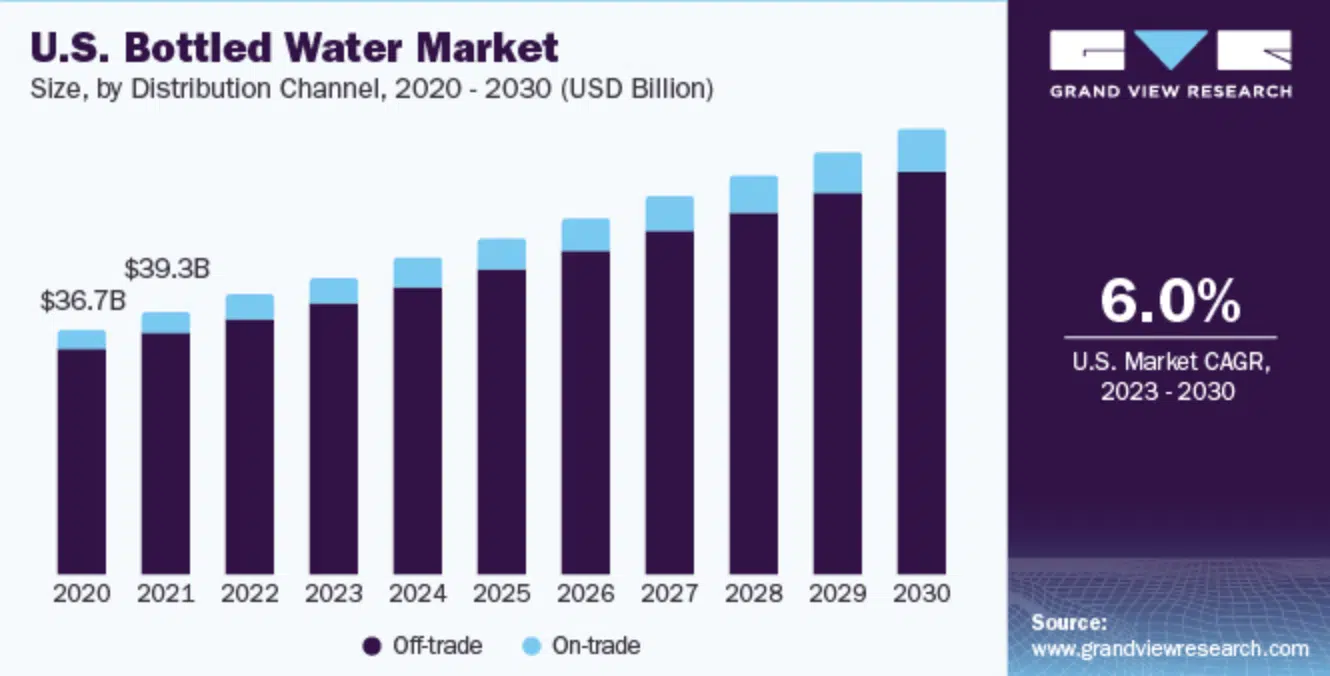
Furthermore, the global water industry is heavily monopolized, with a few key players controlling a significant portion of the market. These companies exert significant influence over the water supply chain, often prioritizing profit over fair distribution and environmental responsibility. This concentration of power can lead to high prices and limited access for vulnerable populations. The global bottled water market alone is expected to reach $509.18 billion by 2030, with these major companies capturing a significant revenue share. This monopolization exacerbates existing inequities in water access and highlights the need for more decentralized and community-driven water management solutions.
The potential of blockchain in water management
Blockchain technology can address these issues by providing a transparent, secure, decentralized platform for managing water resources. This approach offers several advantages:
- Transparency and accountability. Blockchain’s immutable ledger ensures that all transactions and data entries are transparent and cannot be changed once recorded. This transparency can reduce corruption and ensure that water resources are allocated fairly and efficiently. For example, blockchain can be used to track water consumption from source to end user, clearly recording how water is distributed and used. This level of transparency can help hold authorities accountable and manage water resources sustainably.
- Efficient resource management. Blockchain can facilitate the creation of smart contracts, which are self-executing contracts where the terms of the agreement are written directly in code. These contracts can automate water distribution based on real-time data, ensuring water gets to where it is needed most. For example, smart contracts can be used to manage urban water supply systems, automatically adjusting water distribution based on consumption patterns and real-time demand. This can help optimize water use, reduce waste and ensure that households and businesses receive the right amount of water at the right time.
In Dubai, the Dubai Electricity and Water Authority (DEWA) has implemented a blockchain-based smart water network initiative as part of its broader smart city strategy. This project integrates blockchain technology with IoT sensors to monitor water consumption in real time, manage distribution and detect leaks. The decentralized ledger ensures data integrity and transparency, enabling more efficient water management and less waste. DEWA’s initiative aims to improve sustainability and resource management in the fast-growing city, highlighting blockchain’s potential to support urban water management and conservation efforts.
Community participation and ownership
Blockchain allows individuals to directly control and monetize their access to water sources, eliminating the need for third-party intermediaries. This direct control model allows local communities to make collective and transparent decisions about their water use. By managing their water directly from the source, communities can tailor their water management practices to their specific needs, promoting fair distribution and fostering a sense of responsibility and stewardship.
Additionally, future models could allow people to monetize their access to water through web3 technologies. For example, a community-to-business (C2B) model could allow individuals to sell water directly to businesses. In this model, individuals do not need to own the water directly, but can benefit from staking their tokens during event sales pools. This approach not only supports sustainable water management, but also creates economic opportunities for community members. Additionally, a “Burn to Secure” protocol can be used to grant water allocation rights. This protocol provides a real sense of water security and financial opportunity, allowing individuals to realize their rights. This system not only secures future water allocations, but also increases symbolic scarcity and value.
Moreover, a pure investment feeling is achieved through investments in water resources. This leads to potential financial returns and dividends, addressing the aforementioned inefficiencies in water extraction. Investing to finance infrastructure projects such as building factories and improving distribution systems can bring more water to communities, creating additional economic opportunities.
Monetizing water access through the C2B model, the Burn to Secure protocol, and investments in water resources all generate economic benefits for the community and promote a more equitable and efficient water management system.
Overcoming challenges
While blockchain technology has the potential to improve water management, there are challenges in its application. The complexity of blockchain systems and the need for technological infrastructure can pose barriers, especially in developing regions. In addition, there are concerns about the significant energy consumption of blockchain networks. However, technological advances and the development of more energy-efficient blockchain solutions are helping to alleviate these concerns. Furthermore, education and capacity building are critical to ensure stakeholders understand how to use blockchain technology effectively. Governments, NGOs and private sector partners must work together to provide training and support to communities and water management authorities.
Blockchain technology offers a practical and effective means to improve water management. In addition to addressing inefficiencies, blockchain strengthens communities, promotes sustainable practices and opens up new economic opportunities through models such as community-to-business (C2B). As we face the ever-increasing challenges of climate change and population growth, blockchain is not just an innovative solution; it represents a fundamental change in the way we manage and value water resources. Embracing blockchain in water management is essential to creating a sustainable, equitable future, transforming the way we manage and protect our most vital resource.
Read more: DePIN will increase its impact on the environment by being a solution to the climate crisis | Opinion
Jean-Hugues Gavarini
Jean-Hugues Gavarini is the CEO and co-founder of LAKE (LAK3), a real-world asset company using blockchain technology to decentralize access to the global water economy. LAKE strives to ensure access to clean water for all, protect water resources and distribute water to those in need through innovative technology. Jean-Hugues has a varied career in the luxury, fashion and footwear industries. His professional career includes notable successes at Mellow Yellow, Cremieux and Tod’s. Growing up between Silicon Valley and the French Alps, Jean-Hugues has always been immersed in technology and freshwater resources. In 2018, Jean became CEO of Lanikea Waters, a water solutions entity based in the French Alps. In 2019, the concept of LAKE was born, embodying its commitment to innovation and sustainability.