

Bitcoin’s latest decline has pushed prices into territory not seen so far this year, with the market briefly trading near the low $75,000 area.
Related reading
Losses have piled up in recent months, leaving the value well below its record peak and sparking new debate over whether the broader uptrend has stalled.
However, the decline did not happen in isolation and the timing points to broader pressure on risky assets rather than a shock unique to cryptocurrencies.
Bids cluster under $73,000
The order books show increased buying interest, clustered in a range stretching from approximately $71,500 to $64,000. According to market feeds, that demand is visible but provisional.
If there are a lot of bids on the exchange, they can slow a decline, but they can also disappear quickly as sellers accelerate.
Liquidations have further amplified the decline: millions of forced closures of leveraged long positions have been reported, and such events can trigger short, violent declines even if fundamental demand remains.
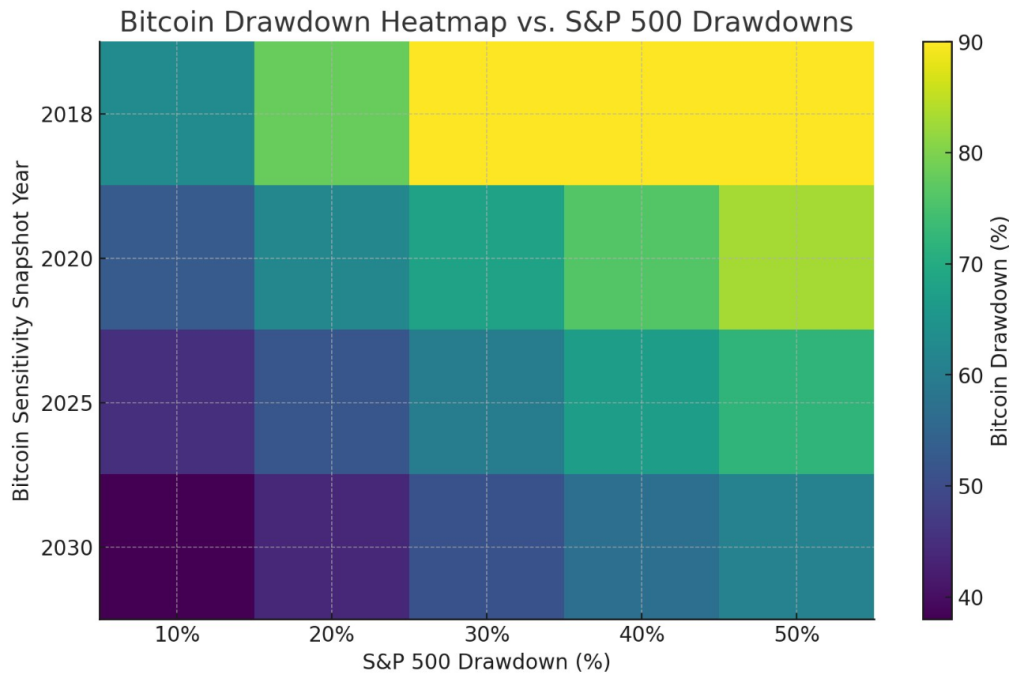
This model shows that the current bitcoin price action is still within historical norms at $74,000.
Bitcoin is down ~40% from its October high, while US stocks remain near all-time highs, while the S&P 500 is down less than 10%. Under those circumstances, a possible ~45% bitcoin… https://t.co/E8oiOKD3VE
— Joe Burnett, MSBA (@IIICapital) February 3, 2026
Nothing special
According to Joe Burnett, vice president of Bitcoin strategy at Strive, the recent downturn still fits within the patterns we saw in previous market cycles.
Burnett said Bitcoin hovering around the mid-$70,000s reflects a decline that has previously occurred during periods of rapid adoption and price discovery.
He added that swings of this magnitude often occur when an asset is still being priced by the market, and not when it has settled into a stable trading range.
Technology stocks hinder risk appetite
The decline in US technology names, particularly those related to AI infrastructure, has been cited by several market watchers as a related cause.
NVIDIA and Microsoft were among the bigger hurdles for the major indices, and reports suggest that weak earnings sentiment and expensive AI expansions have made investors more cautious.
When big growth stocks fluctuate, investors often cut other risky positions as well, and crypto gets swept up in that flow.
Related reading
Some exchanges saw retail dips in buying, and institutional spot buying was also reported.
According to Burnett, a 45% decline is imminent historical fluctuationssuggesting that such volatility has precedents. This view doesn’t take away the pain for traders, but it does place the decline in a longer pattern rather than labeling it as terminal.
Featured image from Unsplash, chart from TradingView