
Key Takeaways
How are Bitcoin holders reacting to the recent price drop?
Glassnode’s Hodler Net Position Change indicates massive distribution (selling), while the Nexo platform’s data shows that Bitcoin consistently represents 53-57% of the collateral.
Why would holders choose to borrow rather than sell during a recession?
Borrowing against Bitcoin gives holders access to liquidity without incurring capital gains taxes. It also helps preserve their position for potential future appreciation.
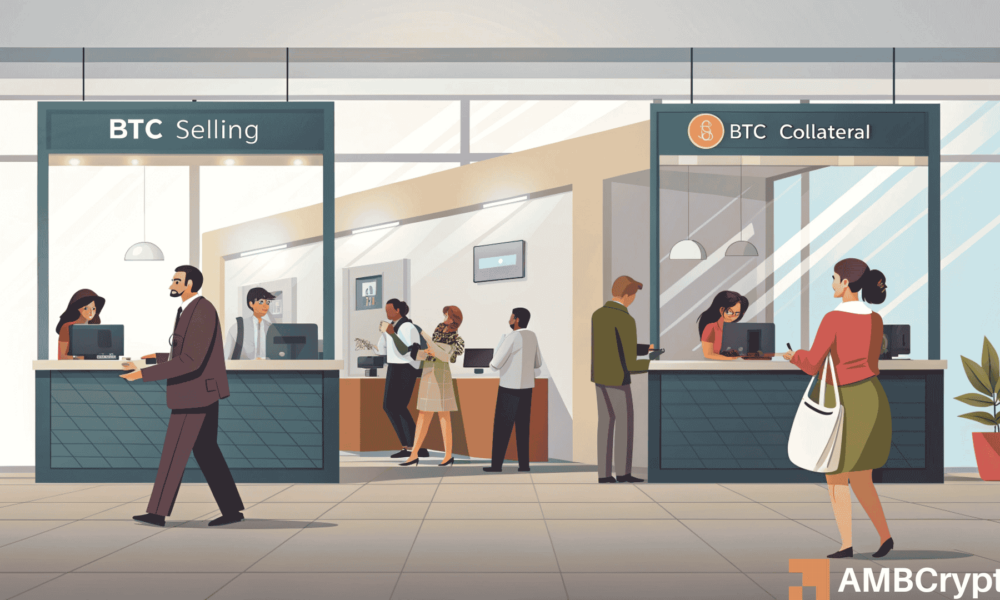
Bitcoin’s decline from over $100,000 to under $90,000 by the end of 2025 has exposed a fundamental divide in how holders respond to recessions: some capitulate, while others double down through strategic borrowing.
The Sellers: Heavy distribution is underway
from Glassnode The Hodler Net Position Change metric paints a grim picture. Red bars dominate the chart through 2025, indicating that long-term holders are actively distributing their Bitcoin.

Source: Glassnode
Sales increased dramatically in late November, with net position changes falling above -60,000 BTC – one of the heaviest distribution periods in recent history.
This behavior follows a well-known pattern: as prices fall, holders who bought near the cycle top or who need immediate liquidity choose to exit their positions, creating sustained selling pressure.
The borrowers: persuasion through leverage
Yet platform data from CryptoQuant and Nexo tell a contrasting story.
Despite price volatility and heavy on-chain distribution, Bitcoin has maintained a remarkably stable 53-57% share of total collateral on the lending platform through 2025.

Source: CryptoQuant
As of July 2025, BTC accounts for 54.3% of all collateral – essentially unchanged from 53.8% in January.
This shows that a sophisticated subgroup of holders uses a fundamentally different strategy. Instead of selling Bitcoin when they need cash, they use it as collateral to borrow stablecoins or fiat money.
Why the Bitcoin Strategy Split Matters
The difference reflects more than just different risk tolerances; it reveals the access to financial instruments and the level of long-term beliefs.
Holders who borrow against Bitcoin:
- Avoid triggering capital gains taxes associated with sales
- Maintain their BTC position for possible future appreciation
- Can access immediate liquidity without leaving the market
- Bet Bitcoin profits will exceed their financing costs in the long run
This reflects how traditional wealth works. Wealthy individuals don’t sell their homes when they need cash; they take mortgage loans.
They don’t liquidate stock portfolios; they use margin loans. Bitcoin is increasingly being treated the same way: as a store of value to leverage, not liquidate.
What this means for the market
The split reveals two stories playing out simultaneously:
Macro printing: Heavy distribution by traditional holders is creating real selling pressure, evident by Bitcoin’s price drop to the $80-90K range.
Structural supportA subset of advanced holders refuse to sell, opting instead for leverage – taking supply out of circulation and potentially creating a supply shock if the price recovers.
The holders who prefer borrowing to selling view current prices as temporary. They believe that Bitcoin’s long-term trajectory remains intact. Whether they are right will determine whether this strategy proves to be genius or foolhardy.
The data shows that access to credit platforms may be creating a new class of ‘staunch’ holders willing to weather volatility through strategic leverage rather than capitulation.