
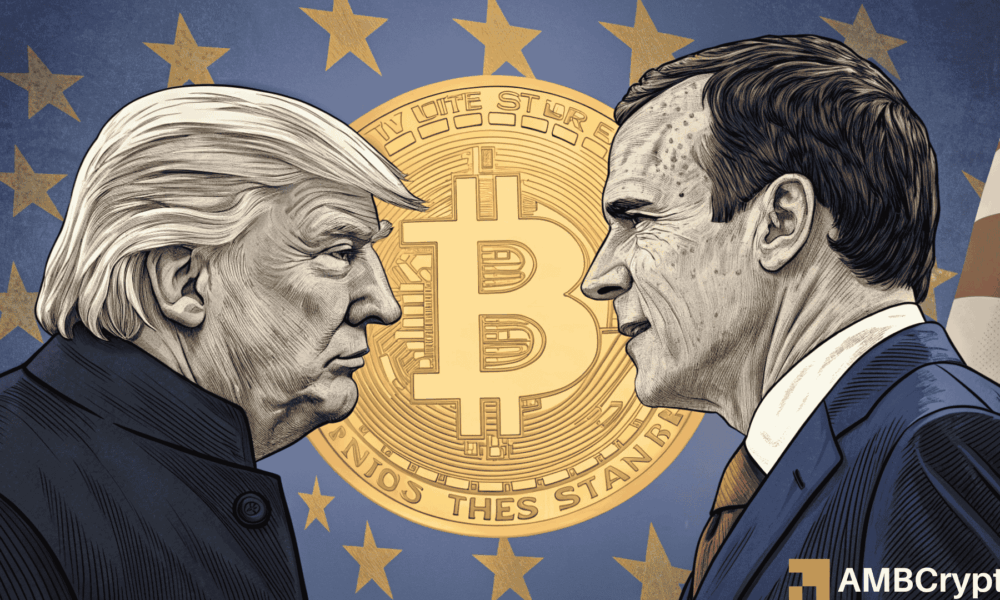
Bitcoin fell below the $88,000 mark on January 21, extending a multi-week pullback as global markets digested renewed geopolitical and trade uncertainty among global markets. European Union and the United States.
At the time of writing it is Bitcoin traded close by $87,500 – $88,000lower on the day and firmly below recent range highs.
This move puts Bitcoin at its weakest level in several weeks. It also follows repeated failures to reclaim it $95,000 – $100,000 area earlier this month.
The EU is blocking progress on the American trade agreement
The latest period of caution in the market follows an announcement of the European Parliament that it has suspended work on key legislation underpinning the EU-US “Turnberry” trade deal.
The decision was confirmed by Bernd LangeChairman of Parliament’s International Trade Committee. This happened after the political groups agreed that negotiations could not continue under the current circumstances.
The statement said the pause was caused by what EU officials described as ongoing threats to the country’s territorial integrity and sovereignty Denmark And Greenlandin addition to the use of tariffs as a coercive policy instrument.
Until the United States returns to a cooperative path, legislative work related to the agreement will be suspended.
Bitcoin’s technical structure remains weak
From a market perspective, Bitcoin’s price action reflects a broader risk expression rather than a single headline reaction. The daily chart shows a clear set of lower highs since October, with selling pressure increasing during the November slump.

Source: TradingView
Subsequent rebounds were superficial and short-lived, indicating limited conviction among buyers.
Trading volume tends to increase during down swings. This reinforces the view that recent moves are driven by distribution rather than temporary volatility.
Bitcoin’s inability to stabilize above previous support levels has left the asset vulnerable to further downsides if macro uncertainty persists.
Macro uncertainty weighs on risky assets
While it is difficult to draw a direct causal link, Bitcoin’s weakness coincides with increasing geopolitical and trade-related tensions between major economic blocs.
The freeze in trade negotiations between the EU and the US adds to an already fragile macro environment, characterized by tariff threats and shifting diplomatic relations.
In such circumstances, higher-risk assets have historically struggled to attract sustained inflows as investors reassess their exposure and prioritize capital preservation.
Final thoughts
- Bitcoin’s drop below $88,000 reflects a broader risk environment rather than an isolated crypto-specific event.
- The renewed trade tensions between the EU and the US add a new layer of macro uncertainty at a time when Bitcoin’s technical structure is already vulnerable.