
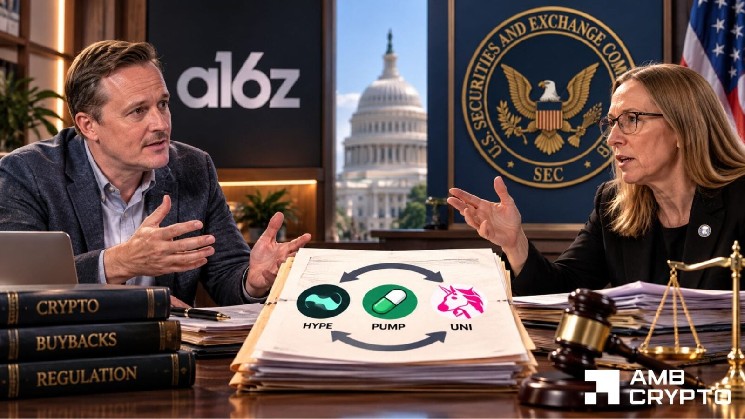
When a crypto system is fully functional, an issuer’s announcement of a non-security crypto asset buyback program does not imply a commitment to undertake essential managerial efforts.
Simply put, if there is no central party involved (meaning it is fully decentralized), such initiatives do not violate securities laws. Therefore, commodity tokens do not transform into securities solely because of buyback programs.
On the contrary, in cases where the crypto system lacks functionality and involves a central party, these offerings may be perceived as a commitment to utilize buybacks to generate yield or returns for token holders. This would then classify as an ‘investment contract’ and require registration with the SEC.
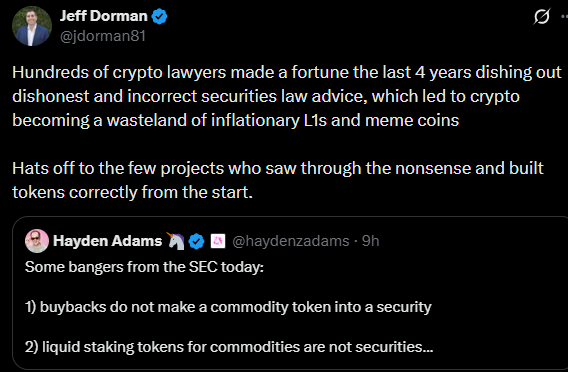
Responding to this clarification, Hayden Adams, CEO of Uniswap, expressed his approval by describing it as ‘bangers.’ Uniswap, which had previously refrained from conducting buybacks due to concerns about regulatory scrutiny under the Biden administration, initiated UNI buybacks last year. Arca CIO Jeff Dorman believes that this guideline will positively impact an industry that has been described as a “wasteland of inflationary L1s.”
Analysis of a16z’s Concerns Regarding SEC’s Crypto Buyback Rule
Despite the positive reception from many industry players, a16z cautioned against premature celebration, pointing out a potential ‘loophole’ in the guideline that could have repercussions for the sector in the future.
In disagreement with the SEC’s stance, SEC Commissioner Hester Peirce, and Miles Jennings, General Counsel at a16z, stated:
Under this interpretation, any startup could tokenize any revenue stream, sell those tokens to the public, and evade securities laws. This could potentially be the largest loophole ever. It is unlikely to withstand legal scrutiny or future regulatory changes. It is simply absurd.
Notably, a16z has been advocating for tokens backed by companies (similar to shares or stocks) to be categorized as securities, while network tokens should be considered commodities.
While Commissioner Peirce clarified that the FAQ does not apply in the presence of a ‘central party,’ Jennings disagreed with her perspective.
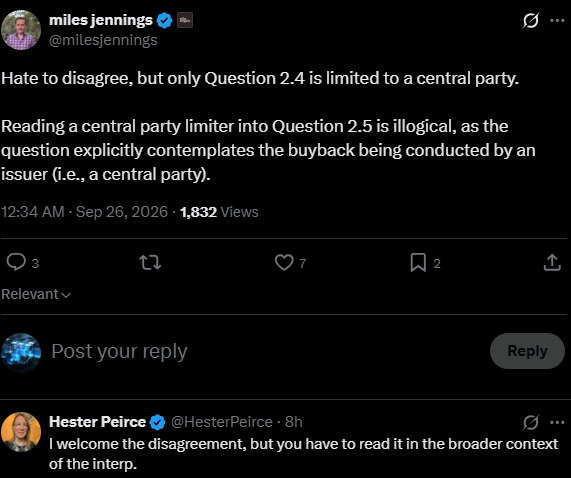
Interestingly, other prominent crypto legal experts such as Scott Johnsson from VB Capital and Gabriel Shapiro echoed Jennings’ concerns, highlighting that the FAQs could potentially introduce unforeseen challenges.
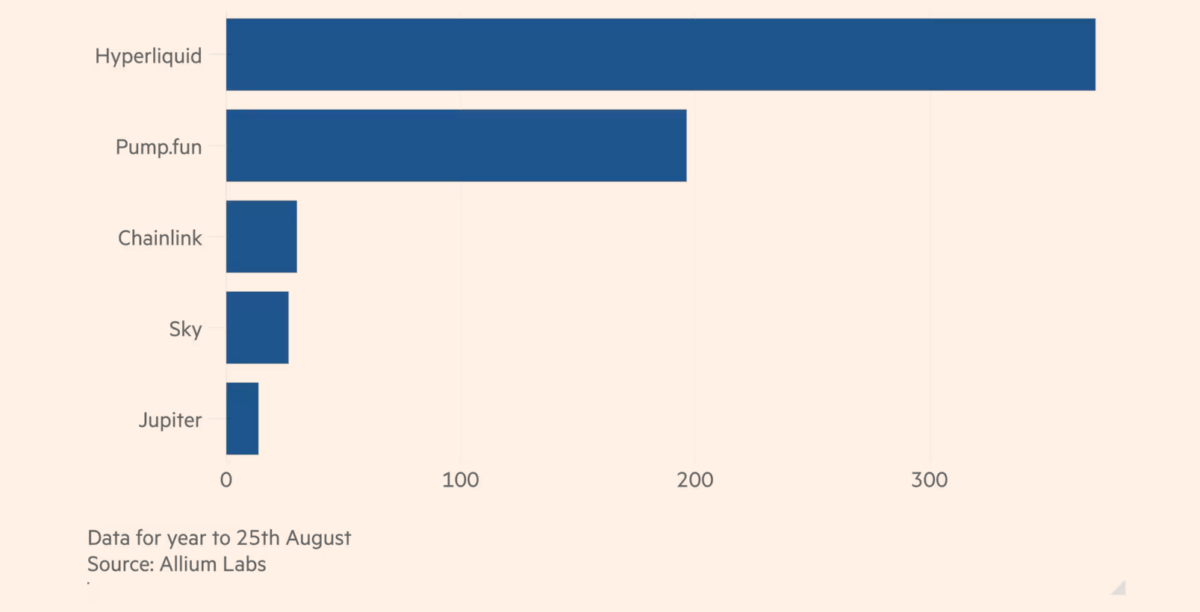
It remains uncertain whether the SEC will revise the FAQ and guidelines based on the feedback received. Nevertheless, the volume of crypto token buybacks surged to $638 million in 2026, with Hyperliquid leading the market.
Concluding Thoughts
- The SEC has clarified that certain token buyback programs do not constitute investment contracts or securities.
- However, a16z’s Miles Jennings has raised concerns about the potential risks associated with the guideline.