

Ethereum’s [ETH] path has now diverged into two separate directions. The major players in the market have made a comeback, but Futures trading is still lagging behind.
However, regular traders are noticeably absent from the scene.
So, who will emerge victorious in this scenario?
Whales Resurface, Stirring Mixed Reactions
Let’s kick things off with the big players in the crypto space, as they have reentered the game.
The Spot Average Order Size for Ethereum, as reported by CryptoQuant, indicated a resurgence of “Big Whale Orders” when ETH was hovering around $2.4K. This marked the first instance since mid-August that such large orders were observed.
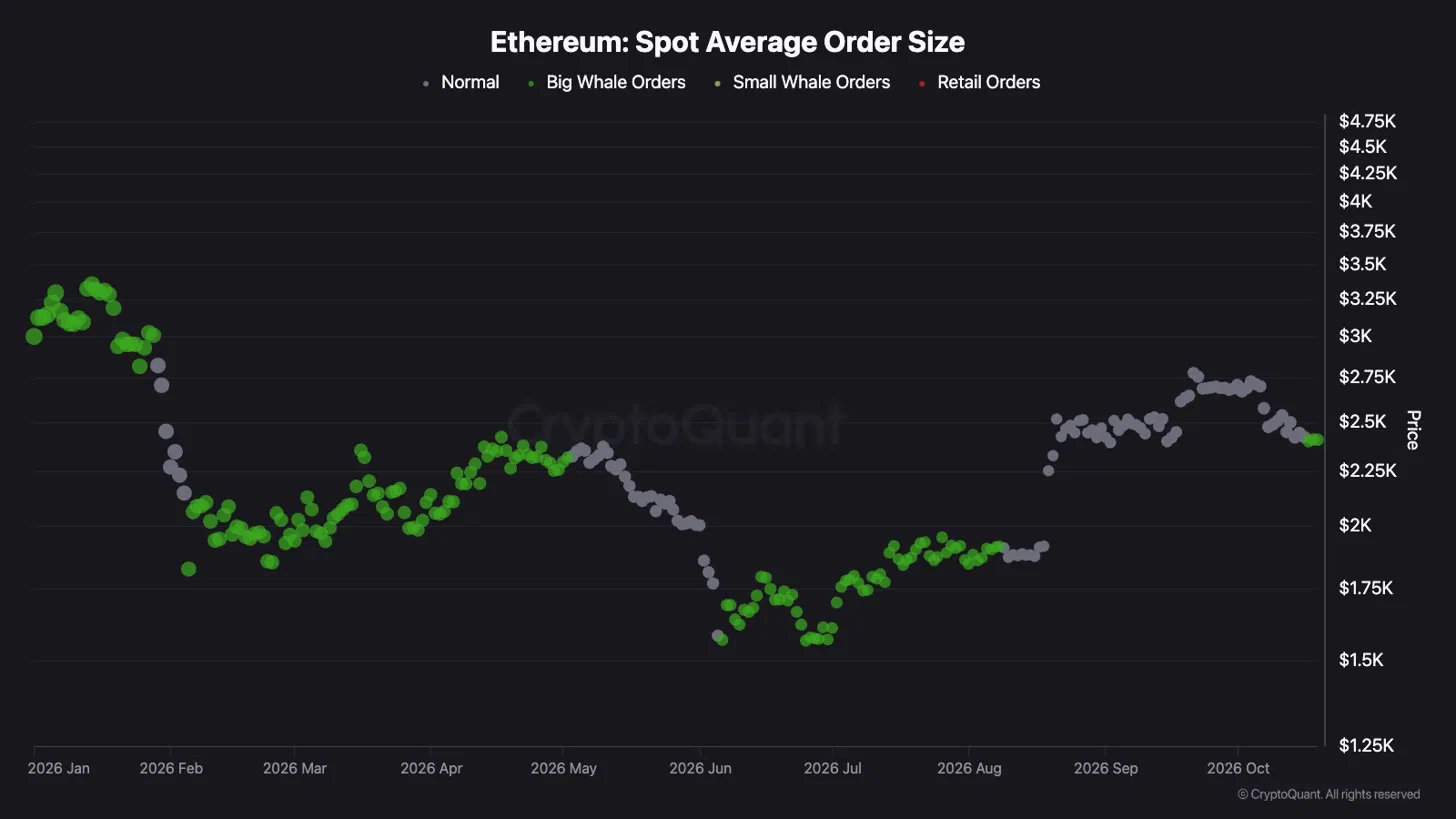
Historically, whale-sized orders have been prominent during February, March, and June, coinciding with market bottoms and subsequent price recoveries. However, the direction of these large trades remains ambiguous, making it a less definitive signal.
On the contrary, the Futures market paints a less optimistic picture.
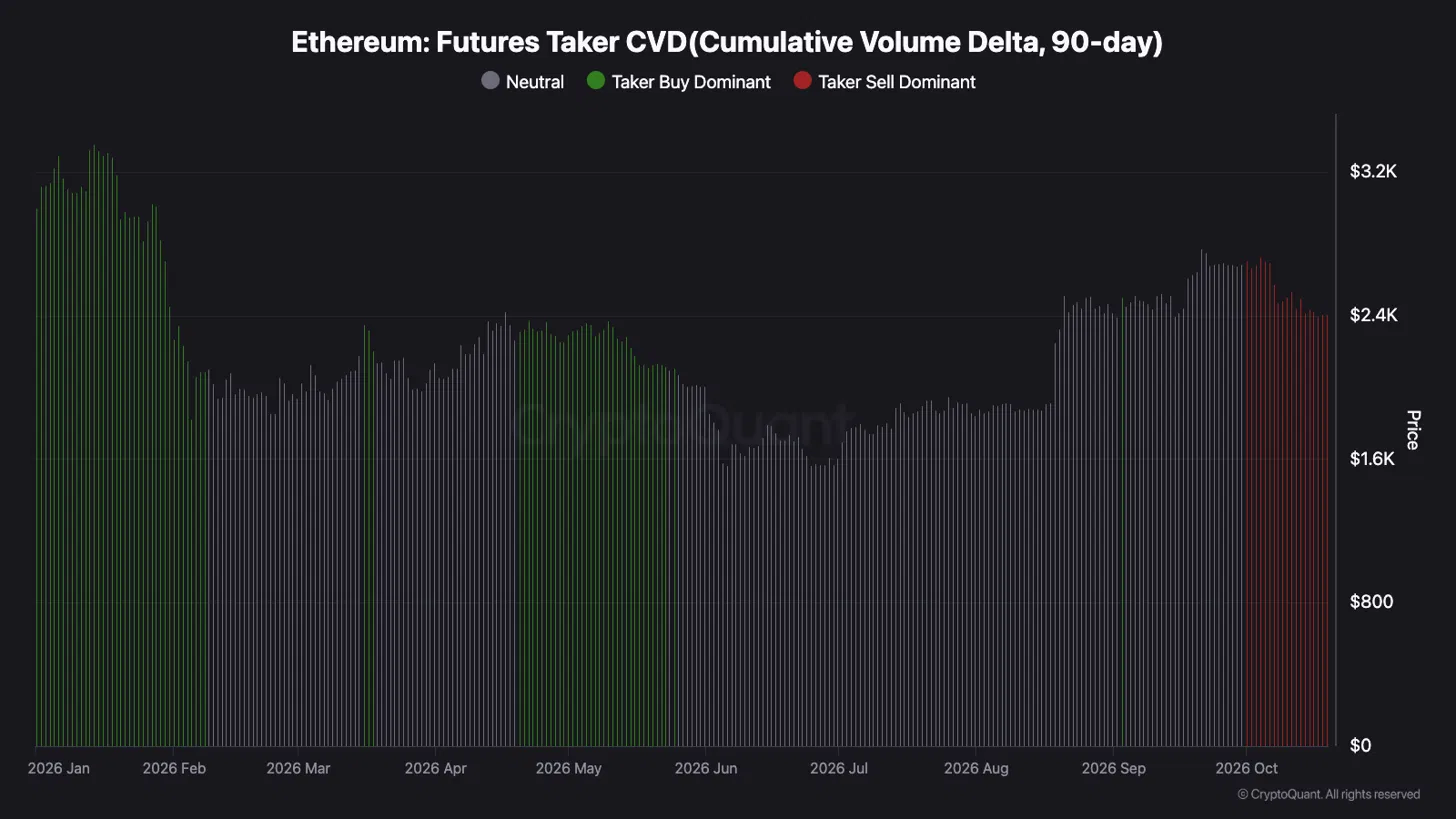
The Futures Taker CVD has exhibited a sell-dominant trend since the beginning of October, marking a deviation from the buy-side bias observed earlier in the year. Notably, during previous sell-dominant periods in January and late April to May, ETH prices experienced declines.
Meanwhile, retail activity in the spot market has remained neutral throughout the year, even during the rally in August.
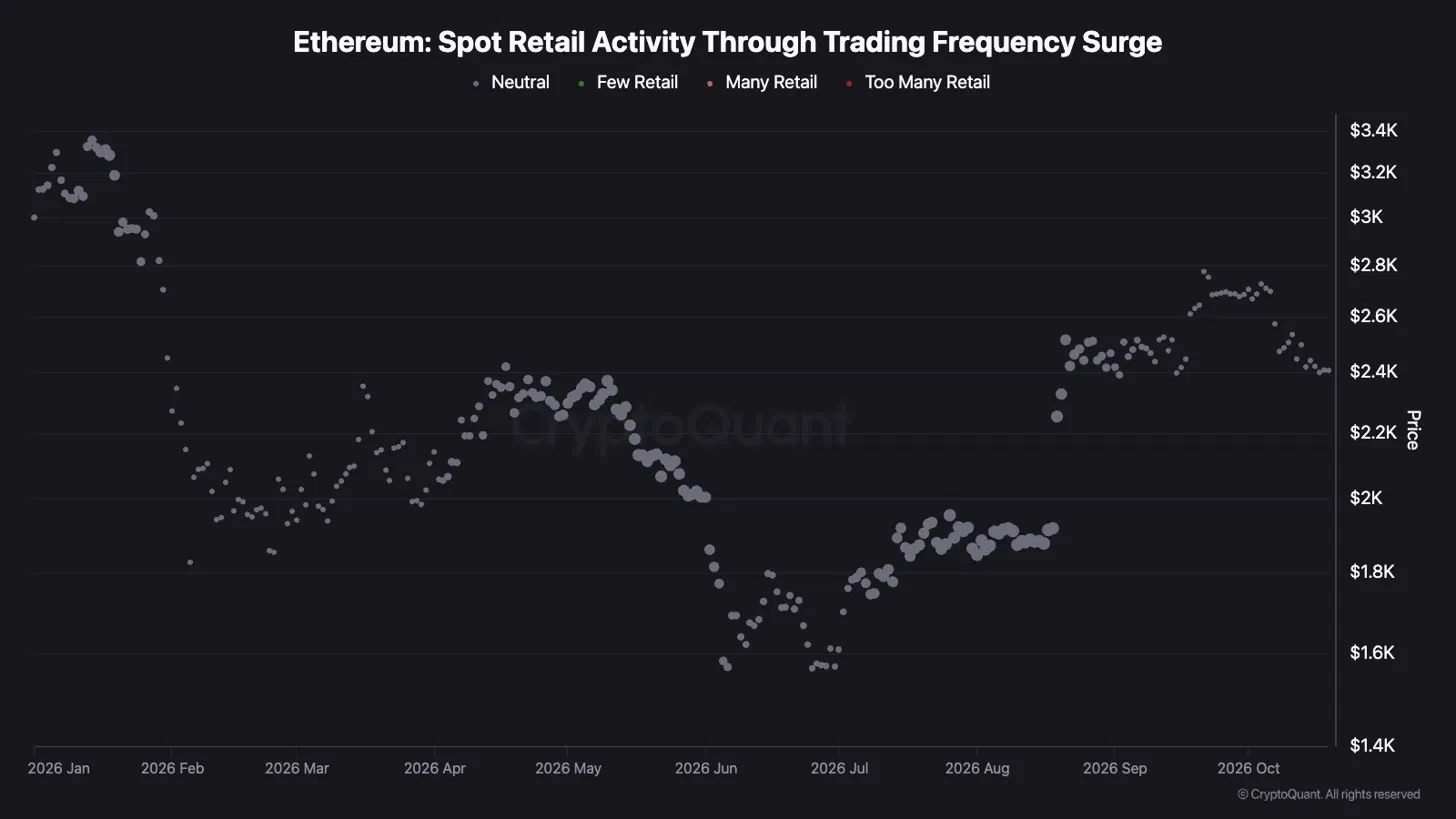
Currently, it’s a clash between whales and Futures traders, while regular buyers seem to be on the sidelines.
Is Ethereum on the Verge of a Reversal?
At the time of writing, Ethereum was priced at $2,433, showing a 1.5% increase for the day, with a brief spike to $2,476. The Relative Strength Index (RSI) crossed above its Signal line, indicating a potential reversal from recent lows.
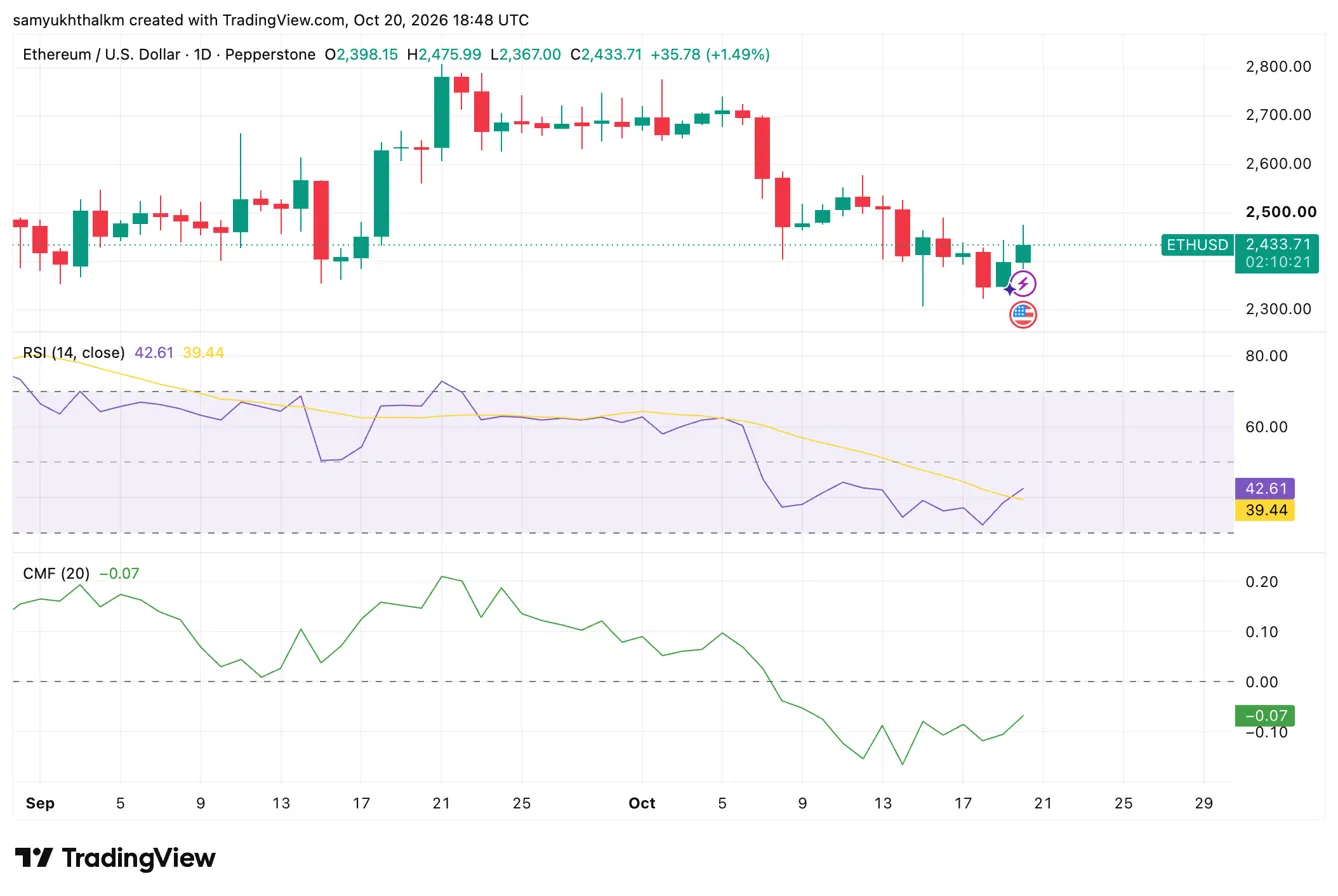
The Chaikin Money Flow (CMF) remained negative but showed signs of improvement from earlier negative readings, suggesting a slowdown in selling pressure.
Despite these positive indicators, Ethereum still has a significant hurdle to overcome in reclaiming the $2,500 mark.
Final Summary
- Ethereum spot market witnesses resurgence in “Big Whale Orders” after a prolonged absence.
- Futures trading remains dominated by selling pressure throughout October.
The world of technology is constantly evolving, and with every new advancement, we are one step closer to a more efficient and connected society. From artificial intelligence to virtual reality, the possibilities seem endless. One of the most exciting developments in recent years is the rise of quantum computing.
Quantum computing is a revolutionary technology that harnesses the principles of quantum mechanics to process information in a fundamentally different way than classical computing. While classical computers rely on bits, which can be either a 0 or a 1, quantum computers use quantum bits, or qubits, which can exist in a state of superposition, allowing them to represent both 0 and 1 simultaneously.
This ability to exist in multiple states at once gives quantum computers an exponential advantage over classical computers when it comes to certain types of calculations. For example, quantum computers have the potential to solve complex mathematical problems, like factoring large numbers, much more quickly than classical computers. This has significant implications for fields like cryptography, where the ability to quickly factor large numbers could render current encryption methods obsolete.
In addition to cryptography, quantum computing has the potential to revolutionize a wide range of industries, from drug discovery to finance. For example, pharmaceutical companies could use quantum computers to simulate the behavior of molecules and develop new drugs more efficiently. Financial institutions could use quantum computers to optimize investment strategies and risk management.
Despite its immense potential, quantum computing is still in its early stages, with many technical challenges to overcome before it becomes a practical reality. One of the biggest challenges is maintaining the delicate quantum state of qubits, which are easily disrupted by external factors like temperature fluctuations and electromagnetic interference. Researchers are working on developing error correction techniques and building more stable qubits to address this issue.
Another challenge is scaling up quantum computers to a size where they can outperform classical computers on a wide range of tasks. Current quantum computers are limited in size and complexity, with only a few dozen qubits. Building a large-scale, fault-tolerant quantum computer will require advances in hardware design, software development, and algorithm optimization.
Despite these challenges, the potential benefits of quantum computing are too great to ignore. Governments, tech companies, and research institutions around the world are investing heavily in quantum computing research, with the hope of unlocking its full potential in the near future. As we continue to push the boundaries of what is possible in the world of technology, quantum computing stands out as a shining beacon of innovation and discovery.