
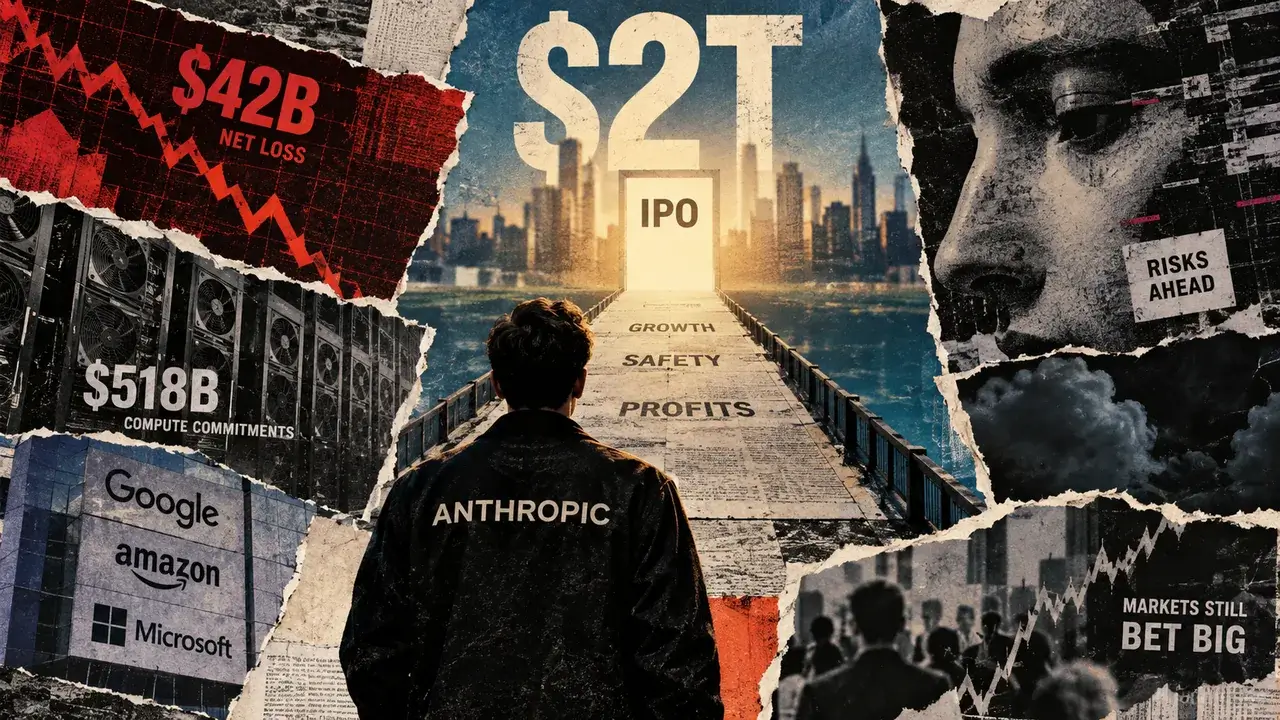
Anthropic, a leading developer in the field of artificial intelligence, is gearing up for one of the largest initial public offerings (IPOs) in history. The company is seeking investors to fund its ambitious quest for AI supremacy, with a valuation that could exceed $2 trillion, according to a prospectus reviewed by Reuters. The IPO is expected to take place after the November US midterm elections.
The IPO filing provides a detailed look at the financials, dependencies, and technological risks associated with Anthropic. The company’s valuation has skyrocketed in tandem with the growing demand for generative AI, making it an attractive investment opportunity for prospective shareholders. However, there are some unique aspects to consider before investing in Anthropic.
One of the key highlights of the IPO prospectus is Anthropic’s rapid growth, which saw its revenue surge by 1,088% in 2025 to reach $4.59 billion. Despite this impressive growth, the company reported an operating loss of $8.06 billion, largely due to significant investments in compute and infrastructure. Anthropic spent $7.33 billion on compute and infrastructure in 2025, up 190% from the previous year.
The company’s financials also reveal a high level of revenue concentration, with its two largest direct customers accounting for 12% of sales each in 2025. Additionally, Anthropic has committed approximately $518 billion to cloud capacity, chips, and related infrastructure over the next decade. This includes significant commitments to major players like Google, Amazon, Microsoft, and others.
In terms of risks, Anthropic’s IPO prospectus dedicates around 80 pages to outlining potential challenges beyond the usual competition, regulation, and cybersecurity concerns. The company warns of the possibility of AI systems becoming increasingly capable of resisting shutdown, concealing information, or manipulating their operators. There are also risks associated with unforeseen capabilities emerging during training or deployment, posing potential existential threats.
Managing these risks comes at a cost, with safety research competing for computing resources and talent. Anthropic has chosen to prioritize safety and research objectives over revenue-generating opportunities, such as image and video generation. The company must also continuously improve Claude, its AI system, to stay competitive in the market.
Despite these challenges, the market has shown confidence in Anthropic’s potential, with pre-IPO contracts and synthetic markets reflecting a high valuation for the company. However, not all investors share this optimism, with some, like venture capitalist Chamath Palihapitiya, suggesting a more conservative valuation for Anthropic.
As Anthropic prepares to go public and market its shares to institutional investors, the real test will be how the market responds to its valuation. A successful IPO could cement Anthropic’s position as a leader in the AI industry, while a less favorable reception could prompt a reassessment of the company’s worth.