

In the last 24 hours, the crypto market witnessed $1.76 billion in liquidations. Bitcoin [BTC] was responsible for $810.64 million of this, with $734.07 being long-term liquidations.
Tuesday, June 2 saw the largest liquidation numbers since the market crash on February 5. On that day alone, $1.844 billion worth of long positions were liquidated in the market.
Crypto faltered and sentiment was once again in “extreme fear” territory. AMBCrypto reported that Bitcoin whales and sharks dumped their assets. It didn’t help sentiment that the U.S. stock market saw a multi-week rally to all-time highs.
Heavy liquidations are only one side of the story
Short-term holders who bought when Bitcoin rose above $80,000 have been caught off guard lately. A month ago, it seemed possible (but unlikely) that the price could rise to $90,000 given the short-term momentum. However, sentiment quickly changed.
During the relief rally, on-chain metrics pointed to a lack of demand, and these bearish predictions were confirmed.
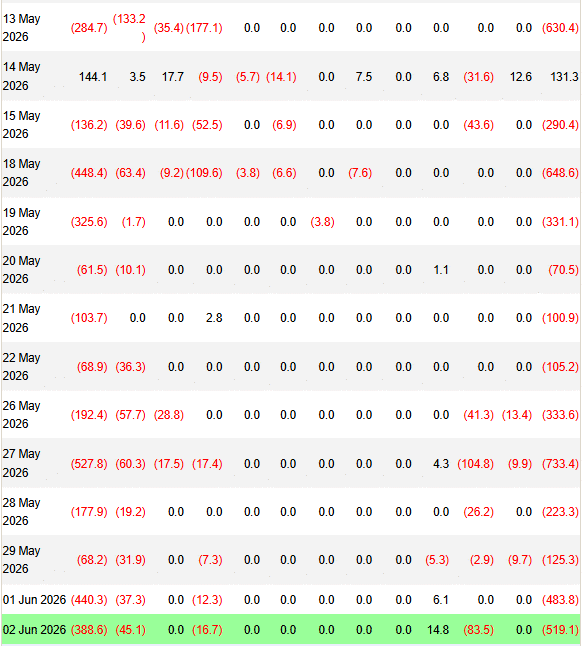
Farside Investors data showed that Bitcoin ETF spot flows have been negative since May 15. Cumulative ETF outflows of $3.963 billion were recorded in just over two weeks, with a series of negative flows highlighting bearish market sentiment.
The short-term capitulation of holders puts additional pressure on BTC
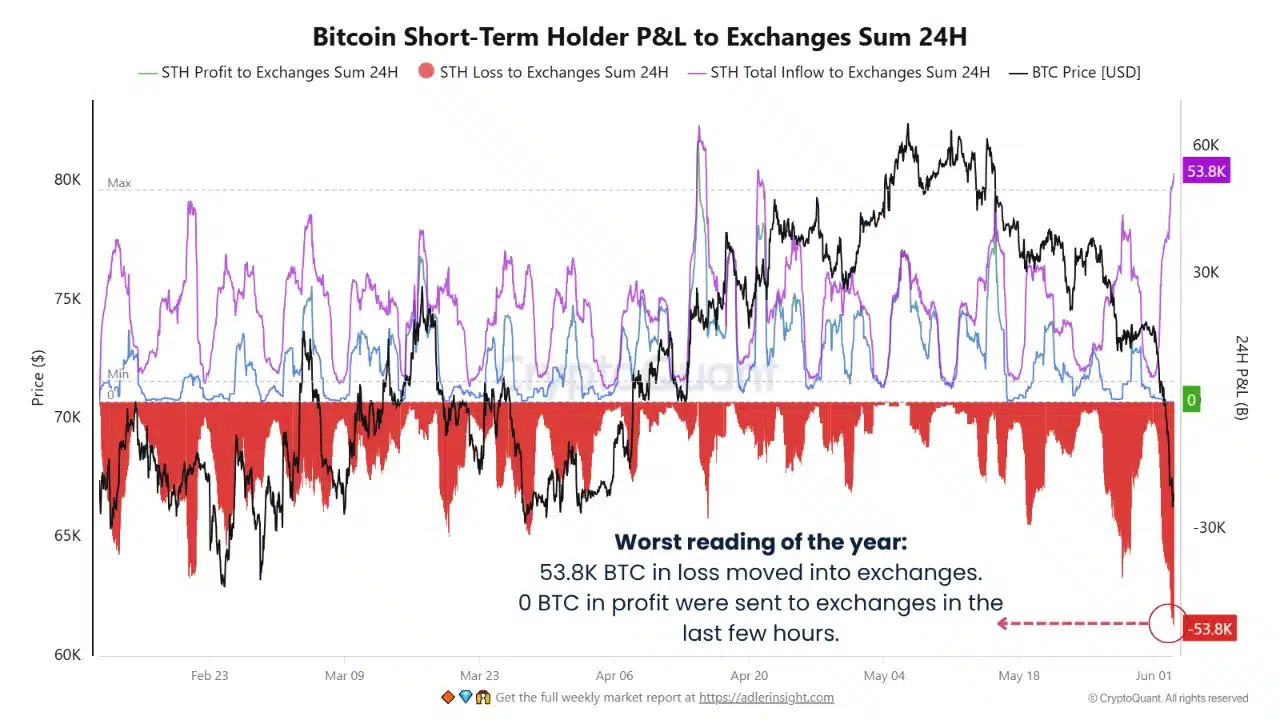
A crypto analyst noted that traders floated 53.8k Bitcoin, all at a loss, within 24 hours. This was the most lopsided short-term holding transfer of the year. The fact that each coin sold at a loss signals a fear-driven exit of buyers near local highs above $80,000.
The upside of the capitulation was that these types of events often mark a local price bottom. The logic is that weak hands are flushed out and only high conviction holders are left standing.
Seller exhaustion can help the market discover a bottom, although not every capitulation guarantees one. Therefore, investors should remain cautious about further losses, especially if inflows into exchanges and outflows from ETFs remain unchanged.
Final summary
- The liquidation and spot ETF flow numbers were notable and helped explain the extent of the selling pressure.
- Liquidations put downward pressure on the market, causing panic among short-term holders and weak hands, leading to more losses and larger liquidations.