
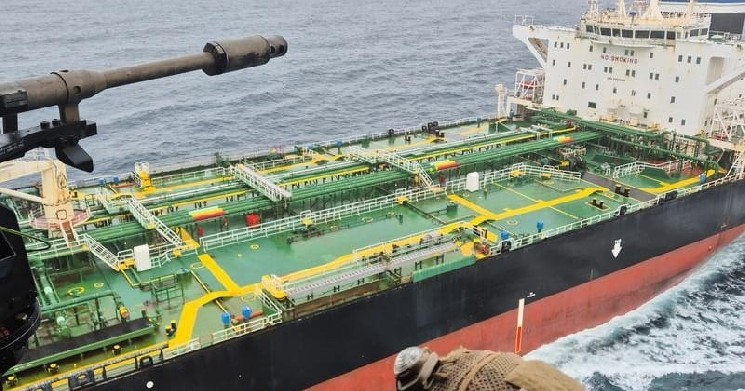
The French Navy boarded and seized the oil tanker Tagor in the Atlantic Ocean on May 31, about 400 nautical miles west of Brittany. President Emmanuel Macron confirmed the operation the next day, making it at least the fourth time in recent months that France has intercepted a sanctioned tanker with Russian links.
The Tagor had sailed from a Russian port and is believed to be part of what Western governments call Russia’s “shadow fleet,” a loose network of aging tankers that carried crude oil while dodging sanctions related to the war in Ukraine. Reports indicated that the ship had attempted to conceal its identity by flying a false flag, and the last AIS transmission was recorded off the coast of Norway about a week before the interception.
A growing enforcement pattern
The Tagor is on sanctions lists maintained by three separate jurisdictions. The European Union sanctioned the ship in October 2025. The US followed with its own designation in July 2025. The UK added its sanctions in February 2026.
The United Kingdom and other allies have reportedly supported France’s maritime interdiction efforts, pointing to a coordinated stance rather than a unilateral French decision.
Russia condemned the seizure as ‘international piracy’.
The shadow fleet problem
Russia’s shadow fleet emerged almost immediately after Western countries began imposing oil export restrictions in response to the 2022 invasion of Ukraine. The concept is simple: buy old tankers through opaque corporate structures, register them in jurisdictions where there are not too many questions asked, and ship crude oil to buyers willing to pay above the Western price ceiling.
The Tagor‘s attempt at using a false flag adds a new layer. Flying a flag you are not entitled to fly is one of the oldest deceptions in maritime history, and it is one that international law takes seriously. A vessel caught doing so effectively loses much of the legal protection it would otherwise enjoy in international waters.
France has previously made detentions in the Mediterranean and other waters, creating a pattern that makes each subsequent interception less diplomatically costly.
What this means for investors
There were no digital assets or blockchain technologies associated with the Tagor or its activities. The infrastructure for sanctions evasion in this case relies on shell companies, flag hopping and AIS manipulation rather than blockchain-based payment rails.