
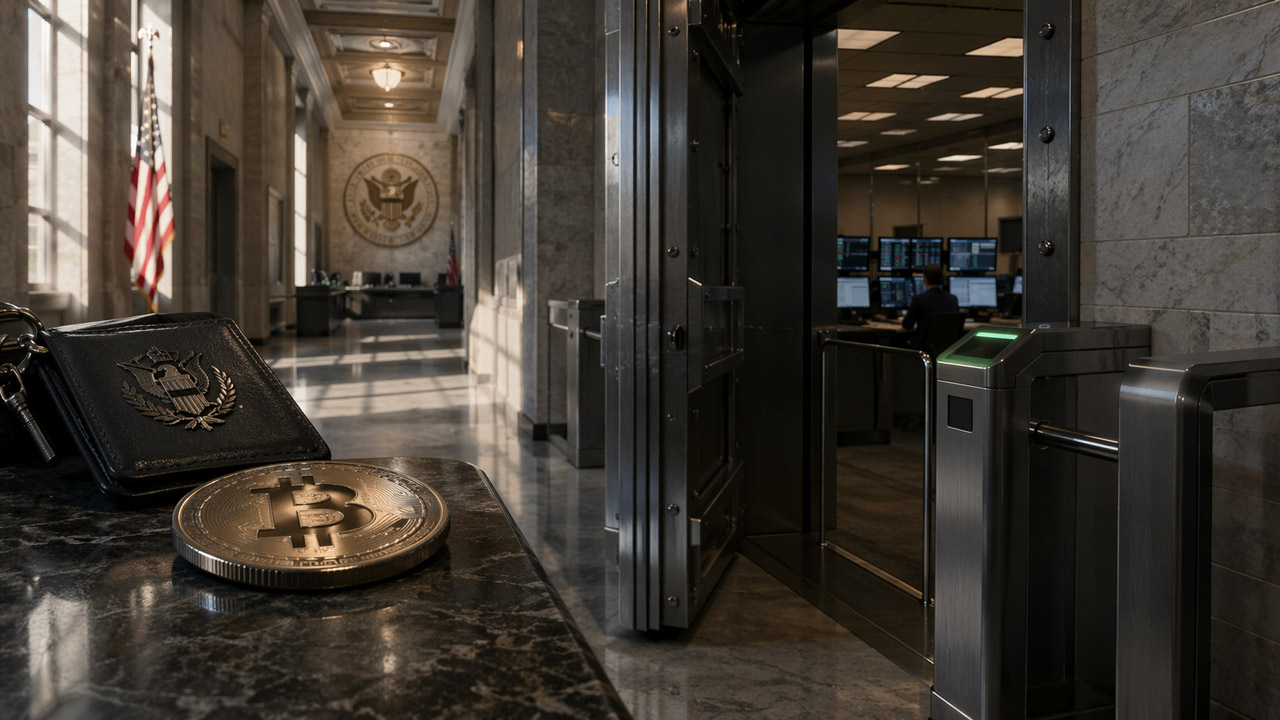
Kevin Warsh will become the first Federal Reserve chairman with publicly disclosed crypto holdings, and the first whose policy instincts could still put more pressure on the sector than his predecessors.
Most Americans aren’t following the Fed’s staffing drama closely, but they are feeling its aftershocks every month through mortgage rates, savings rates and stock market temperatures.
Bitcoin feels those same currents even more keenly than most traded assets. That’s why the question of who runs the central bank matters for crypto long before that person says a word about digital assets. As Warsh’s chances of becoming Fed chairman increased, Bitcoin sold off as traders saw him as a central banker who favors a smaller Fed balance sheet and a tighter monetary regime.
That reaction shows how high the stakes are. The next Fed chairman will determine the fate of Bitcoin by the price of money, the amount of liquidity in the markets, and the willingness of the financial system to allow crypto to move closer to its core.
Warsh’s financial revelations added even more weight to this. The document revealed holdings tied to several crypto-related ventures, including Polymarket, and Warsh has pledged to divest these positions under Fed ethics rules if confirmed by the Senate.
That makes him the first nominee to reach the chairman’s seat with visible sector exposure at a time when crypto is moving closer to the mainstream US financial system. What’s unusual is that the same figure who seems visually closer to crypto can still end up presiding over the kind of monetary environment that weighs it down the most.
Warsh could be more important to Bitcoin than former Fed chairs
The clearest consequence of a Warsh presidency will most likely come from macro policy, not doctrine. Reuters has reported that he favors a smaller Fed balance sheet and a tighter monetary regime, and that the framing alone affected Bitcoin prices as his nomination chances rose.
Bitcoin tends to perform better when liquidity is abundant and investors’ risk appetite is high, and tends to struggle when the Fed withdraws liquidity. So a chair whose instincts lean toward a smaller balance sheet matters for crypto in the cold arithmetic of the markets, because tighter money typically leaves less room for speculative assets.
That is also readable far beyond crypto. The same institution that influences financing costs, market sentiment, and the value of financial assets more broadly also forms the backdrop in which Bitcoin is traded. Even those who care little about digital assets still understand the underlying mechanism as they see the Fed’s influence on mortgage payments, savings returns, and stock market fluctuations.
Bitcoin is on the same risk map, just a little closer to the edge.
A second consequence penetrates deeper into the financial system itself. The Federal Reserve has influence over whether crypto companies can connect more directly to the core of U.S. finance, and the tone set by its chairman is filtering down to banks, custodians and regulators who decide how much exposure to allow.
Earlier this month, Kraken became the first crypto company to secure a Fed master account, giving it direct access to Fed payment rails, with restrictions. Regional Fed banks manage these accounts, while the Fed board sets the guidelines and has signaled an openness to more limited models for crypto and fintech companies. A Warsh-led Fed will inherit that opening question, and its answers will help determine whether crypto becomes a more established fixture in the financial system or stays closer to the edges.
That same tone also shapes the broader climate around banks’ custody of digital assets, stablecoin scrutiny, and regulatory attitudes toward companies operating at the intersection of banking and crypto.
Warsh’s direct authority over crypto law will be limited, but his position will still influence banks’ willingness to work with digital asset companies and how quickly compliance burdens wane or diminish. This is one reason why the choice for Fed chairman has more significance for crypto than a narrow reading of the job title would suggest.
Why this marks a break from the Fed’s recent pattern
Recent Fed chairs largely kept crypto at an institutional distance, even as it transitioned from novelty to something big enough to attract sustained official attention.
In Bitcoin’s early years, the response within the Federal Reserve was one of cautious interest, treating digital payments innovation as a technology worth watching while remaining off the center of policy.
Janet Yellen spoke more forcefully about the limitations and concerns surrounding cryptocurrencies, and Jerome Powell later developed a framework that recognized potential efficiency gains in areas such as payments, while continuing to emphasize the risks to financial stability and the absence of traditional safeguards. By late 2024, Powell was also clear that the Fed was not legally able to own Bitcoin and had no plans to pursue legislative changes that would make this possible.
Warsh arrives with a different kind of profile. His disclosed holdings reflect personal proximity to part of the industry, and his divestment pledge shows he is aware of how sensitive these optics will be. What sets it apart is the combination of visible crypto ties and a macro worldview that is already being read as aggressive by the markets. This mix makes him feel different from previous chairs, without making it easier for the industry to live with.
The forward signals will land soon. Warsh is scheduled to appear before the Senate Banking Committee on April 21, and Powell’s term ends on May 15. Several signals during the hearing will carry weight for the crypto markets, including whether Warsh views financial innovation as something to be accommodated or curtailed, whether he emphasizes balance sheet shrinking as a central objective, whether he specifically addresses banking access and stablecoin oversight, and how directly he speaks about his disclosed crypto holdings and divestiture commitments.
Pull back and you see the big picture. The next Fed era will shape crypto through three forces that ordinary Americans already understand, namely the price of money, the amount of liquidity moving through the markets, and the degree of access crypto companies have to the institutions most Americans trust.
Previous presidents treated crypto as peripheral, experimental or risky. Warsh comes at a time when that distance is harder to maintain, even as the policy instincts associated with him could make the environment tougher for Bitcoin and the companies around it.
His confirmation carries the weight of a larger argument about crypto’s next American chapter and whether that chapter will be defined more by deeper access to the financial system or by tighter money flowing through it.