
Address poisoning, a deceptive technique that can lead to unsuspecting users sending money to the wrong recipient, has targeted nearly 4.5 million Solana wallets over an 11-month period, according to recent findings by blockchain-data firm Bitquery. This alarming discovery underscores the importance of being vigilant when making transactions in the crypto space.
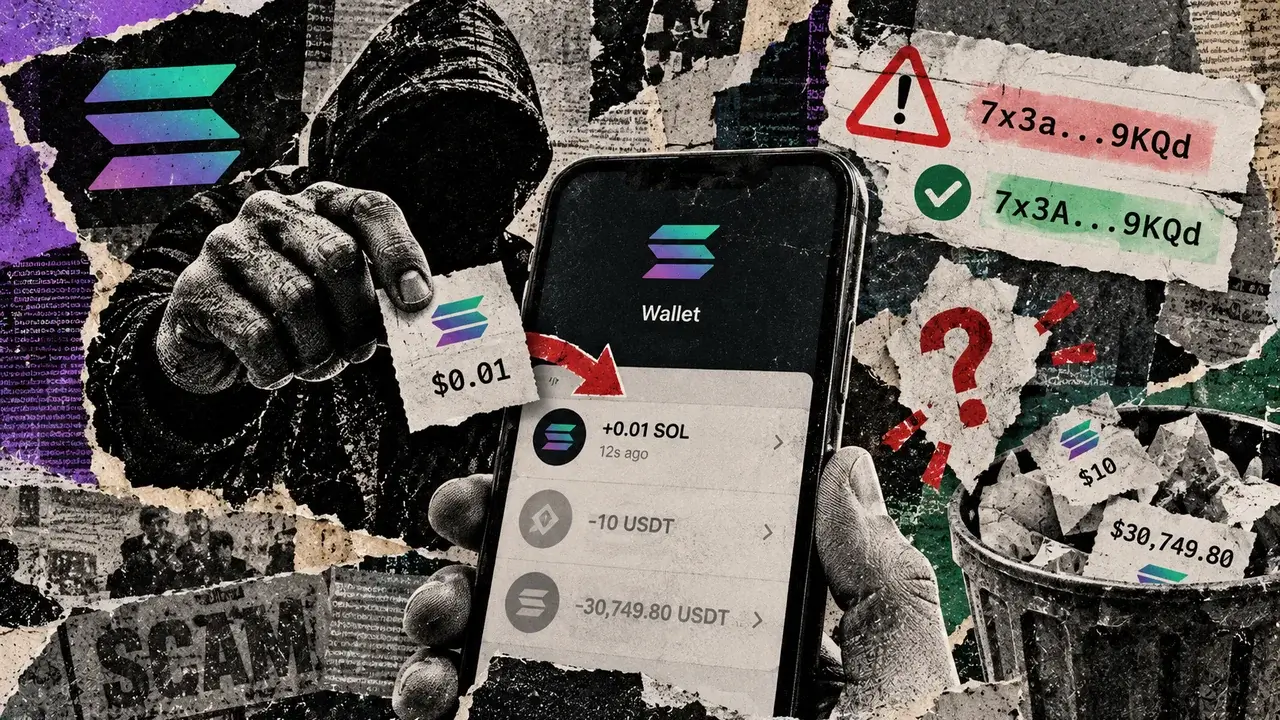
The modus operandi of address poisoning involves planting a misleading entry in a wallet’s payment history. A small test transfer is made to the user’s wallet, followed by a subsequent transfer from a lookalike address. This lookalike address is strategically placed near a legitimate payment, making it easy for users to mistakenly copy it when making a transaction. The result? Money sent to the wrong address, potentially falling into the hands of scammers.
A case study from November 17, 2025, highlighted by Bitquery, illustrates how this scheme can play out in real life. A wallet initially sent $10 in USDT to its Gate.io deposit address, only to receive a tiny amount of dust from a lookalike address shortly after. The unsuspecting user then proceeded to send a second $10 test to the fake address, followed by a whopping 30,749.80 USDT payment to the same address. The successful delivery of the test transfers may have given the user a false sense of security, leading to a costly mistake in the end.
It’s crucial to note that a successful test transfer does not verify the identity of the recipient address. Users must exercise caution when copying addresses from transaction histories and always double-check the accuracy of the recipient address before sending funds. Phantom, a leading crypto wallet, provides guidance on how to avoid falling victim to address poisoning, emphasizing the importance of verifying the recipient address and network before initiating a transaction.
Bitquery’s analysis revealed that over 4.5 million Solana wallets were targeted by address poisoning between October 30, 2025, and October 7, 2026. While not all of these wallets may have incurred financial losses, the sheer scale of the scheme is cause for concern. It’s essential for users to remain vigilant and follow best practices to protect their funds from falling into the wrong hands.
In conclusion, the prevalence of address poisoning highlights the need for enhanced security measures and user awareness in the crypto space. By staying informed and practicing caution when making transactions, users can minimize the risk of falling victim to deceptive schemes like address poisoning. Stay safe, stay vigilant, and always verify before you transact in the world of cryptocurrency.