
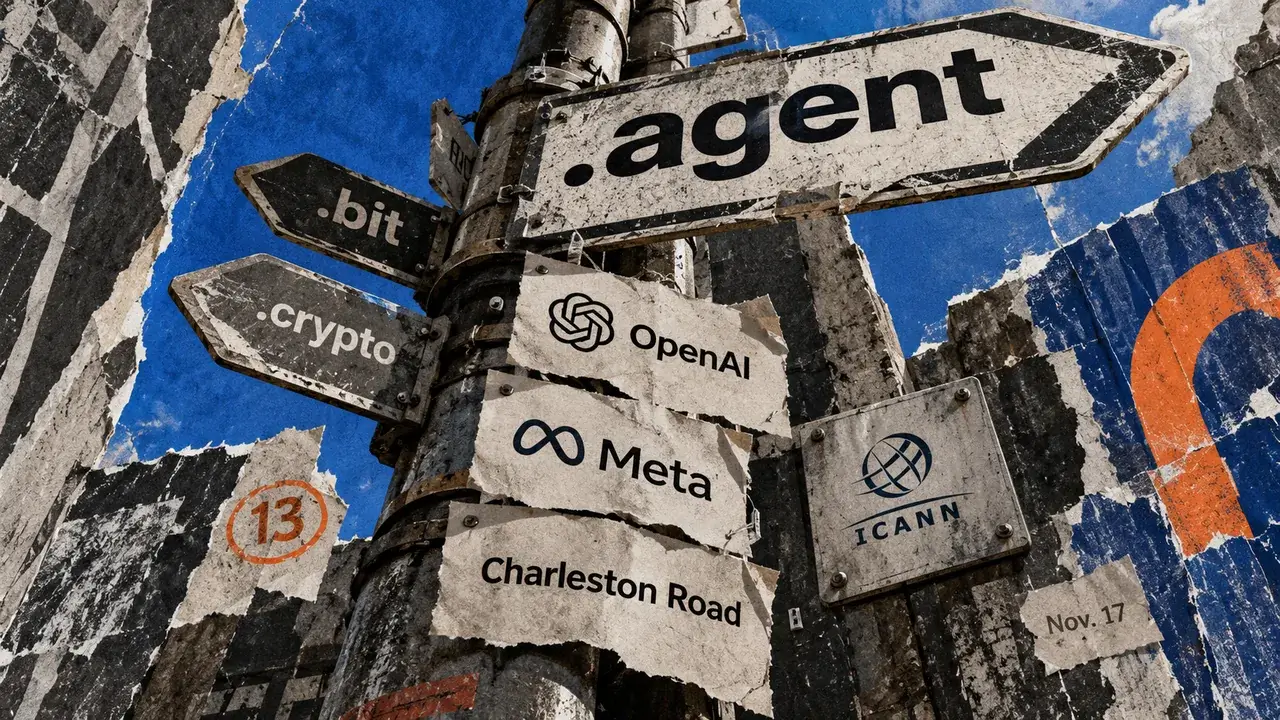
Technology giants OpenAI, Google, and Meta are currently vying for control over the highly sought-after .agent domain extension, along with 10 other applicants in the latest expansion of the internet’s address system. This intense competition follows the recent announcement by the Internet Corporation for Assigned Names and Numbers (ICANN) of 1,615 applications for new generic top-level domains, marking the first such round since 2012.
OpenAI has put forth applications for a total of 15 extensions, including .agent, .agi, .asi, .gpt, .model, .skill, .voice, and .mcp. Alphabet’s Google is also in the running for names like .agent and .mcp, while Meta is pursuing .agent in addition to extensions linked to its AI products.
The competition extends beyond individual brands, with seven applicants eyeing .agi and five vying for .mcp. This fierce battle for domain names underscores how tech companies are strategically positioning themselves for a future where AI agents play a significant role in interacting with various online platforms and services.
Securing control over a top-level domain registry could potentially enable a company to manage registrations and collect fees for addresses using that specific extension, subject to ICANN’s regulations. The financial implications are substantial, with each standard application carrying a hefty $227,000 evaluation fee, and competitive bidding for valuable names could lead to auctions down the line.
In a similar vein, cryptocurrency firms are also actively participating in the race for internet naming rights, with 11 applicants vying for .bit and multiple contenders for extensions like .crypto, .wallet, and .dao. These efforts reflect a broader push to establish naming infrastructure that could bridge traditional internet addresses with blockchain-based identities and financial services.
For instance, the Cardano Foundation recently announced that its application for .ada is progressing through ICANN’s process, potentially integrating the blockchain’s name into the global internet domain system. Frax Finance has also disclosed its application for .frax, aiming to link internet naming with on-chain ownership, payments, and AI-powered commerce.
As AI and crypto infrastructure providers continue to compete, the potential approval of a crypto-related domain could pave the way for more seamless interactions between autonomous software, payments, and digital wallets. However, it’s important to note that approval of a domain does not automatically enable blockchain transactions or wallet functionality, as additional technical integrations would be required.
At this stage, none of the contested domains have been awarded, setting the stage for further developments in the evolving landscape of internet naming rights and digital infrastructure.