
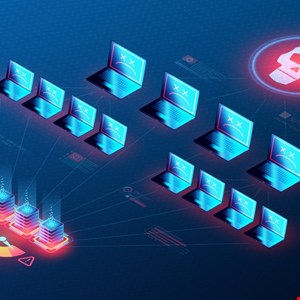
A newly discovered botnet loader has been identified by Qrator Research Lab, introducing a shift in command-and-control (C2) operations by utilizing the Polygon blockchain. This innovative approach eliminates the traditional central servers that have historically been targeted by authorities and security firms in efforts to dismantle malicious networks.
Known as Aeternum C2, this malicious entity was uncovered by Qrator Research Lab while monitoring cybercrime forums. Aeternum C2 replaces the typical infrastructure with smart contracts hosted on the Polygon blockchain. Instead of communicating with hardcoded IP addresses or registered domains, infected machines now retrieve instructions directly from the blockchain. These instructions are publicly recorded within transactions on the blockchain, making them immutable and impossible to remove.
In the past, law enforcement agencies have disrupted nefarious operations like Emotet, TrickBot, and QakBot by seizing servers or suspending domains. However, Aeternum C2 seems to remove this vulnerability entirely by leveraging blockchain technology.
The utilization of smart contracts for control is a key feature of Aeternum C2. According to the seller’s documentation and panel screenshots reviewed by Qrator, Aeternum is a native C++ loader available in x32 and x64 builds. Operators can manage infections through a web dashboard that allows them to select a smart contract, choose a command type, and specify a payload URL. These instructions are then written to the blockchain as transactions and are accessible to bots through more than 50 remote procedure call endpoints.
The seller claims that new commands can reach active bots within two to three minutes. Operators have the ability to run multiple smart contracts simultaneously, each linked to different payloads or functions such as clipper modules, information-stealing DLLs, PowerShell or batch scripts, remote access tools, and cryptocurrency miners.
One of the key aspects of blockchain-based C2 is the decentralization of data. Blockchain data is replicated across thousands of nodes, eliminating the presence of central infrastructure that can be seized. Only the wallet holder has the authority to issue or modify commands tied to a specific contract.
This new model complicates traditional disruption efforts that rely on identifiable infrastructure. Domains can be suspended, hosting providers can null-route IP addresses, and physical servers can be confiscated. However, with blockchain-based control, commands stored on-chain are permanent and globally accessible, making takedown strategies more challenging.
The operational costs associated with Aeternum C2 are minimal. The seller offers lifetime licenses or full C++ source code, stating that $1 in MATIC can fund 100-150 command transactions. This eliminates the need for domains, rented servers, or hosting providers.
In conclusion, Aeternum C2 represents a significant shift in C2 operations by leveraging the Polygon blockchain. This new approach poses challenges for traditional takedown strategies and highlights the importance of proactive DDoS mitigation. As the landscape of cyber threats continues to evolve, staying ahead of emerging technologies like blockchain-based C2 is crucial for effective cybersecurity measures.