
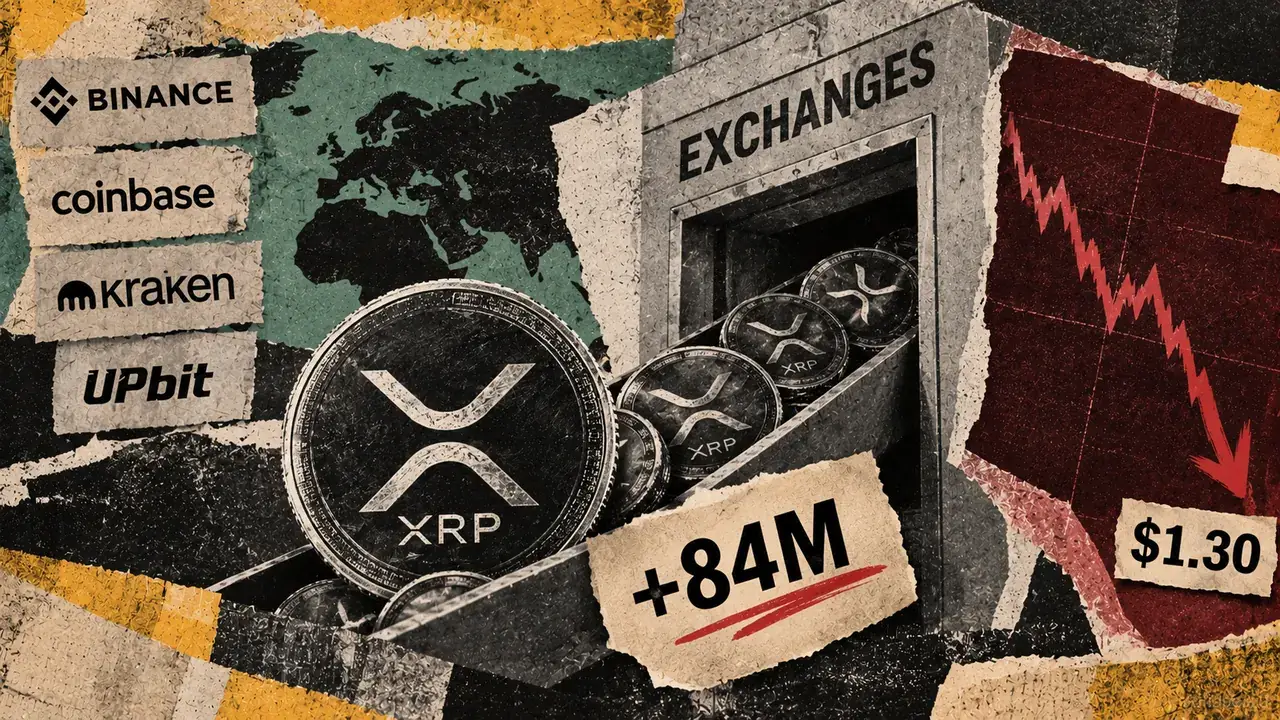
Wallets associated with exchanges have added a significant amount of XRP over a period of three days, totaling 83.94 million XRP. This increase brings the total tracked XRP balance to 22.06 billion, raising questions about potential supply amidst price weakness.
XRP Insights, a platform that tracks XRP Ledger balances and public wallet labels, noted the rise in 699 wallets across 24 exchanges. The latest snapshot of exchange wallets was taken on October 15, 2026, at 08:01 UTC.
During a CryptoSlate reading on October 15, XRP was trading near $1.32 with a 0.89% increase over 24 hours and reported turnover of about $3.12 billion. The platform also provides a market table listing broader token prices.
The downloadable balance figures show three consecutive daily increases in XRP holdings:
– Oct. 13, 2026: 17.75 million XRP
– Oct. 14, 2026: 35.21 million XRP
– Oct. 15, 2026: 30.98 million XRP
The total increase across these three days amounts to 83.94 million XRP. The tracked holdings rose from approximately 21.973 billion to 22.057 billion XRP over this period.
The consistency in the number of wallets and exchanges tracked across these days is crucial as it ensures that any increase in reported balances is not due to the addition of new wallets or exchanges. Instead, it signifies a genuine rise in the balance within the existing set of wallets.
The breakdown of venues over the period of October 8-15 revealed an increase of 82.35 million XRP in the tracked wallets. Binance accounted for the largest positive change, adding 54.61 million XRP, followed by Upbit with 11.58 million, Kraken with 9.17 million, Coinbase with 8.09 million, and Bithumb with 5.81 million. However, some platforms experienced a decrease in their XRP holdings during this time.
XRP Insights tracks various types of wallets, including hot wallets, deposit hubs, and cold storage. It also accounts for wrapped-token reserves and other funds, such as insurance and charity holdings. The platform’s methodology ensures that the total balance reflects exchange-controlled assets and institutional custody, rather than XRP available for trading.
The analysis also considers the limitations of shared-address accounting and the use of destination tags in XRP Ledger transactions. These factors influence the measured total without necessarily reflecting individual customers’ trading intentions.
In conclusion, the increase in XRP balances on exchange wallets raises questions about potential supply dynamics during a period of price weakness. Monitoring executed trades and seller-initiated activity on these venues will provide further insights into the market sentiment and potential risks associated with the current XRP supply.