

A worrying pattern has emerged in the crypto sector. Reports indicate that approximately four in five projects affected by major hacks do not fully recover. Money has been lost, yes. But the deeper damage can often be trusted – and that can be fatal.
Related reading
Trust erodes quickly
When a breach is found, users quickly raise money. Partners take a step back. Liquidity is drying up. Industry experts, including Mitchell Amador, CEO of Immunefi, warn that slow or unclear responses could drive away entire communities.
Some projects try to quietly fix code. That can fail. Silence is sometimes seen as hiding. The panic is spreading. Confidence drops.
“Almost 80% of projects are hacked never fully recover“, Amador emphasized. The main reason, he said, is not the initial loss of money, but the “breakdown of operations and confidence during the response.”
How teams respond can determine their fate
Reports Keep in mind that incident plans are rare and the lack of a clear playbook hurts more than the bug itself. A quick, honest update can calm people down. A slow, confused response makes matters worse.
In many cases, even after the technical error has been resolved, the project remains damaged because users have left and not returned. Some teams are being rebuilt under new names. Others never get the attention again. The human side of recovery is of great importance.
Amador said many protocols get stuck at some point exploit comes to light. According to him, teams often underestimate how exposed they are and lack the operational preparedness needed to address a serious security breach.
Security issues are changing
The to attack are not all the same. Bugs in smart contracts remain a major cause. But now simple human errors, such as leaked keys or social tricks, are also common.
Reports say losses have grown into the billions in recent years, with around $3.4 billion lost in one year. That number indicates the magnitude of the risk.
Community responses determine outcomes
A project can be technically repaired. But the people who used it may have gone further. Communities are vulnerable. Some founders try to refund users or set up funds to cover losses.
That can help. Other teams decide to close the shift and focus on other work. Sometimes the decision is made for them when liquidity disappears and partners cut ties. Recovery is often not just a technical task; it is a rebuilding of trust and reputation.
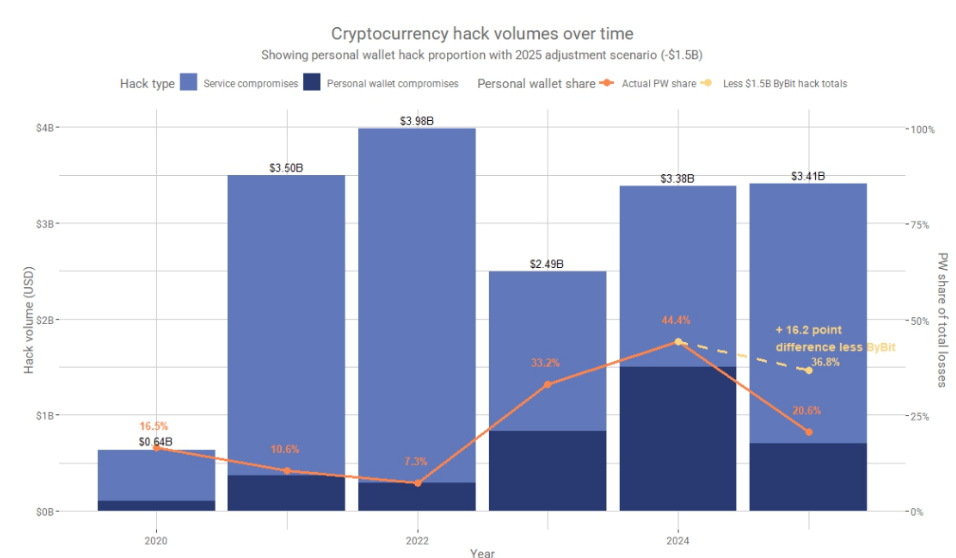
Data from Chainalysis shows the $1.4 billion Bybit hack accounted for almost half of crypto losses in 2025.
Related reading
Huge damage
The number of crypto hacks surged in 2025 as attackers hit both major platforms and private wallets. Based on reports, total losses reached $3.4 billion, the largest annual figure since 2022.
Just three breaches were responsible for nearly 70% of that damage in early December, with the $1.4 billion Bybit exploit being the largest.
Featured image from Unsplash, chart from TradingView