

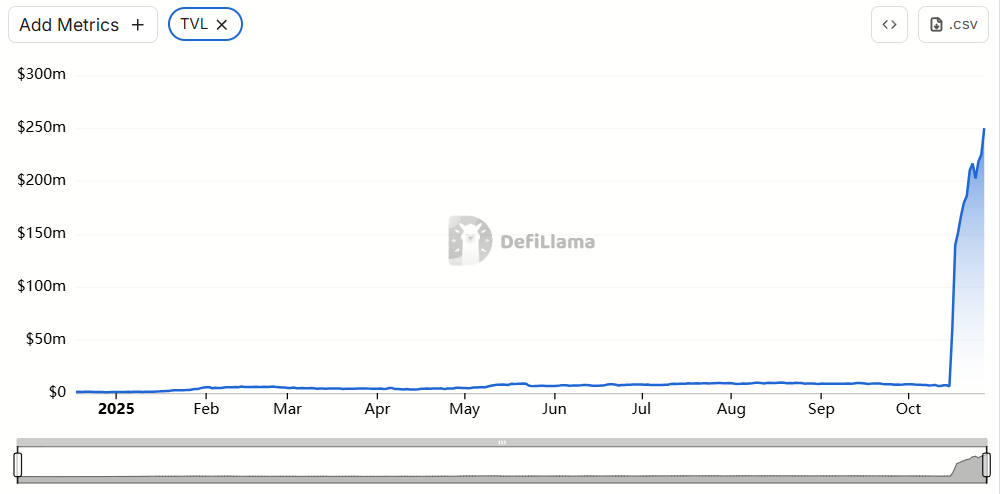
Ink, a Layer 2 (L2) blockchain launched by US crypto exchange Kraken in December 2024, saw its total value locked (TVL) increase by almost 3,800% in less than two weeks, from $6.42 million on October 15 to almost $249 million at the time of writing.
Ink TVL. Source: DefiLlama
However, data from DefiLlama shows that of the 30 protocols deployed on Ink, more than 97% of this sharp increase came from a single product, Tydro, a non-custodial lending protocol built by the Ink Foundation, as a white label instance of open-source DeFi giant Aave.
The Ink Foundation announced the launch of Tydro on October 15, calling the protocol Ink’s “native liquidity layer” and revealing that it would also be integrated directly into Kraken.
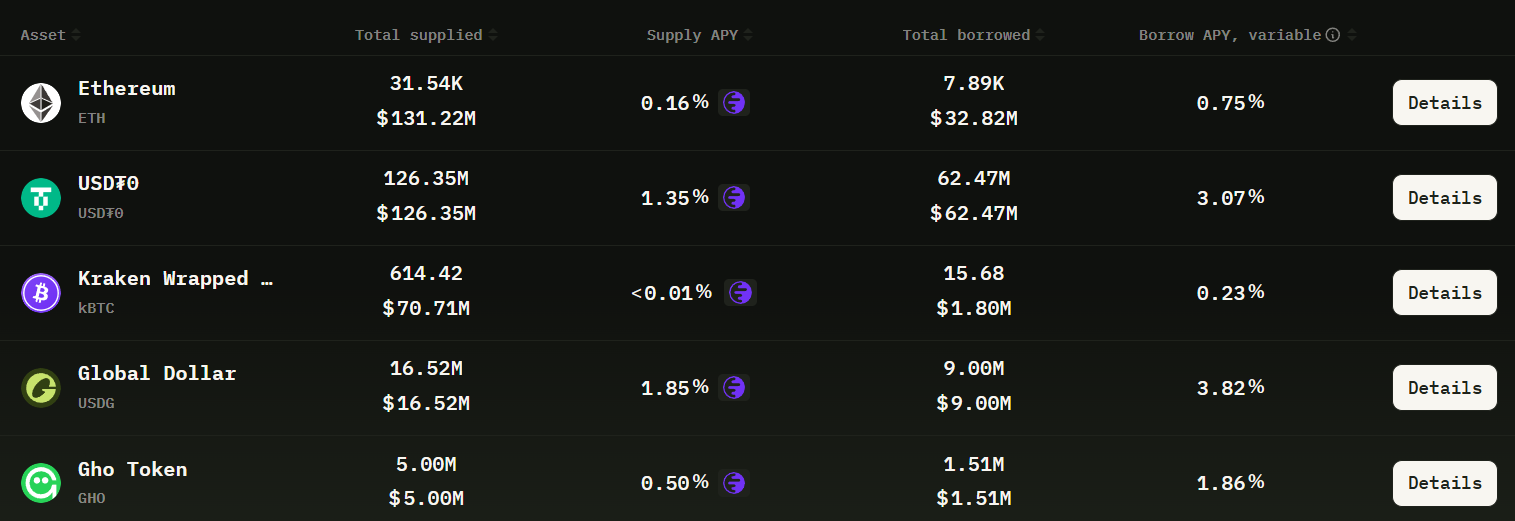
The data further suggests that the spike in TVL followed shortly after Tydro’s launch and was amplified by a nine-digit stablecoin coin of USDT0, a cross-chain version of USDT.
Markets on Tydro. Source: Tydro
At the time of writing, Tydro’s total market size of deployed assets is over $350 million, including $108 million in borrowed assets and $243.55 million in supply.
The highest offering APY on the protocol, currently 1.84%, is not offered on USDT0 but on USDG, a stablecoin issued by regulated fintech Paxos and backed by a consortium including Kraken, Robinhood, Anchorage Digital, Bullish and Galaxy Digital.
Ink protocols based on weekly turnover. Source: DefiLlama
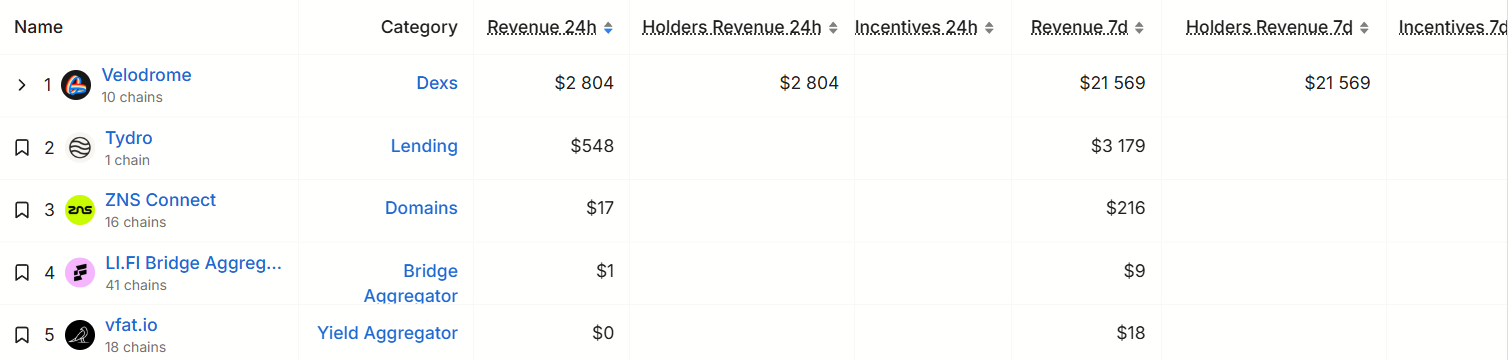
As a result, Tydro, which currently only supports five markets – ETH, USDT0, USDG, KBTC and GHO – became the second largest protocol on Ink in terms of weekly revenue, generating $3,179 since launch, next to Velodrome, a decentralized cryptocurrency exchange, which has over $21,000 in weekly revenue.
Daily active users on Ink. Source: Token terminal
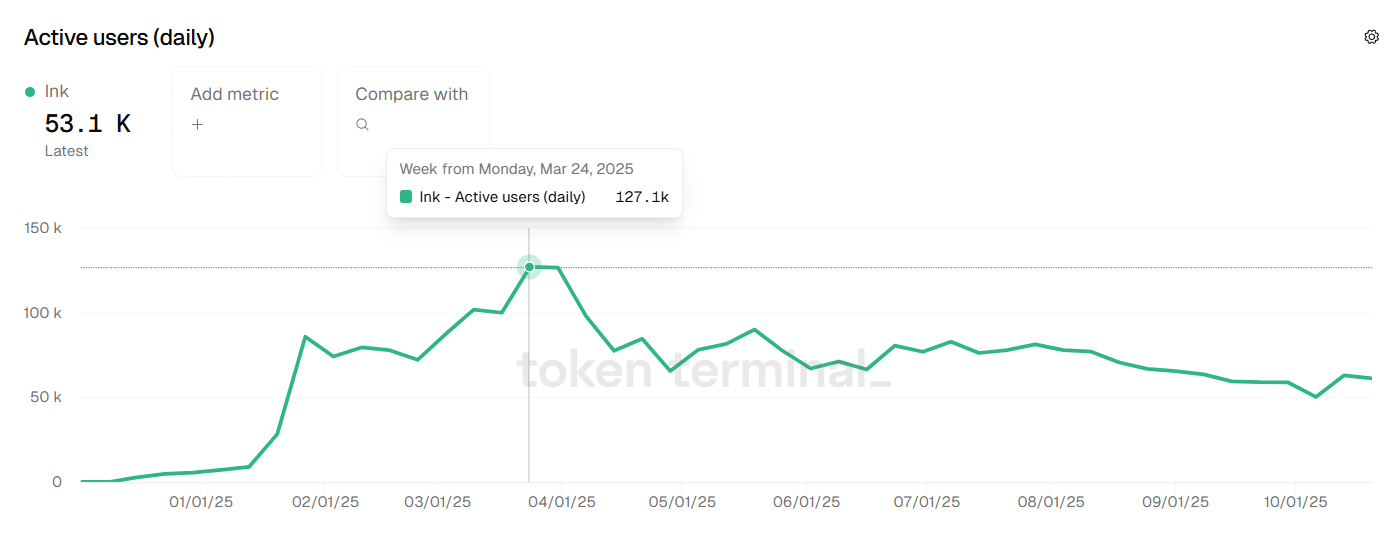
Despite the parabolic TVL expansion, network activity on Ink, which is built on Optimism’s Superchain, is trending downward. The number of daily active addresses has steadily declined from a peak of 127,100 users on March 24 to about 60,300 in the past week, a drop of more than 50%, according to data from Token Terminal. The decline in user activity has also translated into declining network revenues, which have recently fallen to less than $500 in daily fees, with total revenues of $11,600 in the past month.