
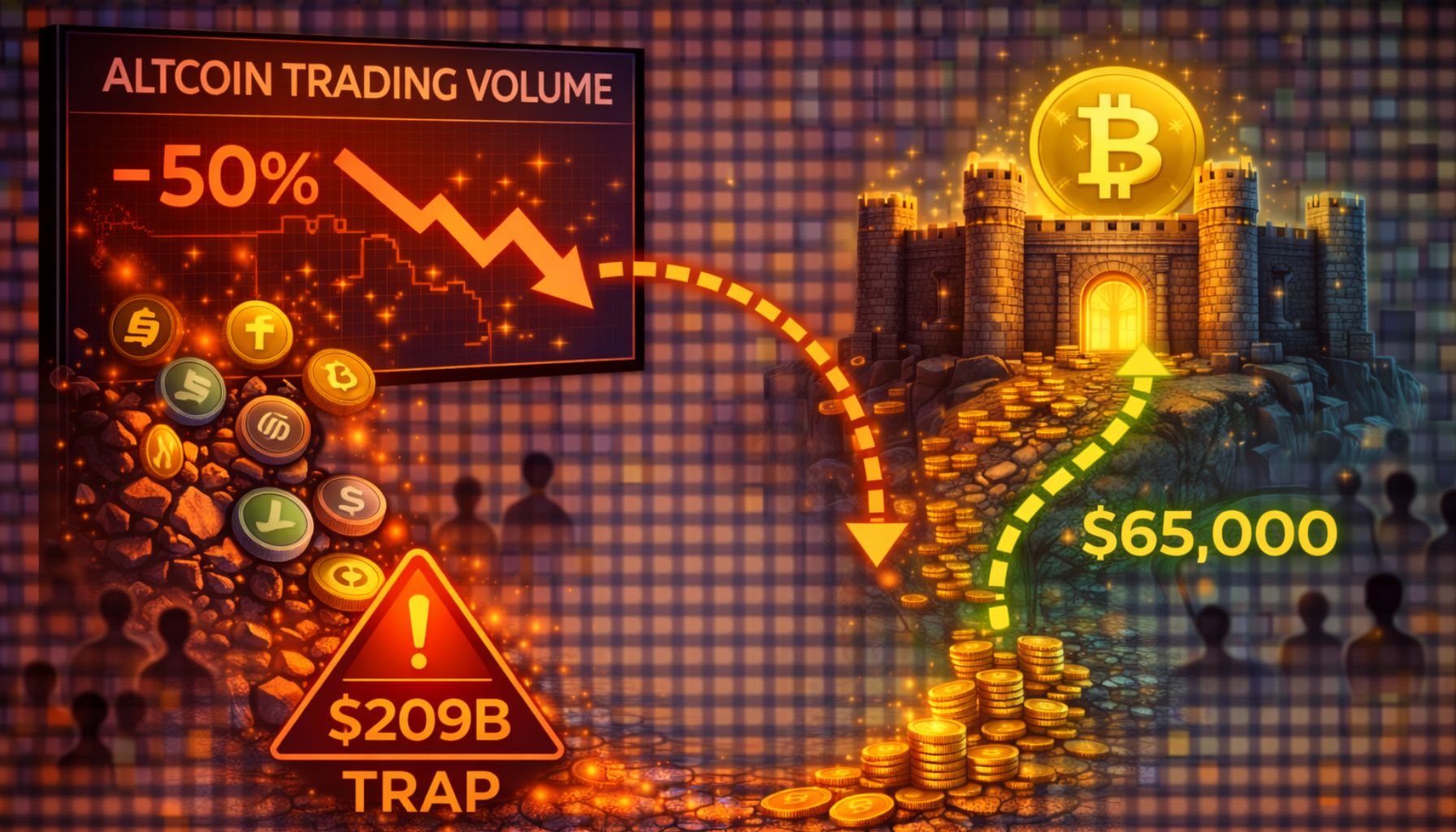
The altcoin market has faced persistent problems since 2024, with many assets still struggling to recover from the euphoric highs reached during the 2021 bull cycle. Despite periodic rallies, broader momentum has remained weak, reflecting reduced speculative appetite, tighter liquidity conditions and a gradual shift in investor preference towards more established crypto assets. This prolonged underperformance has led to much of the altcoin sector trading well below historical peaks, reinforcing cautious sentiment in the market.
Related reading
A recent CryptoQuant analysis provides additional context by examining capital turnover patterns during Bitcoin’s latest correction phase. After a sharp pullback, Bitcoin has entered a consolidation range roughly between $65,000 and $72,000, an area where significant activity from whales, long-term holders and institutional participants appears to be concentrated. Such consolidation zones often attract strategic accumulation rather than speculative altcoin exposure.
Historically, deep corrections or late-stage bear phases tend to cause capital migration into Bitcoin, while altcoins experience reduced inflows. Binance trading volume data – segmented into BTC, ETH, and other altcoins – clearly highlights this dynamic. As Bitcoin regained levels above $60,000, there was a noticeable shift in the volume distribution, indicating that investors were increasingly prioritizing Bitcoin over exposure to higher-risk altcoins.
Altcoin trading activity has noticeably weakened during the current correction phase, reinforcing the broader shift towards defensive positioning within the crypto market. According to a recent analyst According to estimates, Bitcoin trading volumes on Binance regained dominance on February 7, accounting for approximately 36.8% of total exchange activity. This leadership has persisted since then, indicating a continued investor preference for the relative stability and liquidity associated with Bitcoin during uncertain conditions.

In comparison, altcoins accounted for about 35.3% of total trading volume, while Ethereum accounted for about 27.8%. While these numbers still reflect meaningful participation, altcoins have experienced the sharpest contraction in activity. In November, altcoins represented around 59.2% of Binance’s trading volumes, but by February 13, their share had fallen to around 33.6%, representing a nearly 50% drop in market participation.
Similar patterns have appeared during previous corrective phases, including April 2025, August 2024 and late 2022, near the end of the previous bear cycle. Periods of heightened uncertainty typically drive capital towards Bitcoin, which continues to function as the sector’s main liquidity anchor. This recurring rotation highlights Bitcoin’s role as a perceived safer crypto asset when volatility increases and speculative appetite decreases.
Related reading
Altcoin’s market capitalization is weakening as risk appetite remains limited
The overall cryptocurrency market cap, excluding the top 10 assets, continues to reflect continued weakness, highlighting the fragile state of the broader altcoin segment. After peaking near the 2025 highs, this measure entered a sustained corrective phase, with recent price action hovering around $170-180 billion. This zone has acted as a provisional support area, but the absence of a strong recovery suggests that risk appetite for smaller assets remains subdued.
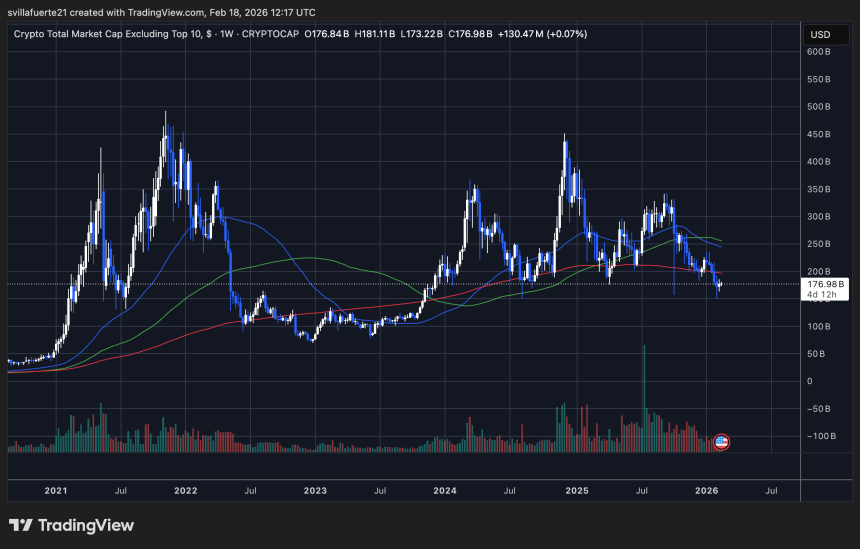
Technically, the structure shows that the altcoin market is trading below the major moving averages, indicating that momentum is still in favor of sellers. Previous recovery attempts have repeatedly stalled near dynamic resistance, reinforcing the idea that capital rotation into key assets – especially Bitcoin – continues to dominate market behavior. The increased volatility during the most recent declines also points to vulnerable liquidity conditions.
Related reading
The volume dynamics further support this tentative interpretation. Peaks in sales activity accompanied the latest pullback, indicating distribution rather than accumulation. While a near-term stabilization appears to be developing, there is limited evidence that continued inflows are returning to altcoins.
Historically, similar configurations have often preceded lengthy consolidation phases rather than immediate recovery. Unless broader market liquidity improves or Bitcoin’s dominance weakens, the altcoin market may remain structurally constrained despite occasional short-term upticks.
Featured image of ChatGPT, chart from TradingView.com