
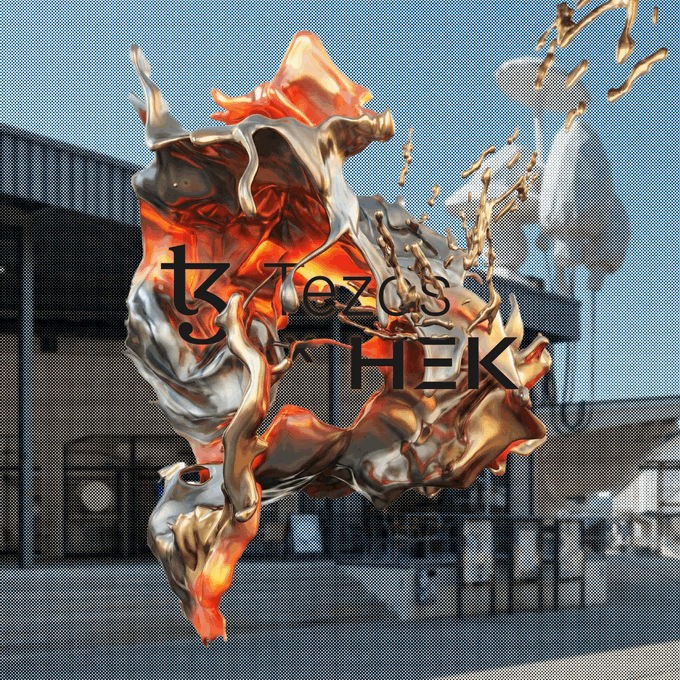
As museums and cultural institutions continue to struggle with exhibiting, preserving and contextualizing digital art, the Tezos Foundation and HEK (House of Electronic Arts) are rising to the challenge together.
—
The two organizations have announced a year-long collaboration running until 2026, aimed at advancing blockchain-based artistic practices through exhibitions, education and long-term conservation.
The collaboration builds on a relationship dating back to 2022, when HEK publicly embraced Web3 and blockchain as tools for increasing participation, ownership and sustainability in digital art.
Exhibitions in virtual and physical spaces
Two curated exhibitions will be presented on HEK’s virtual platform, virtual.hek, showcasing artists working with digital and blockchain-based practices. Each exhibition will feature at least six artists and feature onchain artworks in collaboration with objkt, one of the leading NFT platforms in the Tezos ecosystem.
The program also extends to the public domain. During Art Basel 2026, HEK will host an outdoor presentation at its Basel location, bringing blockchain-based art beyond institutional walls and into shared social space.
Three internationally recognized curators specializing in art and technology will oversee the exhibitions, with an emphasis on experimentation and interdisciplinary perspectives.
“The collaboration with the Tezos Foundation opens up new curatorial and technological possibilities for HEK. It allows us to explore experimental media art formats that transcend institutional and spatial boundaries.”
Sabine Himmelsbach, director of HEK
Education, access and hands-on learning
In addition to exhibitions, the partnership places a strong emphasis on public engagement and education.
HEK will install an on-site kiosk at the Basel location, allowing visitors to explore the digital exhibitions and learn more about blockchain-based art directly in the museum space. At the same time, in-person workshops will introduce new audiences to NFTs, blockchain technology and digital ownership through guided, hands-on experiences.
The goal is demystification: making blockchain art accessible not only to collectors and technologists, but also to general museum visitors.
Preserving digital art for the long term
Through HEK’s leadership of the Software-based Art and Ownership working group within the EU COST Action European Media and Born-Digital Art Conservation and Knowledge Network (EMBARK), the collaboration will support an international training school in the field of NFT conservation.
The program is hosted at ZKM | Center for Art and Media and brings together museum professionals, curators and researchers from across Europe to tackle one of digital art’s most pressing challenges: how to preserve works inherent to software, networks and blockchains.
“Working with HEK supports our focus on long-term museum programming and blockchain education. This partnership is about building sustainable foundations for future generations of artists working with technology.”
Aleksandra Artamonovskaya, head of art at Trilitech, Tezos’ R&D hub in London
A broader institutional push for Blockchain art
The HEK partnership reinforces the Tezos Foundation’s broader strategy to support blockchain art within established cultural institutions. Previous collaborations include projects with the Musée d’Orsay, Serpentine and LAS Foundation – all aimed at integrating blockchain into curatorial practice rather than treating it as a parallel ecosystem.