
Key Takeaways
What caused the latest crypto debanking controversy?
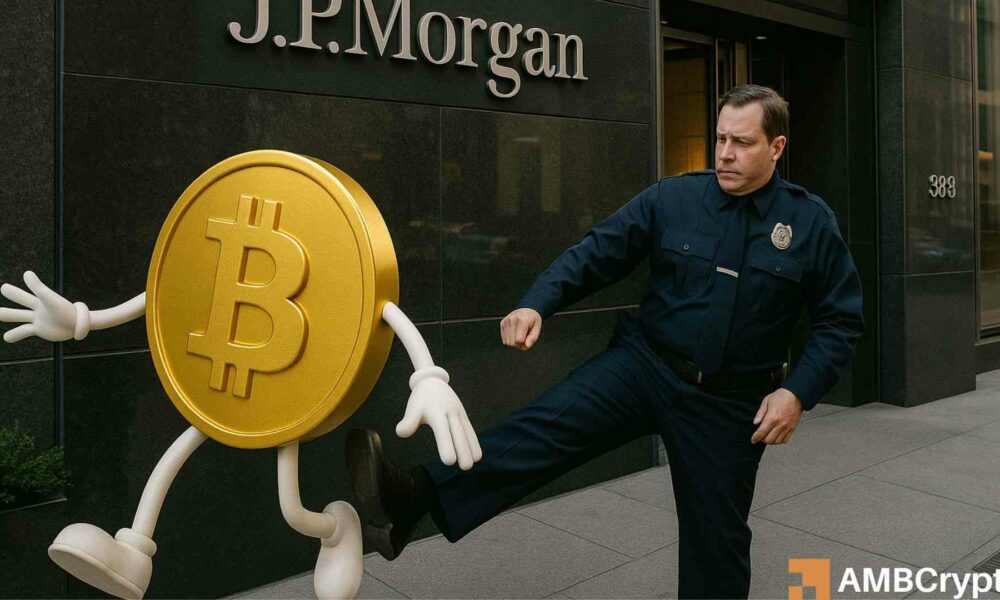
Strike’s CEO revealed that JPMorgan Chase froze his account and limited customer deposits to Strike.
How did the community respond?
The community condemned JPMorgan. But the bank had not issued a statement on the matter at the time of writing.
Crypto debanking is in the news again, this time JPMorgan Chase is under scrutiny.
Jack Mallers, CEO of Strike, a US-based Bitcoin [BTC]-focused payments platform, criticized JPMorgan for kicking him off the bank.
He added that the bank blocked some customers from depositing with Strike, claiming the company was involved in “known fraudulent activity.”

Source:
Senator Lummis slams JPMorgan
In response to the alleged banking restriction, pro-Bitcoin Senator Cynthia Lummis denounced JPMorgan’s actions. She warned that such debanking would push digital assets abroad added,
“Operation Chokepoint 2.0 unfortunately lives on. It’s time we put the brakes on making America the digital asset capital of the world.”
Systematic and targeted crypto debanking was widespread during the Biden era, a phenomenon dubbed “Chokepoint 2.0” by the industry.
Many US banks viewed crypto companies and investors as reputational risks due to the prevailing political climate and regulatory burden at the time.
When the tides changed after the pro-crypto Trump administration took office in 2025, a formal investigation was quickly launched to address the issue.
In August, President Donald Trump signed a treaty executive order advocating fair banking to remedy the situation. The Fed and other regulators were tasked with eliminating “reputational risk” and others as part of the solution.
The White House added at the time that the digital asset industry has been the target of “unfair debanking initiatives.”
Unfortunately, three months after the order, the same problem reappears.
Divided opinions on crypto risks
Supporters of the JPMorgan action, such as Steve Hanke, claimed that $28 billion has been laundered by criminal gangs through cryptocurrency since 2024.
However, John Deaton, a former candidate for the US Senate, clapped back: noticing that JPMorgan has paid $40 billion in fines for illegal activities since 2000. He added:
“Since 2000, JPMorgan alone has paid $40 billion in fines for illegal activities – significantly less than the total fines imposed on all crypto companies.”
Interestingly, even President Trump claimed in August that JPMorgan and Bank of America had rejected his deposits. He said this supported his belief that the debanking was due to politics.
That being said, it remains to be seen whether the friction between the crypto industry and the banks will be fully resolved.