

Latin American digital asset platform Mercado Bitcoin said it had deployed more than $20 million in tokenized private credit on Bitcoin sidechain Rootstock, deepening its push for real-world assets (RWAs) and targeting $100 million in issuance by April.
According to a release shared with Cointelegraph, several offerings had already reached target capacity since going live.
The move adds Rootstock to Mercado Bitcoin’s multichain tokenization strategy, which includes planned RWA issuances on Stellar (XLM) and the XRP Ledger, giving global investors Bitcoin-backed exposure to Latin American private debt markets.
Lucas Pinsdorf, business director at Mercado Bitcoin, told Cointelegraph that the newly issued assets include a mix of receivables and corporate debt, supporting both Brazilian and foreign borrowers.
“What is especially interesting is that these are not limited to Brazilian companies,” he said. “Within the issuance, Mercado Bitcoin has also chosen to issue debt for an American company.”
Related: Crypto Activity in Brazil Surges 43%, with Average Investment Exceeding $1,000: Report
The demand for RWA is growing worldwide
Pinsdorf said the initial $20 million offering sold out quickly, increasing confidence that the $100 million target “would sell out very soon.”
According to data from RWA.xyz, Mercado Bitcoin is among the top 10 tokenized private credit issuers in the world, with more than $370 million in cumulative loans.
Yet it is far behind the market leaders. The three largest issuers tracked by RWA.xyz each spent at least $5.4 billion.
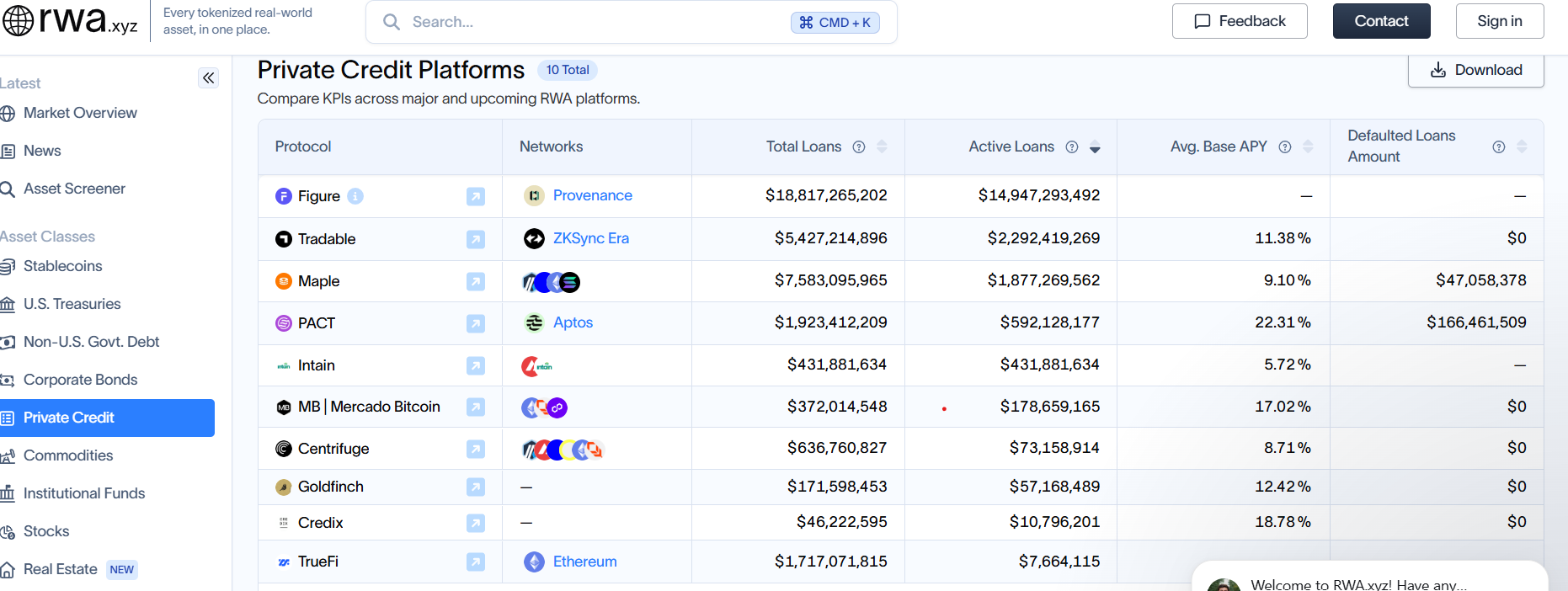
Private lending platforms. Source: RWA.xyz
Pinsdorf said Mercado Bitcoin structured its private credit tokens within Brazil’s regulated framework, based on licensing within its group overseen by the country’s Comissão de Valores Mobiliários (CVM) and the Central Bank of Brazil.
Latin America’s symbolic credit race
Mercado Bitcoin’s RWA pipeline follows a broader regional movement to bring yield-bearing instruments onto the chain.
In Argentina, long-standing cryptocurrency exchange Ripio recently launched local currency stablecoins and tokenized exposure to government bonds, as Latin American issuers seek to bridge the gap between traditional credit markets and blockchain liquidity.
Pinsdorf said Mercado continued to work with regulators to shape the roadmap for tokenized financing.
“We hope for clearer and more objective frameworks on how the path to tokenization in the financial market will be paved,” he said.
Magazine: When Privacy and AML Laws Conflict: The Impossible Choice of Crypto Projects