

The XRP price has recently entered a volatile contraction phase after a sharp decline from multi-month highs, leaving traders wondering if the recent crash represents a distribution top or a structurally valid buying opportunity. With a price limited to a clearly defined range and There are still macroeconomic pressuresActionable short-term trading requires disciplined structural analysis, risk management and clarity at key levels, rather than guesswork.
Trading XRP Price After the Crash: Structure, Levels and Range Execution
During the most recent price cycle, This move flushed out excess debt and forced short-term positioning out of the market, creating new value conditions for consolidation. For traders, this transition is critical as the playbook shifts from trend-following strategies to range-based execution.
Related reading
Recent short-term commentary from market analyst Luke Suther helps frame this phase by emphasizing structure over prediction. His technical analysis is consistent with the chart now showing a compressed range resistance on a higher time frame is still around $1.95-$2.00, while the visible local supply zone is closer to $1.67-$1.70. On the other hand, repeated defenses in the $1.58 to $1.60 region highlight that demand continues to stabilize prices despite broader uncertainty.
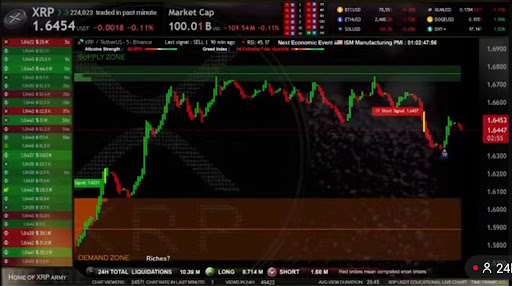
Trading XRP in this environment requires respecting these boundaries. Long exposure becomes beneficial at the bottom of the structure, where consistent responses indicate sellers are failing to accelerate momentum. Entries must remain confirmation-based, supported by observable demand, with strict invalidations under support to maintain risk control.
On the upside, moves toward resistance, both the local supply zone and the broader $2.00 region, serve as tactical exit or risk reduction areas rather than breakout signals. XRP has repeatedly failed to make progress through these ceilings, highlighting weak upside conviction. To price regains resistance on meaningful volume, short-term strategies continue to favor mean reversion over trend continuation.
Managing XRP trades around catalysts and volatility risks
Because XRP is in compressionSuther believes that external catalysts have an outsized influence. Short-term traders must actively include this in the execution and size. Ongoing Epstein-related developments threaten to undermine institutional trust, which could put pressure on broader crypto markets through the Bitcoin correlation. Increased US fiscal risk, including concerns about a shutdown, increases volatility and makes false breakouts more likely. Any progress or comments around the CLARITY Act is especially relevant for XRP and could quickly shift sentiment, while geopolitical tensions around Iran remain a wildcard for risky assets.
Related reading
In practical terms, this means reducing leverage, tightening stops and avoiding oversized positions ahead of high-risk news windows. Catalyst-driven movements should lead to reassessment. no emotional response. A confirmed break above resistance with continued volume would shift the short-term bias towards continuation, while a loss from the $1.50 support zone would invalidate the current range and reopen the downside risk.
Until the structure is resolved, the most effective way to trade XRP after the crash is disciplined range execution, strict risk management, and patience.
Featured image created with Dall.E, chart from Tradingview.com