

Decentralized Physical Infrastructure Protocol (DePIN) peaq has signed a memorandum of understanding with Dubai’s Virtual Assets Regulatory Authority (VARA) to develop a regulatory framework for on-chain robotics and tokenized machines.
According to a Thursday press release, the memorandum focuses on peaq’s Machine Economy Free Zone, with additional areas of collaboration including guidance for projects seeking VARA licenses, joint training initiatives on technology and compliance, and data sharing to support research and regulatory efforts.
Launched in July, the Machine Economy Free Zone is a controlled environment to test how robotics and AI can function within decentralized networks.
Peaq co-founder Max Thake said the agreement “represents a significant bipartisan commitment to bringing the machine economy to life in a compliant way and empowering people to participate, build and benefit from an entirely new economic sector.”
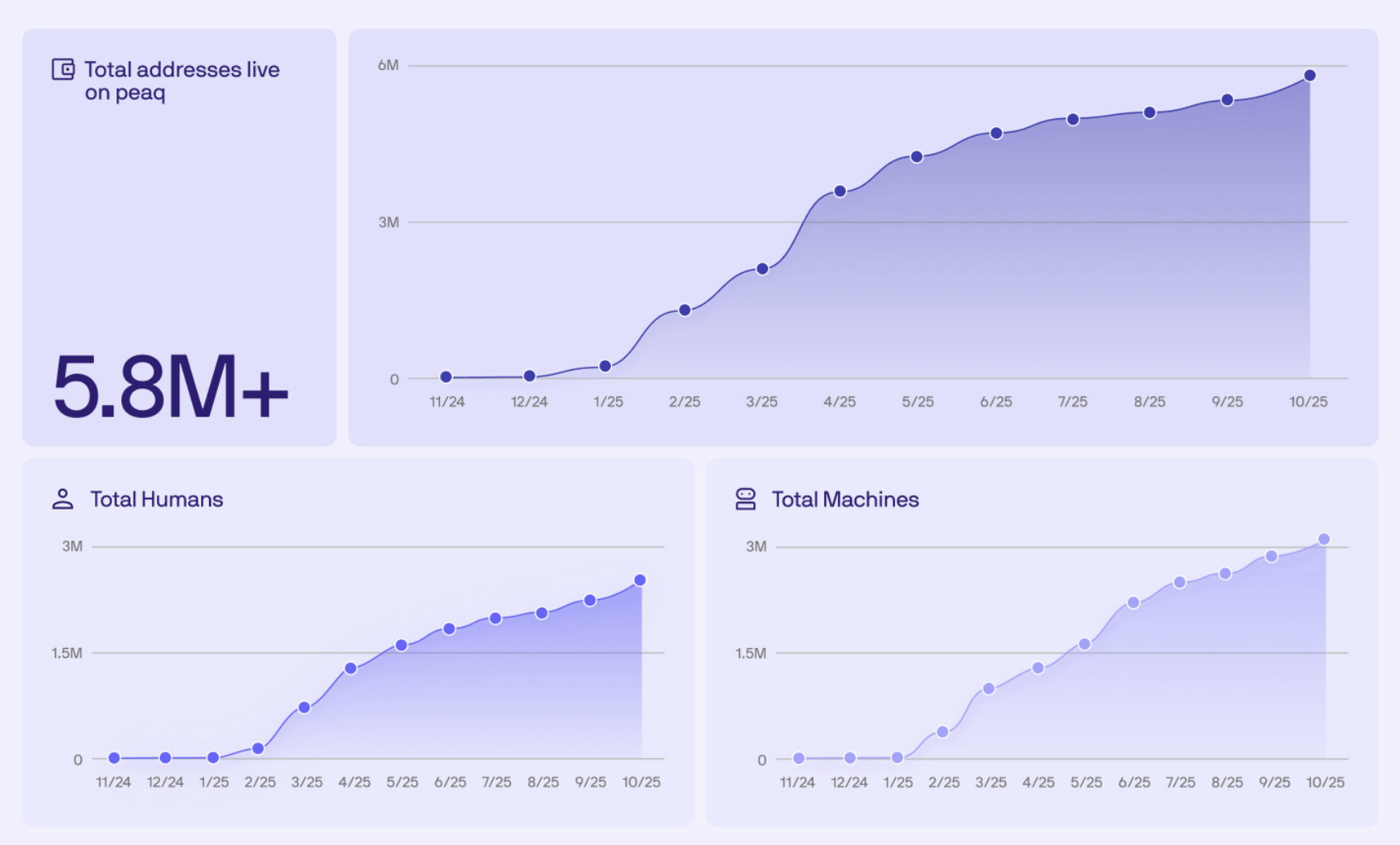
Man and machine at the peak. Source: peak.xyz
Peaq is a layer 1 blockchain for the machine economy, a network where connected devices and robots can own assets, share data, and earn revenue. It supports DePIN and real-world tokenized assets.
VARA is Dubai’s regulatory body for cryptocurrencies and digital assets. Founded in 2022, it oversees licensing, compliance and policies for virtual asset companies across the emirate.
The announcement came about a week after VARA entered into a strategic partnership with DMCC, Dubai’s government-backed commodity and business-free zone, to develop a regulatory framework for tokenized commodities.
VARA CEO Matthew White said the agency aims to “position Dubai as the global benchmark for the safe and sustainable growth of this next-generation asset class.”
Related: Singapore and UAE are the ‘most crypto-obsessed’ countries: report
Dubai and the UAE’s crypto push
Since its creation in March 2022 to oversee crypto and Web3 regulation, VARA has helped transform Dubai, and the wider United Arab Emirates, into one of the world’s leading digital asset and blockchain innovation hubs.
On May 19, VARA updated its rulebook for virtual asset service providers (VASPs) operating in the country, clarifying the issuance and distribution of risk-weighted assets. The new rules will allow people to issue RWAs and list them on secondary markets, according to United Arab Emirates-based law firm NeosLegal.
In August, VARA and the UAE Securities and Commodities Authority (SCA) formed a strategic partnership to synchronize their approaches to regulating digital assets. Under the agreement, Dubai-based licenses will apply to the entire UAE.
On September 22, the UAE signed the Multilateral Competent Authority Agreement under the Crypto-Asset Reporting Framework (CARF) to establish automatic exchange of tax information on crypto assets between member states. The Treasury said the framework will come into effect in 2027, with the first data exchanges scheduled for 2028.
Dubai and the UAE’s approach to digital assets has, unsurprisingly, attracted a migration of wealthy crypto investors. The UAE has become the top destination for migrant millionaires; It is expected that around 9,800 will move to this destination in 2025.
Chase Ergen, board member at crypto investment firm DeFi Technologies, predicts that the crypto sector will grow into the UAE’s second-largest industry within five years.
Magazine: Crypto City: Guide to Dubai