

Journalist
Posted:
The market has been tied to a certain range for more than two weeks, a situation that historically indicates some directional bias. That said, things are starting to turn around, leaving traders wondering where support might eventually stabilize.
Since the late rally in the fourth quarter, Bitcoin [BTC] has been consolidating for more than six weeks and fluctuates between $85,000 and $90,000. Although BTC managed to rise past $97,000, the momentum did not last.
Instead, the subsequent correction wiped out all these gains, and worse, the fund’s price failed to maintain its previous range. The liquidity unwind added pressure, while the Fear and Greed Index kept traders on edge, making the next step even more uncertain.

Source: TradingView (BTC/USDT)
If Bitcoin follows this playbook, the next meaningful move could come in late March, assuming BTC can hold above the $65,000 level. Strong accumulation at this point would help cement that level as a solid bottom.
That said, the conviction still seems thin. On-chain metrics show little sign of institutional interest, while BTC ETFs continue to rise net outflow. The Coinbase Premium Index is still in the red, signaling buy weak spot.
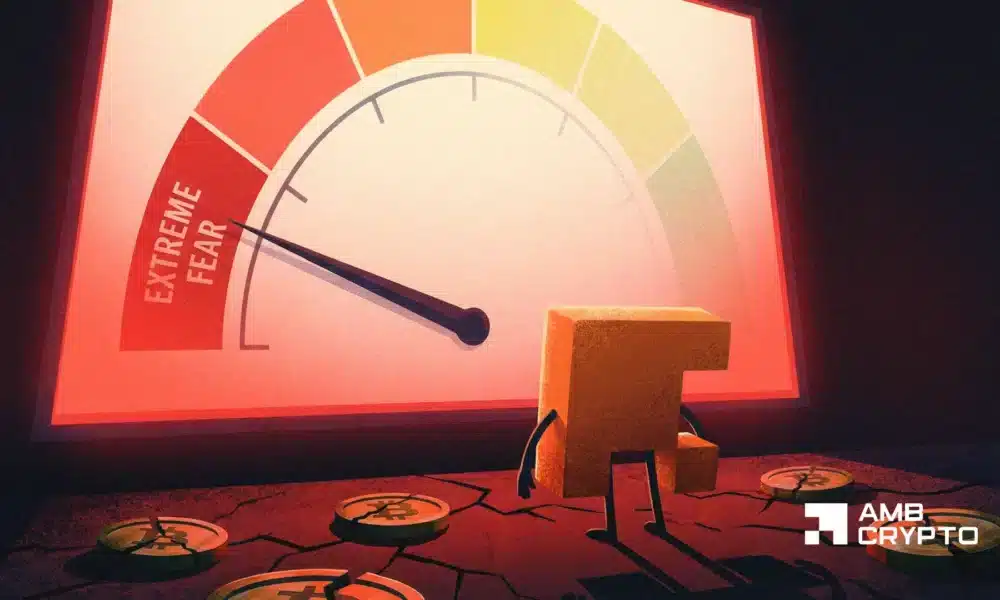
The bigger picture? The Fear and Greed Index tells the real story.
The Fear and Greed Index indicates a low risk appetite
The Fear and Greed Index is a useful benchmark for spotting tops and bottoms.
Historically, market bottoms tend to align with the index sinking into “extreme fear,” often leading to capitulation. When the index starts to creep back up towards the fear zone, it could be a signal that sentiment is shifting.
On the other hand, the market tops usually coincide with the fear and greed index reaching the level of greed or extreme greed. That’s when the euphoria around BTC peaks, traders lock in their profits and the market sees healthy corrections.

Source: CoinMarketCap
This time, however, things looked different.
While Bitcoin regained $97,000, the index remained stuck in the neutral zone, showing that there wasn’t much aggressive accumulation happening at the top. The bears intervened and the bids were not strong enough to counter the pressure settle liquiditycausing the market to slide back.
From a psychological perspective, this indicates a clear lack of risk appetite among investors, which is further reinforced by weak dip buying. Looking at the Fear and Greed Index, the market is still bearish, with consolidation favoring the bears and momentum remaining under pressure.
Final summary
- Neutral readings from the Fear and Greed Index indicate weak accumulation and low risk appetite, keeping momentum under pressure.
- BTC failed to sustain $97,000 as liquidity decreased and pressure increased, tipping the consolidation in favor of the bears.