

Base, a decentralized Ethereum layer-2 scaling network, said Wednesday that it is transitioning from running on the L2 blockchain protocol Optimism’s tech stack to running on its own unified software architecture.
Launched in 2023 as an Optimism chain, Base is shifting to its own tech stack to reduce dependence on third-party service providers and shorten the time it takes to deliver new upgrades, according to an announcement from Base. The team said:
“Consolidating into Base changes the way Base packages and releases software for the network. We will ship one official distribution for each upgrade: a single Base binary for serving nodes on the network.”
The transition is also expected to simplify the Base network’s sequencer, allowing network validators to order transactions, the Base engineering team said.
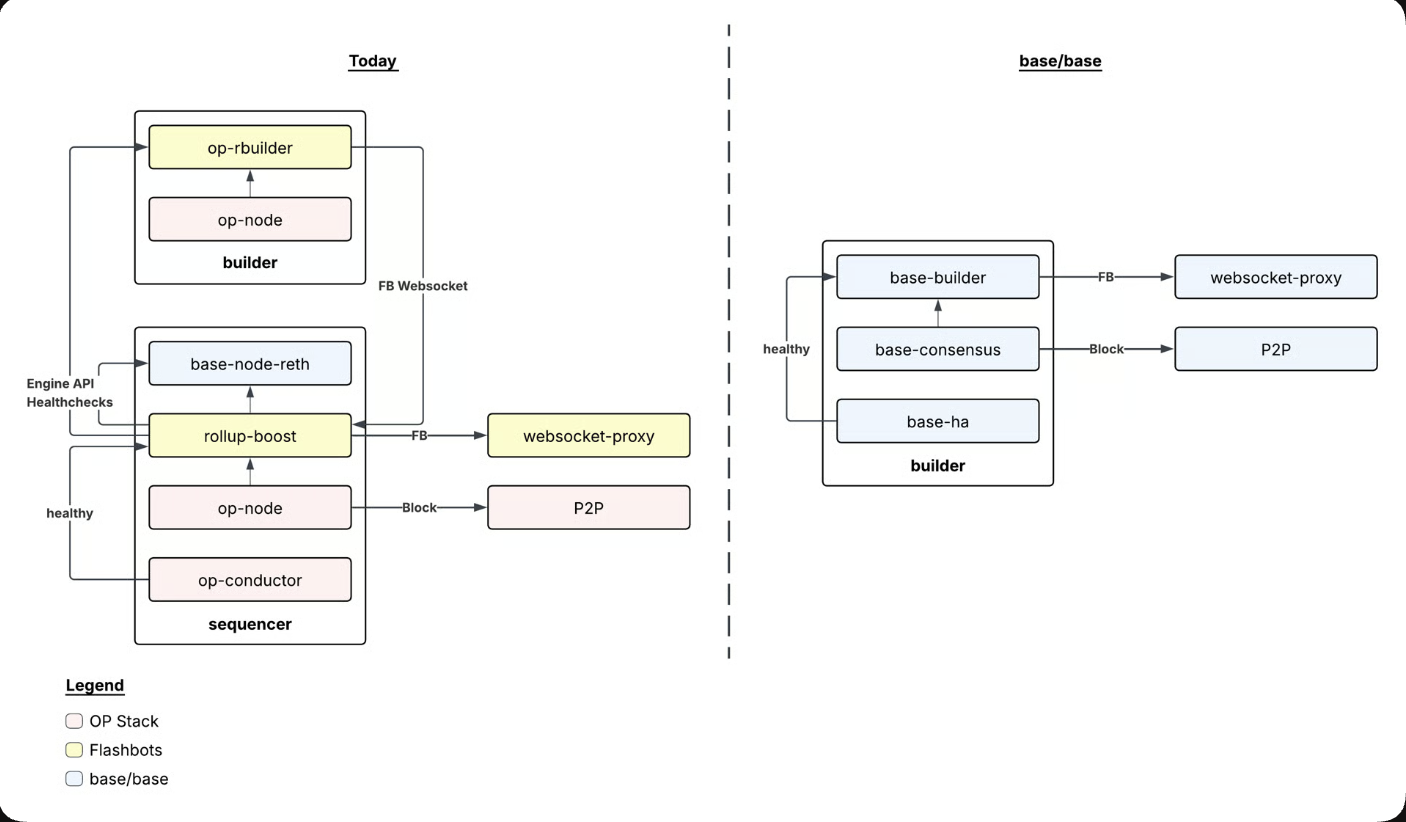
The Base sequencer before and after the shift to a unified architecture. Source: Base
The rollout will take place in four phases, according to a project roadmap, with node runners expected to transition to the new Base client for official upgrades in the coming months.
Ethereum Co-Founder Changes the Game on Layer 2 Scale Networks
Earlier this month, Vitalik Buterin, the co-founder of the Ethereum L1 blockchain network, changed course on scaling Ethereum via L2s.
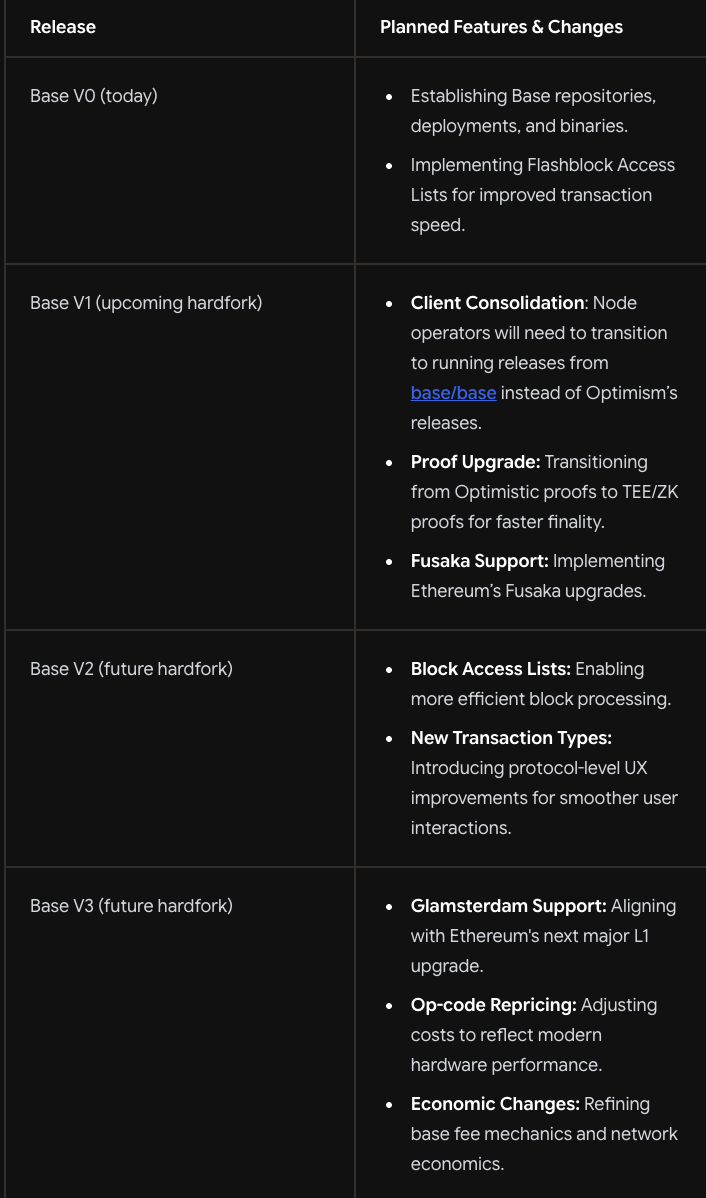
The basic roadmap for the shift away from the optimism tech stack. Source: Base
It will take longer than initially thought to transition L2s to fully decentralized models, Buterin said, adding that the Ethereum L1 already scales independently and has record low network costs.
“The original vision of L2s and their role in Ethereum no longer makes sense, and we need a new path,” Buterin said in February.
Buterin’s comments drew mixed reactions from L2 teams, with some agreeing that scaling networks must go beyond a cheaper execution layer for Ethereum.
“It’s great to see Ethereum L1 scaling – this is a win for the entire ecosystem. In the future, L2s can be not just ‘Ethereum but cheaper,’” Base founder Jesse Pollak said in response.

Source: Jesse Pollack
Other L2 founders argue that layers of scale are already aligned with the long-term goals of the network.
According to L2Beat, there are over 128 different Ethereum L2 scaling networks at the time of publication.