
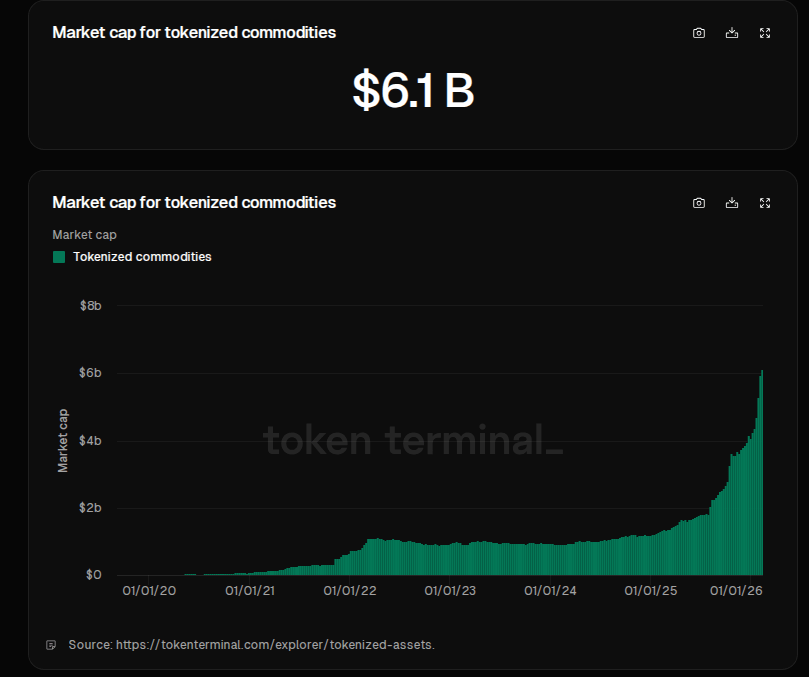
The markets have put more gold into blockchains, and the shift has been rapid. Reports say the tokenized commodities sector has grown by approximately 53% in less than six weeks, increasing its size to just over $6 billion. That jump was led by a small group gold tokens, and this move has traders and some major banks watching closely.
Gold tokens are driving the rally
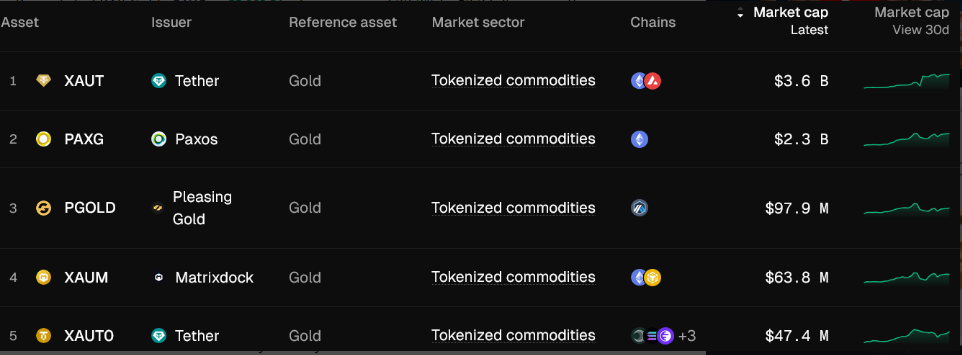
According to on-chain data, most of the new value is in Tether’s XAU₮ and Paxos’ PAXG. Together they own almost $6 billion of the industry’s market value.
Investors view these tokens as a quick way to stake a claim on precious metal without having to move bars or deal with vault papers. Some buyers want a safe haven that moves easily across borders. Others want to trade fractions of an ounce on online markets.
Tether is moving towards physical integration
Reports say that Tether has not stopped issuing a token. The company took a $150 million stake in Gold.com with plans to integrate XAU₮ into that platform and let customers pay for real gold with stable coins.
This is a step toward more directly linking token balances to physical holdings and sales channels. If it works, retail buyers can use familiar cryptocurrency tools to buy and collect real metal, which would change the way ordinary people access precious metal.
Analysts see big benefit
Based on reports, Geoffrey Kendrick of Standard Chartered has outlined a massive growth path: from approximately $35 billion in tokenized real-world assets today to as much as $2 trillion by 2028.
Alvin Foo, a crypto analyst, has argued that tokenized commodities – particularly gold on public chains – could one day scale to trillion-dollar values as markets adopt fractional ownership and new trading rails.
These projections require many pieces to fall into place: clear rules, reliable evidence of custody, and broad demand from non-crypto investors. Ambitious targets are being set, but these rely on a series of technical and legal solutions that are still in progress.
How the system works and why it matters
Stablecoin liquidity and decentralized finance conduits are cited as the conduits that can support larger markets. Reports show that fast settlement, low minimums and easy custody are making the precious metal accessible to smaller investors and traders who were previously left out.
Fractional ownership is already possible, meaning someone can own a piece of a bar without ever visiting a vault. Yet trust must be earned. Custody audits, insured storage, and transparent minting and redemption rules will determine whether token holders feel safe.
Featured image from Private Banker Internationalchart from TradingView