

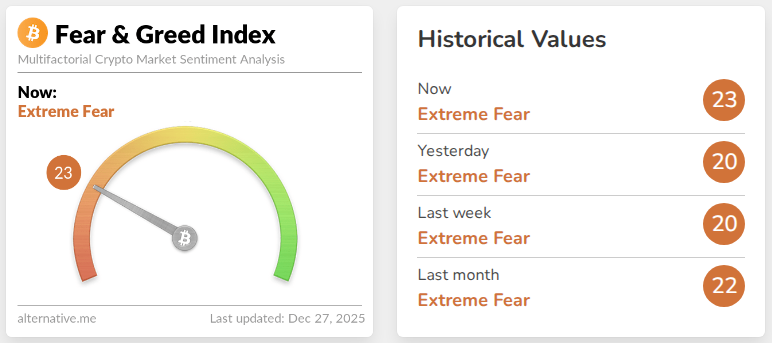
According to reports, Bitcoin’s prospects for 2026 are sharply divided as traders close out the year. The coin was trading at $87,520 at the time of publication and has fallen 8% since January 1 this year. The market mood was weak. The Crypto Fear & Greed Index reached 20 on December 26, marking a two-week period labeled as “extreme fear.”
Related reading
Analysts are divided on market direction
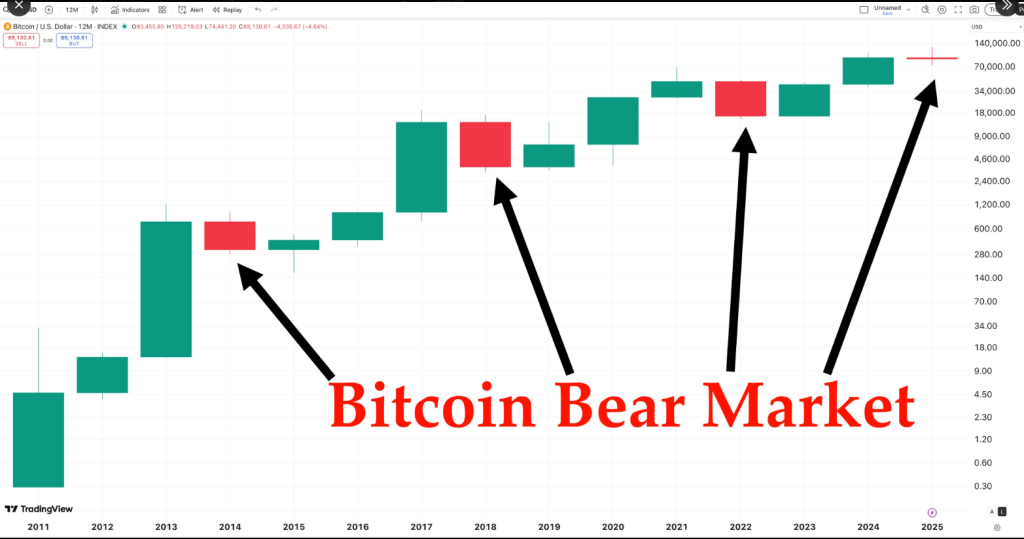
According to reports on X, Jan3 founder Samson Mow claims that 2025 was the bear market and that Bitcoin could enter a bull run that will last until 2035.
PlanC, another well-known analyst, stated that Bitcoin has never had two red annual candles in a row and suggested that surviving 2025 meant surviving the bear phase. These comments have been picked up on industry pages and have sparked new discussions.
2025 was the bear market. https://t.co/1ganX0YSbI
— Samson Mow (@Excellion) December 26, 2025
Some major price calls remain bullish
Several prominent voices still expect sharp gains. Geoff Kendrick at Standard Chartered and Gautam Chhugani at Bernstein each predict $150,000 for Bitcoin by 2026.
Karel Hoskinsonfounder of Cardano, forecast $250,000 by 2026, pointing to limited supply and rising institutional demand as the key drivers.
Arthur Hayes and Tom Lee also set big goals in October, citing $250,000 as a possible outcome by the end of the year.
Sentiment and market data
Based on reports, sentiment readings have not helped bullish momentum. The anxiety index which reached 20 on December 26, remained in the ‘extreme fear’ area for several days.
At the same time, Bitcoin’s price is below many previous projections. Market watchers note that the currency is under pressure, even as several forecasts remain optimistic.
Bears propose sharp downside scenarios
Mike McGlone, senior commodities strategist at Bloomberg Intelligence, expects a decline of about 60% from the historic peak above $126,000 in 2026.
Fidelity’s Jurrien Timmer warned that 2026 could be a “free year”, with prices potentially falling towards $65,000. These views are highly dependent on historical recessions and macroeconomic headwinds.
They carry weight because large declines have occurred before, although past behavior does not guarantee future action.
Where the numbers vary
The spread of projections is large. Some companies are suggesting around $150,000, which would represent an increase of around 74% from the stated level of $86,000.
Others point to $250,000, while downside scenarios reach $65,000 or worse, measured from the peak of $126,000.
This gap shows how different assumptions about supply, institutional demand, and macro conditions lead to very different price targets.
Related reading
Traders and asset managers will monitor flows into regulated products, corporate bond movements and changes in demand within the chain. Headlines and major announcements create food for discussion, but actual flows often determine the course in the short term.
Volatility is likely to persist, and the wide range of forecasts suggests that both sharp rallies and sudden declines are possible in 2026.
Featured image from Pexels, chart from TradingView